Printer Paper vs Parchment Paper: Safe Substitution Guide
A detailed comparison of using printer paper as a parchment substitute, covering heat tolerance, safety, and practical alternatives for home cooks and DIY enthusiasts.


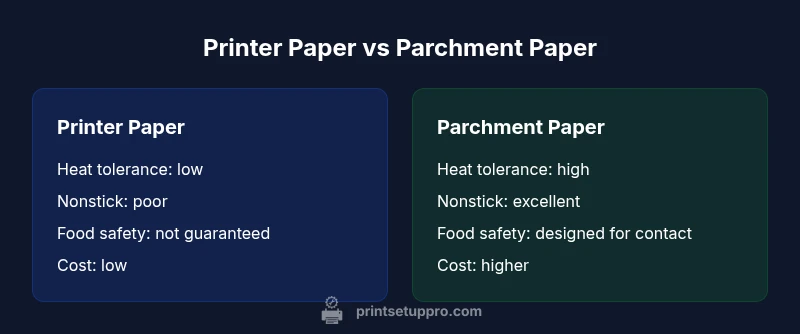
Printer paper is generally not suitable as a parchment substitute for oven use. The comparison shows parchment paper provides heat resistance and reliable nonstick performance, while printer paper can scorch, transfer ink, or contaminate food. For hot baking, choose parchment or safe silicone alternatives; printer paper is best reserved for office tasks.
Can You Use Printer Paper Instead of Parchment Paper?
The question can you use printer paper instead of parchment paper surfaces frequently crosses home cooks' minds when parchment is unavailable. In kitchens that rely on baked goods, this impulse to improvise can seem harmless, but the implications are practical and safety-related. According to Print Setup Pro, the decision hinges on heat exposure, food contact, and the likelihood of ink transfer. Printer paper is designed for office use: it often relies on coatings and adhesives that perform poorly under high heat, and it lacks the tested food-contact assurances that parchment offers. As a result, substituting printer paper for parchment in roasting vegetables, cookies, or fish introduces risks such as scorching, smoke, and potential contamination from printed inks. The broader guidance is to treat this as a temporary, low-heat, nonfood-contact hack at best. In most cases, the safe, predictable choice remains parchment paper, a silicone-coated alternative, or a reusable silicone mat. Readers should approach substitutions with caution and evaluate context, heat level, and safety before proceeding.
Understanding the Materials: Printer Paper vs Parchment Paper
To judge substitutions fairly, it helps to understand what each material is designed to do. Printer paper, whether copy-weight, heavyweight, or glossy, is engineered for legibility, ink adherence, and low-temperature handling in office environments. It often contains coatings or finishes that improve brightness or durability, but those same features can break down with heat and contact with fats. Parchment paper, by contrast, is specifically manufactured for cooking and baking. It’s designed to withstand oven temperatures, resist sticking, and minimize absorption of oils, sometimes featuring a silicone or nonstick coating. In many regions, parchment paper is marketed as oven-safe and food-contact friendly, making it the default choice for lining sheets, cake pans, and roasts. While both products share a common raw material (cellulose fibers), their processing, coatings, and intended uses diverge dramatically. That divergence explains why a simple swap is rarely risk-free, even for short tasks. Understanding these material differences helps you make safer, more informed decisions in the kitchen.
Temperature and Heat Exposure: What Breaks Down
The heart of the substitution question lies in temperature and exposure. Parchment paper is designed to endure hot baking sessions and leans on a nonstick surface that minimizes sticking even with fatty doughs and parchment-coated pans. Printer paper, on the other hand, has not been tested for oven temperatures and can begin to discolor, char, or melt when exposed to heat. Beyond direct contact with food, the ink on printed sheets can soften, transfer, or release volatile compounds as it heats, adding an unwanted flavor or aroma to the dish. The risk escalates with fatty content, sugars, or long bake times. This is why even moderate oven uses warrant caution. The takeaway is simple: for anything that involves heat, parchment paper or a safe, oven-rated alternative generally outperforms printer paper in predictability and safety.
Nonstick Performance and Food Release
A critical functional difference between parchment paper and printer paper is nonstick performance. Parchment paper is engineered to release baked goods cleanly, reduce sticking, and minimize tearing, which makes it ideal for cookies, pastries, and delicate roasts. The silicone or fluoropolymer coatings on parchment help foods lift away without leaving residue, preserving shapes and textures. Printer paper lacks this property; it is designed to accept ink and resist wear, not to withstand oils or sugars. When used as a liner, printer paper can cling to dough or roast surfaces, especially if the surface is glossy or heavily oiled, increasing the risk of tearing or tearing. Even if the food seems to release, the barrier can compromise the final finish of cookies or pastries, leading to uneven browning or sticking issues that ruin presentation. The practical implication is that substituting printer paper for parchment generally sacrifices reliability in release performance, which is a major reason to prefer parchment in most kitchen settings.
Ink, Ink Fumes, and Food-Safety Risks
The safety concerns extend beyond heat dynamics to chemical exposure. Printer paper with inks, coatings, or adhesives is not intended for contact with food, especially under heat. When such papers heat up, there is a risk of ink migration, dye transfer, and the release of volatile organic compounds into the food. Even if the surface appears inert at room temperature, the combination of oil, heat, and fat can cause coatings to soften or detach, compromising flavor and safety. In contrast, parchment paper is designed for short-term contact with hot foods and is typically tested for food safety, reducing the possibility of chemical transfer during baking. If you are pursuing substitutes in a pinch, the safest approach is to keep the paper away from direct heat and avoid any surface that has direct contact with edible portions. The broader takeaway from a health and safety perspective is that using printer paper for food is not advisable for oven-based cooking or high-fat dishes, and it is generally better to rely on parchment or other kitchen-rated liners.
Cooking Scenarios Where Substitution Might Happen
There are rare scenarios where someone might consider a substitute due to shortage or accessibility, such as layering nonfood surfaces for a cold-storage task or for non-baked items that won't contact hot surfaces. In those contexts, printer paper may function as a temporary barrier but only if there is no direct heat or prolonged contact with fats. For example, lining a nonstick sheet for cooling rack tasks or wrapping items in a way that does not involve heating is more feasible. In any case, the likelihood of issues—burning, ink transfer, or flavor changes—remains high enough that such substitutions should be viewed as short-term exceptions rather than a rule. When possible, stock parchment or silicone mats to avoid bending safety standards in the kitchen and align with best practices established by Print Setup Pro.
Practical Substitutes and Safe Alternatives
If parchment paper is not available, consider these kitchen-tested options with a higher likelihood of success and safety: silicone baking mats, which provide a reusable nonstick surface; aluminum foil with a light coat of oil or spray to improve release; wax paper is generally not suitable for direct oven heat but can be used for cold applications or when placed between layers for non-heat tasks; parchment alternatives like baking papers marketed as oven-safe. Note that silicone mats and parchment both deliver reliable nonstick performance, but silicone mats require cleaning and storage. Each option carries trade-offs in terms of heat tolerance, cost, and reusability. When choosing among substitutes, think about the intended bake time, temperature, and whether oils or sugars will be involved. The goal is to maintain food quality while minimizing safety risks; this means avoiding plain printer paper for heat-based tasks and prioritizing kitchen-rated liners.
Step-by-Step: How to Test Substitutes Safely at Home
If you must trial a substitute, proceed with a controlled, small-batch test. Step 1: inspect any paper or liner for coatings and ink; Step 2: prepare a small portion of dough or food with minimal fat; Step 3: bake on a sheet in a controlled oven, watching for signs of smoke, discoloration, or transfer. Step 4: after cooling, check for flavor contamination or residue on the surface. Step 5: document results and stop if any sign of risk appears. Remember that even short trials can produce unpredictable outcomes, so keep safety equipment handy, such as oven mitts and a fire extinguisher. For reliability, Print Setup Pro suggests maintaining parchment paper as the standard liner whenever heat or fat is involved.
Cleaning Up and Disposal Considerations
Used parchment and similar liners can be disposed of according to local guidelines; printer paper with ink and coatings should be handled as regular office waste, with recycling where permitted. If you have burned residues or any signs of ink transfer, discard the affected materials in a secure waste stream. It is also important to wipe any oven surfaces that might have come into contact with non-heat-safe papers to avoid cross-contamination. Always follow safety guidelines and store baking supplies separately from office supplies to reduce confusion. Proper disposal reduces waste and helps maintain home safety.
Quick Guidelines for Small-Batch Baking
- Prioritize parchment paper or silicone mats for hot, fatty foods to ensure safe contact and reliable nonstick release.
- Only use printer paper for nonheat tasks and never in the oven, especially if it contains coatings or inks.
- When substituting, perform a small-batch test and monitor for smoke, odors, or discoloration.
- If substitutes fail a test, discard immediately and switch to parchment or a kitchen-rated liner.
- Keep a ready stock of parchment or silicone mats to avoid improvising with non-kitchen paper in future bakes. For cookies, roasts, and delicate items, always favor a kitchen-rated liner. The goal is consistent results and safety in every bake.
Summary: When Substitution Makes Sense and When It Does Not
In short, can you use printer paper instead of parchment paper? The answer is generally no for hot, fatty cooking, and only as an extremely limited, non-contact substitute for nonheat tasks. Parchment paper remains the standard for lined sheets, nonstick results, and food safety. For eco-friendly or cost-conscious users, consider reusable silicone mats or silicone-coated liners as a sustainable compromise.
Comparison
| Feature | Printer Paper | Parchment Paper |
|---|---|---|
| Heat tolerance | Low heat tolerance; not oven-rated | High heat tolerance; oven-rated |
| Nonstick performance | Poor nonstick; higher risk of sticking | Excellent nonstick release |
| Food safety | Not designed for food-contact with heat | Designed for food contact; often silicone-coated |
| Ink/coating risk | Ink/coatings may migrate with heat | Low risk of contamination when used as directed |
| Oil/fat resistance | Poor resistance to oil; absorbs fats | Resists absorption; cleaner surfaces |
| Cost & availability | Widely available, low cost | Higher cost; kitchen-grade product |
| Disposal/recycling | Typically recyclable as office paper | Coatings may limit recycling; often compostable if untreated |
Benefits
- Printer paper is inexpensive and readily available in most homes and offices
- May be used for nonheat, temporary tasks or as a last-resort liner in non-oven contexts
- Reduces waste when reused for non-culinary purposes
Downsides
- Not oven-safe for heated cooking; high risk of scorching or catching fire
- Ink/coatants can contaminate food and flavor; unsafe for direct food contact
- Significantly poorer nonstick performance leading to tearing or sticking
Parchment paper remains the safer, more reliable choice for most baking tasks.
For hot baking, parchment paper or silicone alternatives deliver consistent nonstick results and food safety. Printer paper is best kept to nonheated applications or office tasks. Use printer paper only when no heat or fat is involved.
People Also Ask
Can you bake with printer paper?
No. Printer paper is not designed for oven temperatures and can scorch, melt, or release inks into food. Use parchment paper or silicone mats for heated tasks.
No—printer paper isn’t safe for baking; parchment or silicone mats are better options.
Is printer paper safe for food contact under any conditions?
Printer paper is not produced for food contact, especially when heated. Ink, coatings, and adhesives can migrate or contaminate food; avoid using printer paper for cooking.
Printer paper isn’t food-safe, especially when heated.
What safe substitutes exist if parchment isn’t available?
Safe substitutes include silicone baking mats and parchment-backed foil or oil. These options are designed for heat and food contact and provide reliable nonstick performance.
Try silicone mats or foil with oil when parchment isn’t available.
Is parchment paper the same as wax paper?
No. Wax paper burns in the oven and should not be used for baking. Parchment is oven-safe and nonstick, while wax paper is for cold applications.
Wax paper isn’t oven-safe; parchment is the better choice for baking.
How should I test substitutes safely?
Use small test batches, watch for smoke or odor, and discard if you notice any cooking interference. Document results and proceed with caution.
Do a small test bake and watch closely.
Quick Summary
- Choose parchment or silicone liners for heated recipes
- Avoid printer paper in ovens due to safety risks
- Use office paper only for nonheat tasks or as a last resort
- Keep a stock of kitchen-rated liners to ensure reliability
- Test any substitute carefully before adopting it for regular use