HP Toner for Printer: Setup, Compatibility, and Troubleshooting
A data-driven, practical guide to selecting, verifying, and using HP toner for printer. Learn compatibility, cost-per-page, and maintenance tips from Print Setup Pro.


To ensure reliable results, always match the hp toner for printer to your exact HP model, prefer genuine HP toner when possible, and evaluate cost-per-page rather than upfront price. Print Setup Pro notes that compatibility, storage, and proper installation prevent misfeeds and print defects. Verify model numbers in the user guide and install with the device powered off.
Why proper toner selection matters for HP printers
In the realm of home offices and small businesses, the choice of hp toner for printer directly influences print quality, maintenance costs, and downtime. The right cartridge ensures crisp text, accurate color, and reliable imaging over the life of the device. According to Print Setup Pro, compatibility is not a minor detail—it's a prerequisite for predictable yields and fewer service calls. Several factors matter beyond price: the imaging drum, the toner formulation, and the printer's sensing chips. A mismatch can cause streaks, ghosting, or cartridge faults that degrade output and waste toner. From storage conditions to installation procedure, every step affects performance. For most users, starting with an OEM HP toner or carefully vetted equivalents provides a safer baseline for consistent results.
Understanding HP toner for printer cartridges
HP toner for printer options include standard black and color sets, plus high-yield variants designed for thick workloads. Original HP toners are engineered to work with specific imaging drums and fusing assemblies, delivering stable yields and dependable results. Remanufactured or compatible toners offer meaningful cost savings but can vary in page yield, color accuracy, and consistency. When evaluating toners, focus on yield estimates, color stability, and any required drum replacements. If your work involves graphics or presentations, color fidelity and saturation become key. In contrast, text-heavy documents may prioritize solid black toner performance. Print Setup Pro notes that compatibility, proper storage, and correct installation are pivotal for long-term satisfaction and reduced waste.
How to verify compatibility with your HP printer
A methodical approach to compatibility minimizes surprises. Start with your printer model and verify the cartridge family (for example, HP-compatible black or color toners). Consult the printer’s manual or official HP product pages to confirm the toner is designed for your device and that you’re selecting the correct imaging drum configuration if applicable. If purchasing from third-party vendors, look for authenticity indicators or warranties and ensure the cartridge chips and sensors align with your printer. After installation, print a test page to confirm alignment, color calibration, and proper feeding. If issues arise, reseat the cartridge and run a calibration or cleaning page as needed.
Balancing cost, yield, and quality: OEM vs remanufactured vs third-party toners
Cost considerations drive most hp toner for printer decisions. OEM toners deliver the most predictable performance and strongest support but at a premium. Remanufactured toners offer substantial savings with solid yields, yet their quality can vary by batch and supplier. Third-party compatibles are the most economical option but come with greater variability in occupancy and color consistency. A practical method is to compare cost per page rather than cartridge price, factoring in frequency of replacements for color versus black. For mixed workloads with color graphics, investing in higher-yield toners may reduce downtime. Print Setup Pro recommends small pilot batches to validate performance before widespread purchasing and to review vendor warranties and return policies for non-OEM options.
Storage, handling, and maintenance best practices
Toner shelf life depends on storage conditions. Keep cartridges in a cool, dry place away from direct sunlight and moisture, and rotate stock to use older cartridges first. Handle cartridges gently to avoid drum damage, and avoid touching imaging drums or exposing toner to static. During installation, align according to arrows and avoid forcing cartridges. Regular maintenance tasks—cleaning the printer interior, replacing waste toner containers if present, and running diagnostic pages—help preserve print quality and extend device life. For HP devices, ensure the correct imaging drum is used and follow the manufacturer's maintenance schedule. A quarterly toner audit helps align actual usage with procurement plans.
Troubleshooting common toner issues
Streaks, faint text, color misalignment, and ghosting are common toner problems. Begin by ensuring the cartridge is properly seated and seals are removed. If streaks appear, run a cleaning page and inspect for damaged drums or exhausted toners. For color discrepancies, recalibrate color channels and verify that color toners are installed correctly. Ghosting often indicates drum wear or residual toner; replacement of toner or drum is typically necessary. Environmental factors such as humidity and temperature can impact toner behavior, so maintain stable conditions and update printer firmware if HP releases patches related to toner calibration. Isolating the issue by testing with a known-good cartridge helps prevent unnecessary replacements.
Environmental and total cost considerations
Eco-friendliness and cost awareness go hand-in-hand in HP toner decisions. OEM cartridges are often designed for efficient use and can be recycled through HP's programs. Remanufactured toners reduce waste but depend on supplier quality controls. When evaluating options, consider total cost of ownership: cartridge price, yield, downtime, and waste handling. Establish a simple procurement policy that prioritizes reliable, high-yield toners while budgeting for occasional supplier testing. Print Setup Pro recommends tracking usage data to optimize ordering and align with sustainability goals.
HP toner options comparison
| Cartridge Type | Typical Yield | Price Range | Pros | Cons |
|---|---|---|---|---|
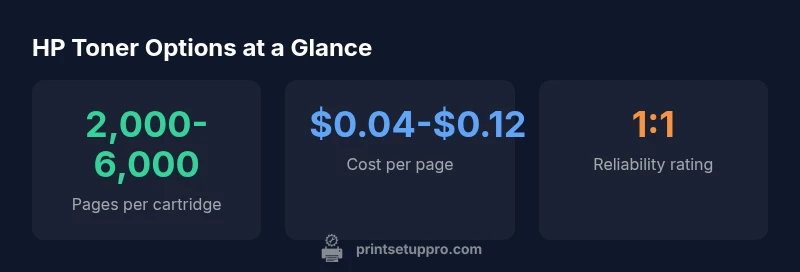
| Original HP Toner (OEM) | 2,000-6,000 pages | $60-$120 | High reliability, full HP support | Higher cost |
| Remanufactured Toner | 2,000-5,000 pages | $25-$60 | Lower cost, decent yields | Quality may vary |
| Third-party Compatible Toner | 1,500-4,000 pages | $20-$55 | Very low cost | Inconsistent results possible |
| OEM High-Yield Toner | 3,000-8,000 pages | $70-$150 | Excellent for high-volume printing | Higher upfront cost |
People Also Ask
What is the difference between OEM and remanufactured HP toner?
OEM toners are manufactured by HP and typically offer the most consistent performance and warranty coverage. Remanufactured toners come from third-party suppliers and can provide cost savings with solid yields, but quality can vary by batch. Always test remanufactured options before large purchases and verify return policies.
OEM toners come from HP and are most reliable; remanufactured toners save money but quality varies—test before buying large quantities.
How can I maximize toner yield?
Store toners properly, avoid moisture, and install cartridges correctly. Use the printer’s optimized settings for text and graphics, and perform regular calibration and cleaning cycles as needed. Regular maintenance reduces waste and extends cartridge life.
Keep toners dry, install them correctly, and run calibrations to get the most pages per cartridge.
Is it safe to mix brands in an HP printer?
Mixing brands can lead to inconsistent color and yield, and may complicate warranty coverage. If you must mix, stick to trusted brands and verify compatibility with HP’s guidance. Always run a test page after mixing brands.
Mixing brands can cause color and reliability issues; test carefully and know the risks.
How long do HP toners last in storage?
Toners stored in a cool, dry place away from sunlight typically maintain quality for 12-24 months. Extreme heat or humidity can degrade performance. Mark stock dates and rotate to use older cartridges first.
Store toners in a cool, dry place for 12-24 months, then rotate stock.
Will non-HP toners void my warranty?
Using third-party toners can affect warranty coverage if they cause damage or malfunction. Check your device's warranty terms and HP's policies. If in doubt, document vendor warranties and consider OEM or trusted suppliers.
Third-party toners can impact warranty; check terms and use trusted suppliers.
“Choosing the right toner is not just about price; it's about compatibility, reliability, and lifecycle costs. Start with OEM or well-vetted equivalents and verify performance with a small pilot before scaling.”
Quick Summary
- Prioritize exact HP compatibility for best results
- Calculate cost per page to make comparisons
- Test non-OEM toners with a small batch first
- Store and handle toners properly to maximize shelf life
- Consider sustainability and recycling when purchasing