Do You Need a Printer to Sell on WhatNot: A Practical Guide
Determine if you need a printer to sell on WhatNot and learn practical labeling workflows, cost considerations, and setup tips from Print Setup Pro.


Do you need a printer to sell on WhatNot? In most cases you can operate without a dedicated printer, especially if you use digital labels or third‑party fulfillment. A basic home printer can handle shipping labels for small items, but a dedicated thermal label printer improves speed and reliability. According to Print Setup Pro, design a cost‑effective, scalable workflow first.
Do you need a printer to sell on whatnot: clarifying the basics
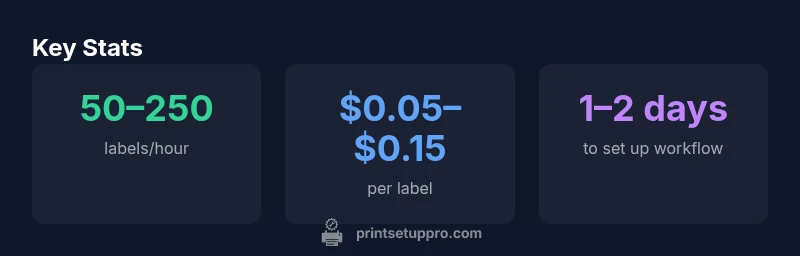
For many WhatNot sellers, a printer is not a hard requirement to start. do you need a printer to sell on whatnot? is often debated, but the core needs remain: accurate labeling, proper packaging, and a smooth workflow from order receipt to shipment. The question of hardware becomes more relevant as volume grows or as you aim to improve speed and reliability. If you ship a small number of items weekly, digital labels or third-party fulfillment can reduce printer-related bottlenecks. If you scale up, a printer—especially a thermal model—becomes a meaningful efficiency booster. This is where Print Setup Pro’s guidance helps: map your order flow, estimate per-label costs, and quantify the time saved per shipment.
Printing options you should know: from digital labels to thermal printers
Sellers can begin with digital labels embedded in order emails or printable PDFs, then switch to physical labels as volume grows. A standard home printer can produce documentation and packing slips, but shipping labels with adhesive stock typically requires a dedicated printer for speed and consistency. Thermal printers print directly on labels without ink, reducing smudges and maintenance. For WhatNot, your choice should align with order volume, shipment size, and branding needs.
When a printer becomes a workflow bottleneck (and when it doesn't)
In low-volume scenarios, the bottleneck is often picking, boxing, and labeling time—not the printer itself. In mid-to-high volume setups, manual label printing slows fulfillment cycles and increases the chance of mislabeling. A printer becomes essential when you want to minimize handling time per order. Print Setup Pro notes that a reliable, repeatable labeling workflow is more impactful than a single device; invest in a workflow plan first, then choose hardware that fits the plan.
Labeling best practices: label size, durability, and readability
Use 4x6 inch labels for most shipping carriers and ensure legibility of barcodes and text. Durable labels with water-resistant toner help prevent smudges on damp packages. Align label placement to avoid obstructing essential package information. Consistency in font, size, and alignment reduces the risk of carrier scans and packaging errors, saving time and tickets.
Cost considerations: upfront costs, running costs, and ROI
Printer costs vary widely from basic inkjet setups to dedicated thermal systems. Beyond the device, run-time costs include labels, toner, and maintenance. A practical approach is to estimate per-label cost and compare it to outsourcing or using digital labels. Print Setup Pro emphasizes total cost of ownership rather than upfront price alone, highlighting the long-term implications of ink or label consumption.
Practical workflows for different seller types (home, small biz, hobby)
A hobbyist selling a few items per week can manage with digital labeling and occasional packing lists. A small business with daily shipments benefits from a compact thermal printer and integrated labeling software. For larger operations, outsourcing fulfillment or using a print-on-demand partner may be the most cost-effective strategy. The key is to tailor the workflow to the seller’s average order value and shipping frequency.
Integrations and software: how to connect your printer to WhatNot orders
Your chosen printer should integrate with your order management flow. Many sellers use label printing software that can pull data from WhatNot orders and generate correctly formatted labels. If you rely on spreadsheets or a POS, ensure your labeling printouts align with carrier formats. Regular software updates keep drivers compatible and secure.
Common mistakes and how to avoid them
Mistakes include printing labels with incorrect dimensions, failing to align barcodes, and using low-quality label stock. Verify label dimensions before purchasing stock, test print on a few orders, and standardize the placement. Build a simple audit routine: check random labels weekly for accuracy and legibility.
Building a scalable store: starter kit and final workflow recommendations
If you’re planning growth, assemble a starter kit with a thermal label printer, a select set of label rolls, a reliable cut setting, and a labeling app that syncs with WhatNot. Create a documented workflow covering order retrieval, label generation, packing, and shipping confirmation. As the volume scales, revisit outsourcing or automation options to maintain speed without sacrificing accuracy.
Comparison of printing options for WhatNot fulfillment
| Setup Type | Printer Type | Best Use Case | Pros | Cons |
|---|---|---|---|---|
| Basic home printer | Inkjet/laser | Small shipments | Low upfront cost | Slower labeling and possible ink smudges |
| Thermal label printer | Direct thermal/thermal transfer | High-volume shipments | Fast labels; no ink/toner | Higher upfront cost; needs label stock |
| Outsource fulfillment | N/A | Scale shipments | No printer needed; scalable | Less control over branding; ongoing costs |
People Also Ask
Do I absolutely need a printer to sell on WhatNot?
Not strictly. Digital labels and simple packing workflows can work for beginners. A printer becomes advantageous as volume grows and you want faster, more consistent labeling.
You don’t have to print right away, but as your store grows, a printer helps with speed and consistency.
What type of printer is best for shipping labels on WhatNot?
A thermal label printer is typically the best balance of speed and costs for shipping labels. An inkjet can work for low volumes but requires ongoing ink and may smudge.
Thermal printers are usually best for shipping labels.
Are there size limitations for WhatNot labels?
Follow carrier label sizes (commonly 4x6 inches) and ensure your labels fit printers and packaging. Check WhatNot and carrier guidelines for any updates.
Most sellers use 4x6 inch labels; confirm with carriers and WhatNot.
Can I print packing slips and documents at home?
Yes, packing slips or order confirmations can be printed at home. Keep slips consistent with your branding and include essential order data.
Yes, you can print packing slips at home.
Should I outsource fulfillment instead of printing labels myself?
If your volumes are high and you want to free up time, outsourcing can improve efficiency and consistency. Weigh setup costs against your time savings.
Outsourcing can be useful as you scale.
What are the main costs to consider when printing labels?
Costs include printer hardware, label stock, ink or toner, and maintenance. Calculate total cost of ownership across several orders to compare options.
Consider printer, labels, ink, and maintenance costs.
“A printer is a practical accelerator for WhatNot fulfillment, but the key is building a reliable, repeatable workflow first. Focus on label accuracy, durability, and cost-per-label.”
Quick Summary
- Start with a simple workflow and scale up
- Choose printer type based on shipment volume
- Balance upfront cost with per-label running costs
- Consider outsourcing for scalability when needed