Is Instax Camera or Printer Better? A Practical Guide
Is Instax camera or printer better? A practical, data-informed comparison of use cases, costs, print quality, and setup to help home offices decide.


Is Instax camera or printer better? It depends on what you value: if you want spontaneous film photography with a tactile print, an Instax camera is best. If you value digital-to-physical prints from your phone, an Instax printer often offers more versatility and lower per-print costs. For many users, a printer option is the more flexible, future-proof choice.
The Core Difference: Film vs Digital Prints
When you ask the question, is Instax camera or printer better, the core difference hinges on how you intend to enjoy your photos. An Instax camera delivers a tangible print the moment you press the shutter, tapping into a nostalgic, film-based process that many hobbyists prize for its texture and color quirks. An Instax printer, on the other hand, bridges your digital library with the Instax film format, letting you print from a phone or computer. That flexibility makes it easier to curate albums, share memories quickly, and reuse existing images without planning a shoot around film stock. The Print Setup Pro team notes that the best choice depends on your workflow, photography habits, and how much you value the ritual of shooting on film. In this guide, we compare both paths across real-world scenarios and practical constraints to help you decide.
When a Camera Shines: Use-Case Scenarios
A dedicated Instax camera excels in moments where spontaneity and physical presence trump perfection. Think school events, birthday parties, or outdoor adventures where you want a physical memory on the spot. The experience is immersive: you compose, shoot, and hold a glossy immediate print minutes later. For social purposes, the ability to gift or display prints immediately has a distinctive charm that digital shares can’t replicate. However, this advantage comes with ongoing film costs and consumables you must stock. For people who savor the tactile process and the “you had to be there” vibe, a camera remains compelling, and its simplicity reduces digital distractions.
When a Printer Shines: Use-Case Scenarios
Instax printers bring digital convenience to the Instax format. They’re ideal for households with plenty of phone photos or classrooms that want to print an entire set from a lesson. The workflow is familiar: pick photos from a device, send them to the printer, and watch a film print emerge. This path scales well for events, family photo walls, or quick gift ideas where you want to reproduce several versions of the same image. A primary benefit is cost efficiency at scale relative to buying multiple camera rolls; another is the ability to choose from a wider set of image sources and edits before printing. For those who prioritize speed and consistency, the printer route often wins.
Feature-by-Feature: What to Compare
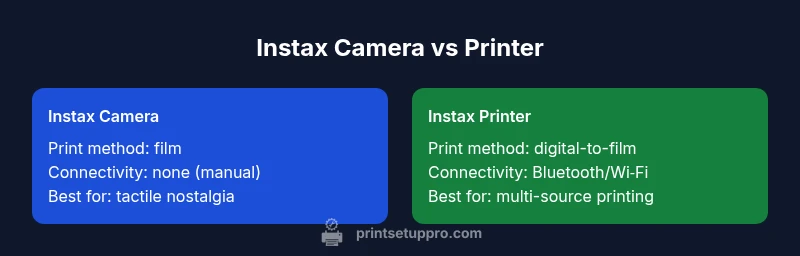
To evaluate is Instax camera or printer better for you, examine core features side by side. Consider print format options (Mini vs Wide vs Square), the availability of different film packs, and the tactile differences between prints. Look at connectivity: cameras rely on film-triggered processes, while printers depend on Bluetooth/Wi‑Fi from a phone or computer. Printing speed matters for events; battery life matters for field use. App ecosystems influence editing options, monochrome vs color fidelity, and the ease of deleting or reprinting. Durability of the device and film stock availability are practical concerns that affect long-term use. By focusing on these criteria, you’ll identify which path aligns with your daily rhythms and event frequency.
Practical Costs and Longevity
Cost considerations are a major factor when deciding what is instax camera or printer better for you. A camera offers the immediacy you want but carries ongoing film costs, which can add up quickly if you print frequently. A printer’s upfront investment is often higher, yet the per-print expense tends to be lower when you factor in the ability to reuse existing digital photos. Film packs also have varying shelf lives and regional availability, which can influence long-term planning. Beyond price, longevity depends on how often you print, how you store prints (some users prefer to seal prints to prevent fading), and how frequently you upgrade to newer film formats. The bottom line: if you print often, the printer route tends to be more economical over time; if you print rarely, the camera’s tactile value may justify the cost.
Quality, Color, and Consistency
Print quality differs between the two approaches. Instax cameras produce prints with a distinct color palette and a characteristic film grain that many users love. The results can be highly consistent within a given film stock, but lighting, shutter speed, and film batch can still influence outcomes. Printers offer more control over the source image, allowing you to apply edits prior to printing. This can improve color accuracy and consistency across multiple prints, especially when printing portraits or group shots. However, the final look still depends on the film stock chosen and the printer’s capabilities. For professionals seeking precise color fidelity, the printer pathway paired with calibrated edits can deliver stronger consistency across batches.
Setup, Maintenance, and Ecosystem
A camera setup is typically minimal: load film, power on, and shoot. Maintenance centers on replacing film packs and cleaning the lens area after outdoor use. A printer demands a slightly more involved setup: ensure compatible devices, install drivers or apps, and keep the print head clean. In both cases, the ecosystem matters—what other devices, films, or accessories can you integrate? If you frequently shoot a mix of photos from different devices, printers offer a more scalable ecosystem since you can source images from multiple devices and keep your workflow cohesive. Print Setup Pro observes that choosing a flexible ecosystem reduces friction and supports ongoing satisfaction with your purchase.
How to Decide: A Simple Framework
Here is a practical framework to choose quickly:
- List your top use cases: spontaneous prints vs curated prints from devices.
- Estimate print volume: occasional vs frequent printing.
- Consider budget over 12–24 months: upfront cost vs ongoing film costs.
- Evaluate your preferred aesthetic: film texture vs edit-ready digital looks.
- Assess storage and gifting plans: immediate prints for memory boards vs organized digital albums.
If spontaneity, tactile feel, and minimal planning matter, lean toward Instax camera. If flexibility, shareability, and bulk printing from multiple devices suit your lifestyle, choose the Instax printer. This approach aligns with practical needs while keeping options open for future upgrades and film stock choices.
Final Thoughts: Aligning Choice with Your Everyday Routines
Ultimately, there is no single winner in the question is Instax camera or printer better. The choice depends on how you interact with memories, the environments where you print, and how much you value a tangible product right now versus a flexible digital-to-print workflow. By framing your decision around use cases, costs, and long-term maintenance, you can pick the path that best fits your home office, classroom, or DIY projects. Print Setup Pro emphasizes that your preference for experience—film nostalgia or digital convenience—will guide the best fit for your lifestyle.
Comparison
| Feature | Instax Camera | Instax Printer |
|---|---|---|
| Print method | Analogue instant film | Digital-to-film via app |
| Connectivity | None to basic (built-in trigger) | Bluetooth/Wi‑Fi from phone/computer |
| Print format options | Limited to film stock (Mini/Wide/Square) | Flexible image source (from contact or gallery) |
| Print speed | Immediate after shooting | Depends on device and queue, often minutes |
| Print costs | Ongoing film packs, per print relatively high | Upfront printer cost with lower per-print cost |
| Best for | Tangible, nostalgic prints on the spot | Multiple sources, bulk printing, sharing |
Benefits
- Immediate, tangible prints that feel physical and nostalgic
- Low maintenance hardware with minimal setup
- No dependence on cloud or devices for prints
- Compact and portable for events and travel
- Simple, plug-and-play experience
Downsides
- Higher ongoing film costs and waste
- Limited print sizes and color control compared to digital workflows
- Film availability can vary by region and stock
- Print quality can vary with lighting and film batch
- Not ideal for high-volume professional printing
Instax Printer often offers better overall flexibility for most users; Instax Camera excels for unique tactile experiences.
If you print frequently or want to curate from multiple screens, the printer wins on versatility and cost efficiency. If you crave the instant, hands-on experience of film and the charm of a spontaneous photo, the camera is the better fit. Use this framework to decide based on your daily routines and memory-keeping style.
People Also Ask
Is an Instax camera better for kids or events?
An Instax camera is often preferred for events and kids because of the immediacy and tactile result. It creates a memorable, shareable moment on the spot, which can be fun at parties, classrooms, and family gatherings. Consider film availability and the cost per print when planning for larger events.
For kids and events, the instant touch and fun of a camera usually win. Think about budget and film stock before you commit long-term.
Can I print photos from my phone with an Instax printer?
Yes. Instax printers are designed to connect to smartphones via Bluetooth or Wi‑Fi, letting you select images from your gallery and print them on Instax film. This makes it easy to curate albums or create themed prints for walls or gifts.
Yes—just pick a photo on your phone and print it directly with the Instax printer.
Do Instax prints fade or deteriorate quickly?
Instax prints have a distinct finish and color profile characteristic of the film stock. Over time, prints may show color shifts if exposed to harsh light or humidity, just like most photos. Proper framing or storage can help preserve prints.
Standard prints can fade with extreme conditions; protect them with framing and proper storage.
Is the cost of film the main downside of using Instax cameras?
Yes, ongoing film costs are a common consideration with Instax cameras. Each print uses a film frame, and replacement stock can add up if you shoot frequently. For budget-conscious users, printers can mitigate per-print costs by sourcing digital images.
Film costs can add up if you shoot a lot; printers can be more economical per print over time.
Which is easier to learn for beginners: camera or printer?
For beginners, a printer is generally easier to master because it leverages familiar smartphone workflows and editing tools. The camera requires some experience with lighting, composition, and film handling, which can be a fun learning curve for hobbyists.
Printers tend to be easier to start with since you control everything from a phone.
Can I mix both Instax camera prints and Instax printer prints in the same project?
Absolutely. You can create a mixed media wall or scrapbook that combines camera prints and printer prints. This approach can diversify textures and storytelling, allowing you to blend spontaneous moments with curated images.
Sure—use both to create a richer display and storytelling flow.
Quick Summary
- Identify primary use case: spontaneous film prints vs digital-to-film workflows
- Evaluate long-term costs: film vs per-print costs for printers
- Favor a printer for multi-source printing and events
- Choose a camera for tactile nostalgia and simplicity