Can You Return Printer Ink If It Doesn't Work? A Practical Guide
Learn how to return defective or unopened printer ink, what to keep, how to contact retailers, and what to expect for refunds or exchanges. Practical steps for home offices, students, and DIYers.


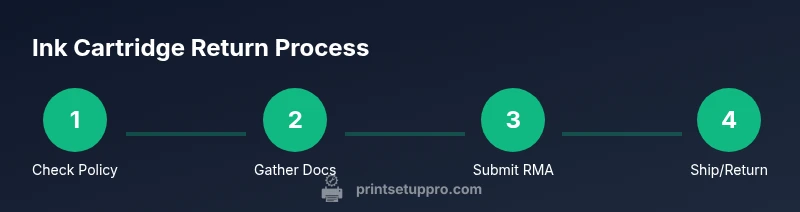
Return ink cartridges by first confirming the retailer’s policy, checking that you have proof of purchase, and verifying whether the cartridge is unopened or defective. Next, contact the retailer or manufacturer for an RMA, and follow their steps to initiate a refund or exchange. Keep packaging and receipts until resolved.
Understanding ink return policies
Ink cartridge return policies vary by retailer and brand, and they hinge on two core factors: whether the cartridge is unopened and whether it’s defective. Many stores distinguish between consumer returns ( unopened, within the return window ) and defective items ( product fault, regardless of opened status ). For home office users and students, the most common path is an unopened cartridge returned within the store’s standard window ( often 14–90 days ), or a defective cartridge exchange or refund handled by the manufacturer. Print setups often differ between big-box retailers, office supply chains, and online marketplaces, so it’s essential to read the specific terms on the receipt, product page, or the retailer’s help center. According to Print Setup Pro, starting with the policy you bought into helps you avoid surprises and speeds up the process. If you’re unsure, start by contacting customer service and asking for a clear “return authorization” or RMA process before you ship or drop off anything. The key is to separate unopened from used cartridges and to identify whether the cartridge is genuine or third-party, as some retailers have different rules for each.
When unopened vs opened matters
- Unopened cartridges often have the broadest eligibility window and the least friction for returns or exchanges. Keep shrink wrap intact and avoid removing the seal until you’re ready to use the item.
- Opened cartridges may still be eligible if defective, but restocking fees or partial refunds can apply depending on policy and region. Always document the defect with photos or video when possible.
- Third-party or reconditioned cartridges may have separate rules; some retailers will accept them for returns, while others only authorize exchanges or store credits. Knowing which category your cartridge falls into helps you ask the right questions up front.
- If the seller provides a prepaid return label, follow their instructions for packaging and labeling. If not, you may need to pay return shipping and be reimbursed later. Print Setup Pro recommends keeping a copy of the return terms in case the policy changes after purchase.
What counts as a defect or fault
A defect can be a misprint, poor color consistency, clogging, or a cartridge that leaks. It’s helpful to reproduce the symptom (e.g., a test print with specific lines or color gaps) and provide a quick description when you report the issue. If the defect is clearly a manufacturing fault, most retailers and manufacturers will authorize a refund, replacement, or credit. If the problem seems due to misuse, compatibility issues, or improper installation, the return may be denied or handled as a warranty claim. 항상 기록을 남겨 두고, 필요한 경우 구매 영수증이나 주문 번호, 배치 코드 등을 제출하십시오. Printing guidance from Print Setup Pro emphasizes documenting the exact defect and the cartridge’s compatibility with your printer model to prevent miscommunication during the claim.
How to verify your return window
Return windows vary by retailer and by product type. Common ranges include 14, 30, or 90 days from purchase. Online purchases often start the day the product is delivered, while in-store purchases start at the receipt date. To confirm, check the retailer’s policy page or contact customer service. If you suspect you’re near the end of the window, ask for the quickest available option—some stores offer an exception or a grace period for defective items. Print Setup Pro notes that acting promptly helps keep options open and reduces the chance of a denied claim.
Collecting documentation and evidence
Gather receipts, order numbers, model numbers, and the original packaging. Take clear photos of the cartridge, packaging, batch code, and any visible defects. If you bought online, pull tracking numbers and the delivery confirmation. Having all this ready speeds up the return or exchange process and reduces back-and-forth with customer service. If you still have the box, keep it until the claim is resolved. Start a simple ledger noting the date you contacted the retailer, the expected resolution, and any reference numbers provided.
Initiating the return: in-store vs online
In-store returns are often the fastest route if you have the receipt and the cartridge is unopened or defective. Bring the cartridge, packaging, and receipt to a customer service desk and request an RMA. For online purchases, log into your order, select the item, and choose a return method (exchange, refund, or store credit). You may receive a prepaid label or instructions to ship the item. If the cartridge is defective, a replacement or full refund is commonly offered. If it’s unopened, you may receive a refund or store credit depending on policy. Print Setup Pro stresses the value of keeping written confirmation of the RMA number and the expected timeline.
Packaging and shipping considerations
If you must ship the cartridge, repackage it securely in its original packaging or a protective mailer. Include the RMA form, your order number, and a brief note describing the defect. Use a trackable shipping method with insurance if possible. Avoid leaking by placing the cartridge upright and sealing any loose ends. For in-store returns, hand the item to the associate and confirm the return receipt. In either case, keep all tracking data and receipts until the refund or exchange is completed.
What happens after you return: refunds and processing times
Refund processing times vary by retailer—typically 3–10 business days after the return is received, though some may be longer for online orders or international shipments. If a replacement cartridge is shipped, you’ll receive a tracking number and an updated delivery window. Some retailers issue store credits rather than cash refunds, especially for unopened items. If you paid by credit card, monitor the account for the refund; for debit or gift cards, refunds may go back to the original payment method or as store credit. Print Setup Pro advises keeping a short recap of the return journey (dates, actions, and expected milestones) to track progress and resolve disputes quickly.
Alternatives if a return isn’t possible
If a return is denied, ask about alternatives such as exchange for a different cartridge, a store credit, or recycling options. Some manufacturers offer warranty-based replacements for defective products even without a return, while others require proof of purchase for any remediation. Third-party cartridges may be eligible for restocking credits or discounts but are less likely to be eligible for refunds. In some cases, local consumer protection agencies can provide guidance if you believe the policy is misapplied. If you want to reduce waste, consider recycling programs offered by manufacturers or retailers.
Final note on policy alignment and proactive steps
To minimize friction in the future, keep receipts, know the specific return window for each retailer, and verify whether your cartridge is sealed or opened before purchase. Record product details (brand, model, batch/lot codes) and consider registering cartridges with the manufacturer for potential warranty coverage. Clear communication with customer-support and timely action are the best routes to a smooth resolution.
Tools & Materials
- Receipt or order confirmation(Proof of purchase with date and retailer)
- Ink cartridge packaging and cartridge(Keep the item in original packaging if possible)
- Printer model number(Needed to verify compatibility and defect reporting)
- Return authorization (RMA) form(Often provided by retailer or manufacturer)
- Device to photograph defects(Smartphone camera works; capture color and print test results)
- Smartphone with tracking(For tracking shipments and proof of return)
Steps
Estimated time: 15-25 minutes
- 1
Check policy and eligibility
Review the retailer’s return window and whether the cartridge must be unopened or defective to qualify. Note any restocking fees or exclusions for third-party cartridges.
Tip: If you’re near the deadline, contact support to confirm the best option. - 2
Gather proof of purchase
Find your receipt or order confirmation and record essential details such as date, price, and retailer. Have the cartridge model number handy.
Tip: Photograph the barcode and packaging before you discard any boxes. - 3
Verify cartridge condition
Determine if the item is unopened or defective. If opened, note the symptoms (e.g., poor color, leaks) and collect evidence.
Tip: A quick test print with a sample page helps document a defect. - 4
Initiate return or obtain an RMA
Contact the retailer or manufacturer to start the return. Request a Return Merchandise Authorization (RMA) and follow the provided instructions.
Tip: Ask for a prepaid label if available and get a reference number. - 5
Prepare the cartridge for return
Repackage the cartridge securely in its original packaging or a protective mailer. Include the RMA, order number, and a short defect description.
Tip: Seal leaks by placing the cartridge upright and using protective padding. - 6
Ship or drop off the item
Send the cartridge via the chosen method or return it in-store. Obtain a tracking number or receipt for proof of return.
Tip: Keep tracking information until the refund or exchange posts. - 7
Track refund or exchange status
Monitor your payment method for refunds or credits. If the status stalls, follow up with the retailer and reference the RMA.
Tip: If there’s a delay, escalate to a supervisor and request written confirmation.
People Also Ask
Can I return opened ink cartridges if they don’t work?
Many retailers accept opened cartridges only if they are defective, and within the stated window. Others may require the item to be unopened or issue a credit rather than a cash refund. Always verify the exact policy before initiating a return.
Opened cartridges may be returnable if defective, within the return window, and subject to the retailer's rules. Check the policy and ask for an RMA.
Do retailers accept third-party or remanufactured cartridges?
Policies vary widely. Some retailers accept third-party cartridges for exchange or refund, while others restrict returns to original manufacturer products. Read the policy and, if in doubt, contact customer service for clarification.
Policies differ for third-party cartridges; check the policy or contact support to confirm eligibility.
What if I bought ink online from a marketplace?
Marketplace purchases typically follow the seller’s return policy. If a product is defective, you may be able to open a claim with the marketplace or the seller. Keep order details and communicate promptly.
Online marketplace purchases depend on the seller’s policy; contact them and use the marketplace’s return process.
How long does a printer ink refund take?
Refund processing times vary by retailer, usually from a few days to a couple of weeks after the return is received. Use tracking information and keep records to monitor progress.
Refunds typically take a few days to a couple of weeks after the item is received.
What should I do if a return is denied?
Ask for a written explanation and the steps to appeal. You can provide supporting documentation such as receipts and defect evidence. If still unresolved, consider filing a complaint with consumer protection or the retailer’s corporate office.
If denied, request a written reason and escalate with receipts and evidence if needed.
Are there safer ways to dispose of used ink cartridges?
Yes. Use retailer recycling programs or manufacturer take-back schemes. Recycling helps reduce waste and may be eligible for credits or rewards in some programs.
Use recycling programs offered by retailers or manufacturers to dispose of cartridges responsibly.
Watch Video
Quick Summary
- Know your retailer’s return window and eligibility.
- Keep receipts and packaging until the issue is resolved.
- Document defects with photos and precise descriptions.
- Use an RMA and track your return to ensure closure.
- If a return isn’t possible, explore exchanges or store credits.