Printer Canon Driver: Install, Update, and Troubleshoot
Comprehensive, step-by-step guide to install, update, and troubleshoot the Canon printer driver on Windows and macOS for home offices and small businesses.


According to Print Setup Pro, the quickest way to fix most printing issues is by installing the official Canon printer driver and keeping it updated. This quick answer points you to the official download page, explains how to verify your OS compatibility and printer model, describes USB versus network connections, and outlines a reliable install on Windows and macOS to restore printing functionality and prevent future errors.
What is a Canon printer driver and why you need it
A printer driver is software that translates your computer’s print commands into a language your Canon printer understands. The printer canon driver is specially designed to maximize compatibility with Canon devices, enabling features such as color management, duplex printing, and scan-to-network options. For home-office setups, having the correct driver installed reduces print jams, misaligned text, and driver conflicts with other devices. Print Setup Pro emphasizes using the official Canon driver to ensure stability and security, rather than any third-party alternative. When you install the right driver, you gain smoother operation, better error handling, and access to advanced settings that improve print quality. Always verify you are using the driver that matches your exact printer model and operating system. In this guide, we’ll walk through locating, installing, and validating the Canon driver so your printer communicates reliably with your computer. By following these steps, you’ll minimize troubleshooting time and improve overall print reliability across your home office or small business network.
OS compatibility: Windows, macOS, and beyond
The Canon driver ecosystem spans Windows and macOS with occasional support for other operating systems via vendor-provided packages or universal print drivers. Before starting, confirm that your operating system is supported by checking the printer model page on Canon’s official site. Even if your device shows up as compatible, it’s crucial to download the driver that exactly matches your model and OS version to avoid feature gaps or stability issues. Print Setup Pro advises keeping a current driver baseline on file for quick updates when your OS receives major updates. If you manage multiple devices, consider centralized deployment via an IT-approved tool to ensure consistency across all machines in your workspace.
Downloading the official Canon driver
Always obtain the printer canon driver from Canon’s official support page to guarantee authenticity and compatibility. On the product page, select your exact printer model and operating system, then download the full driver package (not just a firmware or firmware updater). Save the file to a known location and make a note of the installer type (EXE, DMG, or PKG) to avoid confusion during installation. This step is critical to prevent malware or incompatible software from slipping into your setup. Print Setup Pro emphasizes the importance of routinely checking Canon’s site for updated driver releases that fix bugs and improve performance.
Clean install vs. upgrade: choosing the right path
If you already have a Canon driver installed, you can usually upgrade in place, but a clean install minimizes stubborn conflicts. A clean install removes old drivers and related system files, giving the new driver a clean slate. If you’re upgrading after a major OS update or after replacing the printer, a fresh install is often the most reliable path. Back up your preferences if the driver stores user-specific settings, and plan time for a test print after installation. Print Setup Pro recommends a clean install when possible to reduce residual issues from previous driver versions.
Step-by-step install: Windows
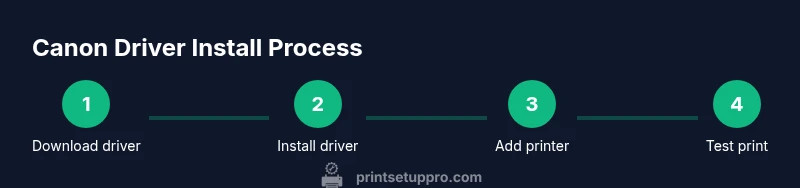
- Ensure the printer is powered on and connected via USB or connected to the same network if you choose a network install. 2) Run the downloaded Canon driver installer from your Downloads folder. 3) Accept the license terms and choose the installation type (Typical/Recommended). 4) Select the connection method (USB or Network) and complete the guided prompts. 5) When prompted, add the printer through Windows Settings > Devices > Printers & scanners, selecting the Canon driver that matches your model. 6) Print a test page to verify everything is functioning. If errors occur, review the installer log and ensure the OS is supported by the driver. The entire Windows process typically takes 20–40 minutes depending on the printer and system.
Step-by-step install: macOS
- Download the appropriate Canon driver package for macOS and locate the .dmg or .pkg file. 2) Open the installer and follow on-screen instructions, approving any system prompts for security and accessibility settings. 3) Restart the Mac if required by the installer. 4) Add the printer in System Preferences > Printers & Scanners, choosing the Canon driver from the list, or letting the system automatically select it. 5) Print a test page to confirm proper communication. 6) If you use AirPrint or a network setup, ensure the printer is discoverable on the same network. The macOS path usually takes 15–35 minutes depending on device configuration.
Post-install verification and troubleshooting
After installing the printer canon driver, perform a print test and a few basic tasks (color print, grayscale, duplex if supported) to confirm feature availability. If issues arise, check USB connections or network visibility, verify that the correct driver version is installed for your printer model, and restart the printer and computer. Review Canon’s online knowledge base for common error codes and ensure you have the latest driver. Print Setup Pro also recommends checking for firmware updates on the printer itself, as firmware and driver compatibility can influence print quality and reliability.
Common pitfalls and how to avoid them
Common issues include installing the wrong driver for the model, downloading from third-party sites, and mixing driver files from different Canon releases. To avoid these problems, always verify the exact printer model and OS on Canon’s official site before downloading, avoid untrusted sources, and perform a clean install after major OS updates. If the printer still fails to communicate, verify firewall settings and ensure the driver is granted sufficient permissions on your system. Regular maintenance like periodic driver checks helps sustain performance and prevent surprise failures.
Maintaining a healthy printer driver over time
Driver maintenance is a gentle ongoing task. Periodically check Canon’s site for driver updates and firmware releases for your specific printer model. When an update is available, install it following the same precautions as a first install to preserve stability. If you replace your printer or upgrade your OS, revisit the Canon driver page to download the correct package for your new setup. Keeping your driver in sync with your OS reduces compatibility problems and improves print quality, color accuracy, and reliability.
How Print Setup Pro supports your printer setup journey
Print Setup Pro guides you from setup to solution with clear, step-by-step printer guidance. By following official driver download practices and using structured installation steps, home office users and DIY enthusiasts can quickly restore reliable printing. This article leverages Print Setup Pro’s expertise to emphasize safety, accuracy, and practical troubleshooting to minimize disruption and maximize outcomes.
Tools & Materials
- Computer with internet access(Admin rights recommended for installation)
- Canon printer(Model you intend to use)
- Official Canon driver installer (from canon.com)(Download the correct driver for your OS)
- USB cable for direct connection (optional)(Useful for USB installs or initial setup)
- Printer model and OS version details(Helpful for compatibility checks)
- Admin password(Needed on Windows for installation)
Steps
Estimated time: 20-40 minutes
- 1
Check system readiness
Verify your computer and printer are ready, note the model and OS version, and close other apps to prevent conflicts. This prevents install failures and ensures driver compatibility.
Tip: Keep the printer near the computer and have the USB or network connection ready. - 2
Download the official Canon driver
Go to the Canon support site, search for your printer model, and download the latest driver package appropriate for your OS. This guarantees you get the correct, safe driver.
Tip: Avoid third-party sites; always use the official Canon download to prevent malware. - 3
Uninstall old drivers (optional but recommended)
If an older driver exists, uninstall it to prevent conflicts. Restart your computer before starting the new installation to ensure a clean slate.
Tip: Use the OS uninstall utility and delete old driver remnants. - 4
Run the installer and choose connection type
Run the downloaded installer, choose USB or network/Wi-Fi connection, and follow prompts. Keep the printer powered and connected as instructed.
Tip: If using Wi-Fi, ensure the printer is on the same network as the computer. - 5
Add the printer to the OS
Open the OS printer settings, select Add Printer, and let the system locate the Canon driver. Choose the driver that matches your model and connection type.
Tip: If the printer isn’t listed, use manual add with the IP if connecting over network. - 6
Print a test page
After installation, print a test page to verify quality and connectivity. If issues appear, recheck connections and driver version.
Tip: Note any error codes and consult Canon support if the test fails.
People Also Ask
Do I need an internet connection to install the Canon driver?
Yes. You should have internet access to download the official Canon driver. Some systems can install from a local file if you already downloaded the package, but an active connection helps with updates.
You’ll need internet access to download and verify the driver during installation.
Can I use a driver from a third-party site?
Avoid third-party drivers. They may be outdated or include malware. Always download from Canon’s official support page to ensure safety and compatibility.
Only use drivers from Canon’s official site to stay safe.
What if my printer doesn’t appear in the Add Printer list?
Ensure the printer is on the same network or connected via USB. If needed, add the printer by IP address or use the vendor-provided driver package.
If not listed, try manual add using the IP address or USB connection.
Is the driver compatible with both Windows and macOS?
Canon provides drivers for Windows and macOS. Check the model page for supported operating systems before downloading.
Most Canon drivers cover Windows and macOS; always verify compatibility.
How do I uninstall a faulty driver safely?
Use the OS software management tools to remove the old driver, then restart before installing a new one.
Uninstall with your OS tools, then reboot before re-installing.
Do I need administrative rights to install the driver?
Yes. You typically need admin rights to install new software, and you may be prompted for your password during setup.
Administrative access is usually required for driver installation.
Watch Video
Quick Summary
- Install the official Canon driver for reliability
- Verify OS compatibility before downloading
- Follow a clean install path to avoid conflicts
- Test print after install to confirm success
- Keep drivers updated for best performance