Repair Printer Near Me: Find Local Help & Quick Fix
Need fast printer repair near you? Learn how to locate trusted local service providers, compare quotes, and diagnose common issues—so you can get back to work quickly. This guide covers finding nearby pros, prepping for visits, and safe maintenance tips for home offices and small businesses.


Find trusted local printer repair near me and start with safe, practical steps. This quick guide shows how to locate nearby technicians, verify credentials, request quotes, and prepare questions for the visit, so you can minimize downtime and protect sensitive data. Local experts offer faster diagnostics, on-site options, and clearer warranty paths.
Why local printer repair matters
Local printer repair near me offers several advantages over shipping devices to distant service centers. Speed, convenience, and the option for on-site visits help minimize downtime—crucial for home offices, students, and small businesses that rely on print output daily. According to Print Setup Pro, working with nearby technicians reduces wait times, improves communication, and often simplifies warranty or replacement decisions. A nearby shop can also provide hands-on demonstrations for basic maintenance and ensure sensitive print data remains secure within your locality.
Quick triage you can do before calling a pro
Before you summon help, run a quick triage to narrow down the issue. Check power and USB/ethernet cables, confirm the printer is on and connected, and review any error codes on the display. Clear paper jams, inspect for toner/ink clogs, and run a basic self-test from the printer menu. If you recently updated firmware, consider rechecking compatibility. Keep a note of the exact symptoms and any recent changes; this speeds up diagnostics and avoids unnecessary visits.
How to find a repair printer near me
Start with a targeted search using terms like “printer repair near me,” then use map listings and manufacturer-certified service directories to compare options. Verify credentials, ask about service models (onsite vs drop-off), and request a written estimate before any work. Read recent customer reviews focusing on reliability and data privacy. Confirm whether they service your printer model and brand, and ask about whether a diagnostic fee is credited toward the repair if you proceed.
What to expect during a repair visit
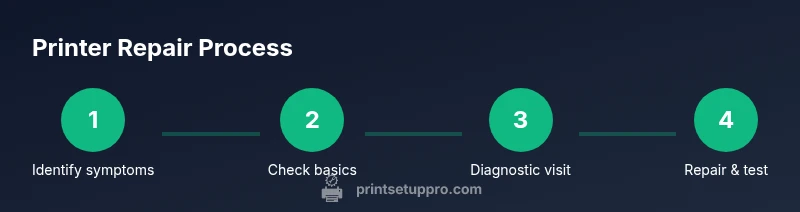
A typical visit begins with a diagnostic check to confirm the root cause, followed by a scope of work and an estimated cost. If parts are required, the technician will discuss availability and lead time, plus any warranty on components. Expect questions about your printer’s usage, network setup, and any confidential data stored on the device. Reputable shops will provide a written estimate and a timeline for completion before starting.
At-home maintenance to avoid future issues
Prevention is cheaper than cure. Regular cleaning of paper paths, rollers, and interior vents helps prevent jams. Update firmware periodically, use high-quality paper and genuine cartridges, and protect the printer from dust and humidity. Simple steps like keeping cables tidy and avoiding overfilling trays can extend device life. A quick monthly self-test keeps you aware of emerging problems before they become urgent.
Cost considerations and budgeting
Repair costs vary by issue, model, and parts availability. Diagnostic fees, travel charges, and labor can add up, while replacement parts for older models may be scarce. In many cases, a basic repair runs a few dozen to a couple of hundred dollars, excluding parts. For budgeting, ask for a written estimate with labor, parts, and any applicable warranty, and compare it against the cost of a comparable replacement printer.
When to replace rather than repair
If the printer is very old, repair parts are hard to obtain, or the estimated repair exceeds a practical percentage of replacement cost, replacement often makes more sense. Energy efficiency, print quality upgrades, and compatibility with current devices can justify buying a new model. In such cases, a local shop can advise on options and even assist with disposal and setup.
Authority Sources
For general safety and consumer guidance, consult reputable resources from government and university-affiliated organizations:
- OSHA safety information: https://www.osha.gov
- FTC guidance on choosing repair services: https://www.ftc.gov
- NIST computer and device safety guidelines: https://www.nist.gov
The Print Setup Pro edge
Print Setup Pro recommends starting with a local, reputable technician for most routine printer repairs. They emphasize upfront quotes, clear warranty terms, and a plan to protect data privacy during service. By prioritizing nearby experts, you minimize downtime and simplify follow-up support, helping home offices and small operations stay productive.
Tools & Materials
- Phillips and flat-head screwdriver set(For removing panels and accessing internal components)
- Microfiber cloth or lint-free wipe(For cleaning rollers and glass surfaces)
- Isopropyl alcohol (70%)(Use with cloth for cleaning contacts, never pour)
- Digital multimeter (optional)(For testing power supplies and fuses if you’re comfortable)
- Replacement parts (as needed)(Only after diagnostic confirmation; avoid guessing)
- Owner’s manual or model-specific guide(Having model details speeds diagnostics)
Steps
Estimated time: 60-120 minutes
- 1
Define the problem and collect symptoms
Document the exact issue, when it occurs, error codes, and recent changes to firmware or software. This makes the repair visit efficient and helps the tech pinpoint root causes quickly.
Tip: Take clear photos or videos of errors to share with the technician. - 2
Perform basic checks and reset
Power cycle the printer, restart connected devices, and recheck cable connections. Run a self-test and print a test page to confirm persistent symptoms.
Tip: Reset network settings only if you’re comfortable, then reconfigure to preserve connectivity. - 3
Assess jams and consumables
Remove any paper jams using manufacturer guidance. Check rollers, fusers, and cartridges for wear or improper seating; replace with genuine consumables if needed.
Tip: Never force paper through a misaligned path; this can worsen damage. - 4
Get quotes and confirm service scope
Contact 2–3 local shops for estimates and service models. Confirm whether diagnostic fees apply to the repair and ask about warranties on labor and parts.
Tip: Ask for written estimates before any work begins. - 5
Schedule and prepare for visit
Choose a time that minimizes disruption, back up any contained data if applicable, and prepare the printer location for safe access by the technician.
Tip: Clear the area to allow the technician space to work and test connections. - 6
Review the repair plan and finalize
Review the diagnostic findings and parts needed, then approve the repair plan and expected turnaround. If a repair isn’t cost-effective, explore replacement options.
Tip: Keep a copy of the invoice and warranty terms for future reference.
People Also Ask
How do I find a reliable printer repair near me?
Start with manufacturer-certified repair centers or trusted local shops. Check ratings, ask about warranties, and request a written estimate before any work. Compare at least two options to ensure fair pricing.
To find a reliable printer repair near you, check manufacturer-certified shops, read reviews, and request a written estimate before any work.
What is a typical diagnostic fee for printer repair?
Diagnostic fees vary by shop and location but are generally charged to cover initial inspection. Ask whether the diagnostic fee applies toward the final repair if you proceed.
Most shops charge a diagnostic fee for the initial inspection; ask if it applies to the final repair if you proceed.
How do I decide between repairing vs replacing a printer?
Consider printer age, availability of replacement parts, and total repair cost relative to a new unit. If parts are scarce or the price is high, replacement may offer better reliability and efficiency.
If your printer is old or parts are scarce, replacing it may be more reliable and cost-effective than repairing.
What questions should I ask a repair technician?
Ask about diagnosis steps, expected turnaround, warranty terms, and whether labor or parts are covered by the warranty. Also confirm data privacy measures during service.
Ask for diagnosis steps, turnaround time, warranty terms, and data privacy measures before work starts.
How long does printer repair typically take?
Repair duration varies by issue and parts availability but spans from same-day diagnostics to a few days for parts. The technician should provide a timeline before beginning.
Most repairs take a few hours to a couple of days depending on parts availability; expect a timeline before work starts.
Can I perform basic printer maintenance myself?
Yes, with caution. Regular cleaning, firmware updates, and using genuine consumables can prevent many common issues. Avoid opening high-voltage areas or attempting complex repairs.
Some basic maintenance you can do yourself includes cleaning and firmware updates, but avoid risky internal repairs.
Watch Video
Quick Summary
- Local repair saves time and data security.
- Do quick triage before calling a pro.
- Get written quotes and compare warranties.
- Ask about on-site vs drop-off service.
- Evaluate replacement if repair costs are high.