How to Protect Printer from Hackers: A Practical Guide
Learn practical steps to secure your printer from hackers, covering firmware updates, password hygiene, network segmentation, encrypted print jobs, and ongoing monitoring for home and small office setups.


You will learn practical, actionable steps to protect your printer from hackers by strengthening authentication, isolating the printer on a secure network, and keeping firmware up to date. The key requirements are a network-enabled printer, updated firmware, strong admin credentials, and a segmented home or small‑business network.
Understanding printer security basics
Printers are often overlooked network devices that sit between your devices and your data. When a printer is connected to a home or small office network, it can be scanned, attacked, or used as a stepping stone to access other devices. The goal of this guide is to help you protect printer from hackers by applying a practical, layered approach. Basic risks include leaving default admin passwords, enabling remote management, or exposing the printer’s web interface to the internet. Even older models with outdated firmware can harbor flaws that newer patches fix. According to Print Setup Pro, printers increasingly serve as persistent access points in small networks, especially when they share a Wi‑Fi network or connect to cloud print services. By starting with simple, repeatable changes—changing defaults, updating firmware, and limiting network exposure—you can dramatically reduce the attack surface. Treat printers as part of your security posture, not as a separate, neglected device. This section sets the scene for practical, doable steps you can implement over a weekend.
Network hardening: segmentation and access control
A core strategy is to isolate the printer from sensitive devices and data. Place the printer on a dedicated network segment or VLAN and restrict which devices can reach its management interface. Disable UPnP and any automatic discovery features that reveal the printer to the wider network. If your router supports it, create a firewall rule that blocks inbound access to the printer’s admin ports from the internet, while permitting necessary printing traffic. Use a stable IP address (static or DHCP reservation) so you can apply consistent rules. In small offices, a guest network for visitors helps keep IoT-like devices off the main network, reducing risk. Regularly review which devices are allowed to print and remove those that are no longer in use. This approach reduces exposure and makes monitoring easier since you know what traffic is legitimate.
Authentication and user management best practices
Change any default admin password immediately; choose a long, unique password or passphrase. If the printer supports two‑factor authentication, enable it; if not, rely on a strong password and careful credential management. Disable guest accounts or limit them, and audit who has admin access. Where possible, use role‑based access to ensure users only perform tasks they need. Maintain a formal list of admins and contractors and rotate credentials on a schedule. For most home setups, a strong password and regular reviews provide meaningful protection even without enterprise identity services.
Firmware updates and vulnerability monitoring
Firmware updates are essential to patch security flaws attackers may exploit. Check the vendor’s site or the printer’s built‑in update feature regularly, and enable updates if you trust the source. Always use official firmware and verify the update integrity when the printer supports signatures. Remove outdated devices from the network if they cannot be updated. Subscribe to security advisories from the vendor and industry sources to stay informed about newly discovered issues. If you keep a small offline archive of firmware versions, you can roll back safely in case an update causes issues—only for devices you actively manage.
Data in transit and at rest: securing print jobs
Print data travels across the network; protecting it reduces risk of leakage. Use TLS/HTTPS for the admin interface and enable encrypted printing if available. Disable insecure protocols such as Telnet, FTP, and legacy SMB on the printer. If the device supports encryption for stored print jobs, enable it to prevent leaked copies from memory. Review cloud printing features and permissions; only allow cloud printing if you truly need it. After large print runs, clear the printer’s memory to prevent residual data from being retrieved. Understanding where each print job goes helps you prevent data leakage and privacy breaches.
Secure configuration steps you can apply today
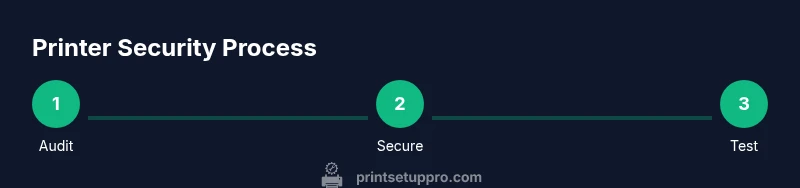
This section provides concrete actions you can perform this weekend. 1) Connect to the printer via a wired link to ensure a stable admin session; 2) Change the admin password to a strong passphrase; 3) Disable remote management and UPnP; 4) Enable automatic firmware updates or set a regular manual check; 5) Restrict access with firewall rules or MAC filtering; 6) Enable TLS/HTTPS for the admin interface and disable all insecure protocols; 7) Turn on audit logging and set alerts for unusual activity; 8) Place the printer on a dedicated network segment; 9) Test printing from an approved device and verify there is no exposure to the internet. Implementing these steps creates a layered shield that blocks most opportunistic attacks. Document your settings to reproduce them on future devices.
Remote printing considerations and mobile devices
Many printers offer mobile printing, cloud printing, and remote access features. If you enable these, tighten controls: authorize only trusted apps, require device authentication, and keep cloud credentials secure. Consider turning off cloud printing when not needed or restricting it to a trusted network via VPN. Ensure your router firmware is up to date and you use a strong Wi‑Fi password (prefer WPA3). When using mobile apps, pick reputable vendors and avoid exposing the printer to the public internet. Regularly review printer settings across all devices to prevent forgotten configurations.
Physical security, logging and privacy reminders
Physical access to a printer can enable tampering with memory or USB interfaces. Disable USB printing if not required and place the unit in a secure location. Enable available logging and set sensible retention policies to protect privacy while allowing audits. Periodic checks help catch misconfigurations, such as stray open ports or unapproved print queues. Finally, document security settings and review them quarterly. This habit keeps security aligned with aging devices and new models.
Tools & Materials
- Computer or mobile device with browser access to printer admin panel(Used to login and adjust settings securely)
- Latest firmware from vendor or robust internet connection for updates(Check for model-specific updates and validate authenticity)
- Strong admin password or passphrase(Aim for 12+ characters with a mix of letters, numbers, and symbols)
- Managed network equipment (router/firewall)(Supports segmentation, port filtering, and UPnP control)
- VPN or isolated network segment (optional but recommended)(Optional but increases protection by isolating the printer)
- Documentation of security settings(Keep a changelog for audits and future replacements)
Steps
Estimated time: 60-90 minutes
- 1
Login securely and change admin password
Connect to the printer via a wired connection if possible, then access the admin panel. Change the default admin password to a strong, unique passphrase. Do not reuse passwords from other devices. This first step blocks the most common attack vector: compromised defaults.
Tip: Use a passphrase of at least 16 characters; consider a password manager for storage. - 2
Disable remote management and UPnP
In the network settings, turn off remote management and disable UPnP to prevent outside control or automatic exposure. This reduces the chance of attackers gaining control from the internet or misconfigured routers. Ensure only printing traffic can reach the device.
Tip: If you must allow remote access, use a VPN instead of exposing the admin interface publicly. - 3
Update firmware to the latest version
Check for firmware updates from the official vendor and apply them. Updates fix known vulnerabilities and improve overall security. If your device supports auto‑update, enable it after verifying the source integrity.
Tip: Verify the update from the vendor site and avoid unofficial firmware. - 4
Restrict network access to the printer
Assign a dedicated VLAN or firewall rules that limit which devices can connect to the printer’s management ports. Use static IP or DHCP reservation for consistency. Disable unnecessary protocols (e.g., Telnet, FTP).
Tip: Document the allowed devices list and review quarterly. - 5
Enable encrypted printing and TLS for the admin panel
Enable TLS/HTTPS on the admin interface; disable insecure protocols. If available, enable encrypted printing to protect job data in transit. Ensure cloud printing permissions are tightly controlled or disabled when not needed.
Tip: Test the secure connection with a browser and a print job from a trusted device. - 6
Implement logging and monitoring
Turn on audit logging to capture access attempts and configuration changes. Set up alerts for unusual activity or failed logins. Regularly review logs as part of routine maintenance.
Tip: Schedule a monthly review reminder for logs. - 7
Prepare for future devices with a maintenance plan
Keep a simple, repeatable checklist for new printers: password, firmware, network rules, and logging. Maintain a vendor contact list for security advisories. This makes scaling security easier as you replace devices.
Tip: Create a standard operating procedure for new devices. - 8
Test and verify security post‑check
From an approved device, run a quick test: confirm ports are closed, admin interface is TLS only, and no unexpected services are visible. If you have external access, validate there’s no exposure from outside your network.
Tip: If any test fails, revisit the related settings until the test passes.
People Also Ask
What is the biggest risk to printers for hackers?
The largest risk is exposing the printer’s management interface to the internet or using default credentials. Attackers can gain control, extract data, or pivot to other devices on the network.
The main risk is weak or default credentials and remote access exposure that lets attackers control the printer.
Do I need to update firmware regularly?
Yes. Regular firmware updates fix known vulnerabilities and improve security features. Enable automatic updates if you trust the vendor, and verify authenticity before applying any firmware.
Absolutely—keep firmware current to close security gaps.
Can I secure a printer on a home network without a business-grade firewall?
Yes. Use network segmentation (a separate VLAN or guest network for the printer), disable unused features, and ensure the admin interface is not exposed. A consumer router with good firewall rules can provide strong protection.
You can still secure a home printer with careful network segmentation and updated software.
Is it safe to print over Wi‑Fi?
Printing over Wi‑Fi is safe if you use a secure network (WPA3 or WPA2 with strong password), enable encrypted printing, and disable unnecessary remote features. Avoid exposing the printer to public networks.
Wi‑Fi printing is fine when the network is secured and the printer is configured properly.
Should I disable cloud printing features?
If you don’t need cloud printing, disable it to reduce exposure. If you rely on cloud printing, limit permissions, keep credentials secure, and monitor cloud activity.
Disable cloud features unless you need them, then control access tightly.
Watch Video
Quick Summary
- Secure admin access with a strong password
- Isolate printers on a dedicated network
- Keep firmware updated and monitored
- Disable unnecessary services and remote access
- Enable encrypted printing and TLS for admin interfaces