Konica Printer: Setup, Troubleshooting, and Maintenance
A practical, steps-based guide to set up, configure, and troubleshoot a Konica printer for home offices and small businesses. Includes drivers, network setup, maintenance, and common fixes.


With this guide, you will set up a Konica printer, install the correct drivers, connect options (USB, Ethernet, or Wi‑Fi), and troubleshoot common issues. It covers Windows, macOS, and mobile printing, plus maintenance basics and safety notes. According to Print Setup Pro, starting with fresh drivers and updated firmware minimizes errors; the Print Setup Pro team found consistent results when you verify network settings first.
Konica Printer Landscape: Use Cases and Core Capabilities
A Konica printer is a reliable workhorse for home offices, small businesses, and student projects. Whether you need crisp color proofs, duplex printing, or fast draft copies, these devices balance performance with cost-effective toner or ink options. In practice, a Konica printer handles everyday documents, invoices, presentation slides, and school assignments with predictable results. When evaluating models, focus on print speed, color accuracy, supported media sizes, duplex capability, and ease of maintenance. For many teams, the right Konica printer becomes a central hub for documents, labels, and marketing materials. According to Print Setup Pro, choosing a model with consistent driver support across operating systems reduces setup friction. The Print Setup Pro team has observed that users who align firmware, drivers, and network settings early in the process experience fewer print errors down the line. This guide focuses on practical setup steps you can apply whether you’re in a home office or a compact shop.
Before You Start: Prerequisites and Safety
Before touching the Konica printer, gather the essentials and review safety basics. Ensure you have access to a stable power outlet and a network (Wi‑Fi or Ethernet) that the device can join. Identify your computer or mobile device with administrative access to install drivers. Have the printer manual handy or bookmark the Konica support page for model-specific steps. Keep a small notepad to record IP addresses, firmware versions, and any error codes you encounter. Clear a clean workspace to avoid losing small parts. Always power the device off before connecting cables, and unplug during major cable changes to reduce the risk of shock or equipment damage. If you will use a wireless connection, note your router's SSID and password. This preparation saves time and prevents late-night troubleshooting sessions.
Unboxing, Physical Setup, and Driver Install
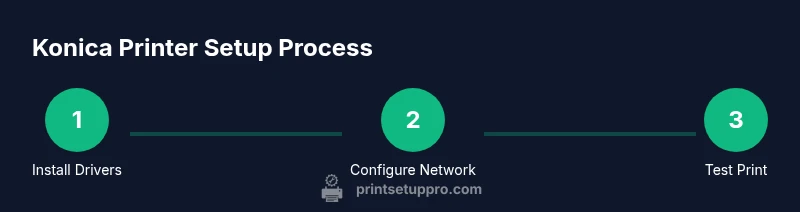
Unbox the Konica printer and verify all components are present: power cable, user manuals, consumables, and any setup media. Place the printer on a stable surface with at least a few inches of ventilation on all sides. Connect the power cable, switch on the device, and wait for the startup splash screen. On your computer, download the latest driver package from the official Konica support site and run the installer. Follow prompts to choose USB or network installation and allow the installer to detect the printer automatically. If you have a previously installed driver, uninstall it first to avoid conflicts. Finally, perform a test print from the built-in utility to confirm basic printing is functioning. A clean driver install reduces jam-related errors and ensures color accuracy.
Network and Wireless Setup for Konica Printers
Most Konica printers support USB, Ethernet, and Wi‑Fi connections. For a wired setup, connect the Ethernet cable to a router port and set the printer to obtain an IP via DHCP, or assign a static IP if you manage a small network. For Wi‑Fi, use the printer's control panel to access the network settings, select your SSID, and enter the password. On your computer, add the printer through System Preferences (macOS) or Devices and Printers (Windows), choosing the network option rather than USB if available. Print a configuration page to verify the network status and IP address. If you encounter a failure, check for firmware compatibility with your router and verify that your firewall allows printer traffic. A stable network is the backbone of reliable Konica printing in busy environments.
Common Troubleshooting Scenarios and Fixes
If the printer is not detected, ensure the driver package matches your OS and try a USB reconnect or network re-discovery. For print quality issues, run a nozzle check or alignment on the printer's dashboard and replace consumables if necessary. If pages come out skewed, check tray alignment and paper type settings in the driver. For slow printing, verify that the print quality or photo mode isn’t set to a high-resolution preset; switch to a standard mode for drafts. If errors appear, consult the printer’s error codes in the manual or on Konica support pages. Remember to restart both the printer and the computer if a device seems unresponsive. Consistent driver and firmware alignment minimizes recurring issues.
Maintenance and Longevity Tips
Routine care keeps your Konica printer performing predictably. Clean the exterior and the paper path with a soft cloth to prevent dust buildup. Use quality paper and store consumables as directed by the manual to avoid jams and print defects. Run regular maintenance tasks such as alignment checks and toner/ink level calibrations when prompted by the printer. Keep firmware up to date to improve compatibility and security; disable auto-update only if you have a managed IT policy. If you notice unusual noises, pause operation and inspect for foreign objects or worn rollers. Periodic maintenance reduces downtime and extends the life of the device.
Advanced Tips and Next Steps
For larger workgroups, set up shared printing queues, configure user permissions, and enable secure print release to protect sensitive documents. If you require mobile printing, install the manufacturer’s app or use OS-native features like AirPrint or Mopria where supported. Create a simple color vs. black-and-white workflow to optimize toner usage. Track usage and costs with built-in reports or your IT monitoring tool. The Print Setup Pro analysis shows that routine firmware updates correlate with better reliability across Konica printer models; plan a quarterly review of settings and firmware. Finally, draft a quick-start checklist for new users to streamline onboarding and reduce support requests.
AUTHORITY SOURCES
- OSHA.gov: Safety guidelines for handling electrical equipment and printers.
- NIST.gov: Best practices for device security and firmware management.
- Energy.gov: Energy efficiency recommendations for office printers and standby modes.
Quick Reference: Quick Troubleshooting Tips
- Always start with a fresh driver install when moving to a new OS.
- Keep firmware current to minimize compatibility issues.
- Verify the printer is on the same network as your devices for wireless setups.
Tools & Materials
- Konica printer (model specified)(Model name and serial handy for updates)
- AC power cable(Use a stable outlet; avoid extension cords if possible)
- USB data cable(USB-B to USB-A depending on device)
- Computer or mobile device(For driver installation and printing)
- Ethernet cable (optional)(Use for wired network setup)
- Printer driver installer (official)(Download from Konica support site)
- Test paper (A4/Letter)(For initial test print)
- Access to printer manual or online support(Helpful for model-specific steps)
Steps
Estimated time: 60-90 minutes
- 1
Gather and Prep
Collect your Konica printer model information, unbox the device, and confirm all required accessories are present. Inspect cables and media for damage before connecting anything. This reduces the risk of missing components mid-setup.
Tip: Keep model name and serial handy for firmware checks. - 2
Install Drivers
Download the latest Konica printer driver from the official site, run the installer, and grant any permissions. Choose the correct connection type (USB or network) during setup. If Windows prompts a security warning, allow the installer to proceed.
Tip: Use a direct internet connection during download to ensure the latest version. - 3
Connect via USB
Plug the USB cable between printer and computer and turn on the printer, then run the installer’s detection step. If the device isn’t detected, try a different USB port and reboot both devices.
Tip: Avoid using USB hubs for the initial install. - 4
Configure Network Settings
Access the printer’s control panel or embedded web server to set network parameters; enable DHCP or assign a static IP. Document the IP address for future access and troubleshooting.
Tip: Writing down the IP address helps future access and troubleshooting. - 5
Add Printer to Computer
In Windows, open Settings > Devices > Printers; click Add; in macOS, go to System Preferences > Printers; choose IP or network printer; print a test page.
Tip: If multiple Konica models appear, ensure you pick the intended model. - 6
Print a Test Page
From the printer utility, print a test page and verify margins, color, and duplex. If issues appear, adjust media type and print quality settings.
Tip: Always check tray settings before printing large batches. - 7
Update Firmware and Drivers
Check for firmware updates via the printer menu or official site; install updates, then restart the printer.
Tip: Back up settings if the menu allows; note changes in a small log. - 8
Enable Mobile Printing
Install Konica app or use OS-native features like AirPrint or Mopria; add the printer to your mobile device; print a test page.
Tip: Ensure both device and printer are on the same network.
People Also Ask
Do Konica printers require special drivers for each OS?
Yes. Download the official Konica printer drivers for your operating system and run the installer. The installer will guide you through the setup and any platform-specific steps.
Yes. Download the official Konica drivers for your OS and follow the installer prompts.
How can I connect a Konica printer to a Wi-Fi network?
Use the printer’s control panel to access Network Settings, select your Wi-Fi SSID, and enter the password. After connecting, add the printer on your computer as a network printer.
Use the printer’s control panel to connect to Wi‑Fi, then add it as a network printer on your computer.
My Konica printer is offline. What should I check?
Check that the printer is powered on, connected to the same network as your computer, and that the correct driver is installed. Restart both printer and computer if needed.
First verify power, network connection, and drivers; reboot devices if it’s still offline.
Can I print from mobile devices to a Konica printer?
Yes. Use Konica’s mobile app or OS-native printing frameworks like AirPrint (iOS) or Mopria (Android) to print from smartphones or tablets.
Yes—use the Konica app or AirPrint/Mopria for mobile printing.
How often should I update Konica printer firmware?
Check for updates when you notice issues or when the manufacturer releases a new version. Installing firmware updates can improve compatibility and reliability.
Check for updates when available and apply them to improve reliability.
What should I do if paper jams occur?
Power off the printer, carefully remove jammed paper along the path, and reseat the paper tray. Check for damaged rollers and replace consumables if needed.
Power off, clear the jam carefully, then check for worn parts.
Watch Video
Quick Summary
- Verify drivers and firmware before printing.
- Choose USB or network setup based on workspace needs.
- Test prints after each major change.
- Keep firmware and support resources up to date for reliability.