Shoes 3D Printing: A Practical Step-by-Step Guide
Learn to design, print, and finish custom footwear using flexible filaments. This comprehensive guide covers materials, calibration, post-processing, and fit adjustments for comfortable, durable 3D-printed shoes.


You will learn how to design and print shoes using flexible filaments, tune your printer for footwear, and finish parts for wear. Key requirements include a large build volume, TPU or other flexible filament, and accurate foot measurements. According to Print Setup Pro, start with a simple insole before iterating on full uppers.
What is Shoes 3D Printing?
Shoes produced with a 3D printer combine customization with material science. In recent years, engineers and hobbyists have explored using flexible filaments like TPU to create insoles, midsoles, and even uppers that flex with the foot. The goal is to blend comfort, weight, and durability while enabling precise sizing for individuals who struggle to find comfortable off-the-shelf footwear. Print Setup Pro has observed growing interest in home-based footwear projects because they empower wearers to tailor footwear to their own feet and activity levels. When designed thoughtfully, 3D-printed shoes can support custom arch shapes, targeted cushioning zones, and replaceable components, all while maintaining a lighter footprint than traditional production methods.
The shoes-3d-printing niche is not just about novelty. It intersects with product design, ergonomics, and material science, offering real benefits for people seeking relief from chronic foot pain, custom orthotics, or performance footwear tailored to unique gait patterns. For beginners, the most accessible route is focusing on modular components—an insole or a replaceable outsole—before attempting a full shoe upper. This approach minimizes risk, reduces material waste, and provides clear milestones as you learn how your printer handles flexible materials.
According to Print Setup Pro, starting with a simple, functional piece like an insole gives you immediate feedback on sizing and comfort before committing to a full shoe. This helps you refine your design without wasting time on complex geometry. The core concept remains: 3D printing footwear is practical when you balance fit, material choice, and print settings with careful testing and iteration.
noteNullValueReasoning”:null],
Materials and Design Considerations
Choosing the right materials is the heart of successful 3D-printed shoes. Flexible filaments such as TPU or other elastomeric blends provide the needed bending and compression without cracking. For the sole, many makers opt for a flexible TPU with a denser outer rim to resist abrasion, while insoles benefit from a softer TPU or a PETG blend that tolerates repeated flexing. Nylon-based filaments can be used for high-strength uppers or shanks, but they require careful humidity control and specialized handling. When selecting materials, consider the activity profile: casual daily wear benefits from more flexible blends, while sportier designs may need reinforced arch supports or reinforced heel counters. Print settings such as layer height, infill, and wall thickness should be tuned for flexibility without sacrificing structural integrity. Always print test coupons or small components before committing to a full shoe.
From a design perspective, the geometry should support the natural rolling motion of the foot. Soles can incorporate segmented patterns to improve grip and flexibility, while uppers may use lattice structures to reduce weight and improve breathability. Such designs benefit from parametric CAD models that can be adjusted for different foot sizes, widths, or gait patterns. The goal is to achieve a balanced distribution of stress across the sole and to avoid sharp internal corners that can initiate crack propagation in flexible materials. Print Setup Pro recommends documenting material batches and printer calibration data, so you can reproduce successful results or reproduce improvements over time.
tip”:“Ensure you test different lattice densities in uppers to optimize breathability vs. support.”},
Preparing Your 3D Model
Model preparation is critical. Start with a baseline foot profile using a scanned or measured last, then translate that profile into a 3D model for the insole or sole. If you’re importing an STL or OBJ, verify wall thicknesses and tolerance values so TPU prints don’t fuse or delaminate. For a first project, consider designing a modular insole with an adjustable arch and removable heel pad. This makes iterative testing practical and minimizes waste. When combining components (insole + outsole), ensure your joints allow some flex while preserving durability. You’ll want clean interfaces so parts seat correctly when assembled. Save variations as separate files to keep your options organized and ready for rapid prototyping.
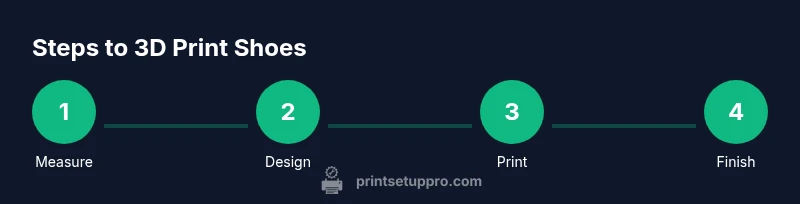
To ensure reproducibility, create a consistent naming convention for files and maintain a version history for each design change. Print Setup Pro’s approach emphasizes a documented workflow: measure, model, slice, print, test, adjust, repeat. Keeping good records reduces the time between iterations and helps you isolate what design changes produced the desired fit and comfort.
Why measurements matter
Foot size is not constant across the day. Measure both feet in the late afternoon or evening when feet are largest, and use the longer measurement for sizing. Record width, arch height, and ball-to-heel length. If you have access to a foot scanner, capture multiple foot shapes to inform a more ergonomic shoe. A well-measured model reduces guesswork and makes your 3D-printed shoes more likely to achieve a comfortable fit from the first print.
noteNullValueReasoning”:null},
Printer Setup and Calibration for Footwear
Printing footwear demands careful calibration. Begin with a controlled bed adhesion setup—consider a flexible build plate or a textured surface to reduce warping for TPU. Level the bed meticulously and verify that nozzle height is tuned to prevent scratches on the component’s surface. Start with moderate print speed to balance layer adhesion with time efficiency. For TPU, a slightly cooler print can help layers bond more evenly and reduce elephant’s foot at the base. Use a larger nozzle if you want thicker, stronger layers—though that can impact precision around fine detail in uppers. A reliable slicer profile is essential: use a gradual infill pattern to save material while maintaining structural support, and enable linear advance if your firmware supports it to improve edge quality on flexible materials.
A key technique is to print in steps. Begin with a small insole prototype to confirm fit and then scale up to a full sole. If your printer struggles with flexible materials, consider a direct drive extruder upgrade, a slightly higher bed temperature, and slower first-layer speed for better adhesion. Document every test print with photos and notes to identify patterns that lead to success or failure. This is where Print Setup Pro’s experience shines: methodical calibration reduces the number of failed prints and accelerates the path to wearing footwear.
Slicer settings to consider
- Layer height: aim for a balance between detail and print time.
- Wall thickness: thicker walls improve durability for soles.
- Infill: lighter infill can save material for insoles, heavier for structural components.
- Supports: plan supports only where needed to minimize post-processing.
- Filament handling: keep TPU dry and avoid exposure to moisture to prevent filament brittleness.
Remember, proper calibration and material handling are critical for footwear. Print Setup Pro suggests rounding out the process with a few practice prints that focus on fit and comfort before printing a complete pair.
tip”:“Use a dummy foot model to validate fit before printing actual components.”},
Printing Shoes: Layer Strategies and Supports
Layer strategies determine both comfort and durability. For insoles and midsoles, consider thinner layers to maintain flexibility, while the outer shell requires slightly thicker layers to provide abrasion resistance. Supports should be minimized for functional components to simplify post-processing, but you may still need them for complex upper geometries. A typical insole print benefits from a moderate infill density to maintain shape without creating excessive weight. When printing outsole sections, orient pieces to maximize surface contact with the bed and improve layer bonding along critical stress lines. If your model includes arches or raised tread, print those areas with extra vertical edge reinforcement to prevent delamination under flex.
Details matter here: alignment between sole and insole must be precise for a comfortable fit. Use assembly fits to confirm that each component seats correctly. During this stage, small design adjustments—like slight shifts in the arch or heel counter—can dramatically improve comfort without requiring a full reprint of the entire shoe. Documentation helps you replicate nuances as you iterate.
Common pitfalls and fixes
- Warping on TPU: ensure bed temperature and enclosure are stable.
- Poor layer adhesion: slow first-layer speed and verify nozzle height.
- Delamination: check for consistent filament quality and avoid moisture exposure.
- Oversized parts: reprint with adjusted scale using precise calibration.
Print Setup Pro notes that systematic iteration is more effective than one-off large prints. By focusing on modular components, you can gradually assemble a complete pair with confidence.
tip”:“Print small test sections to check arch support before printing a full sole.”},
Post-Processing and Finishing
Post-processing improves wear resistance and comfort. Start with gentle abrasion to remove rough edges and burrs that may irritate the skin. For TPU, sanding with progressively finer grits can smooth edges without compromising the material’s elasticity. If the outsole needs additional grip, consider a simple coating or attaching a separate rubber tread. Insole surfaces can be smoothed using light sanding and, if desired, a breathable fabric cover can be bonded to improve comfort and moisture management. When you finish, ensure seams are secure and joints are flush to avoid pressure points. Sanitize any foot-contact surfaces before wearing.
Color finishing is also an option—paint or dye using compatible coatings or apply textured finishes to improve aesthetics and grip. If you are reprinting components, keep a detailed log of the finish you achieved to help reproduce it later. Print Setup Pro’s recommended routine is to finish each component to the point where it feels comfortable against the skin, then test again with socks and shoes to confirm the final fit.
tip”:“Test wear with socks and walk on varied surfaces to evaluate comfort and grip.”},
Durability, Comfort, and Fit
Durability in 3D-printed footwear depends on material choice, wall thickness, and the interplay of components. TPU provides flexibility and resilience, but the outsole and heel counters may require reinforcement. Comfort stems from accurate sizing, correct arch support, and edge finishing that avoids irritation. A well-designed 3D-printed shoe should support the natural foot motion without binding or creating pressure points. If you notice hotspots, reprint the affected area with adjusted geometry or increased padding.
Fit adjustments are the key. Use a modular approach so you can swap out parts for different activities or foot types. For instance, you can create interchangeable insoles with different arch heights, or create a sole with an adjustable heel pad. While many people pursue full footwear, many also find value in 3D-printed sandals or slippers as stepping-stones toward full shoes. Print Setup Pro’s practical stance is to tailor to the wearer’s needs and to iterate based on real-world wear tests.
Durability tips
- Test under real walking conditions on varied surfaces.
- Inspect joints for signs of wear and reprint as needed.
- Document material batches and environmental factors that affect performance.
tip”:“Prioritize comfort tests over aesthetic perfection in early iterations.”},
Safety and Legal Considerations
Always consider safety when wearable devices are involved. Ensure there are no sharp edges on the final product; sand and smooth edges thoroughly and verify there are no loose parts that could detach during wear. If you’re creating footwear for medical reasons, seek professional advice on any specific material restrictions or design requirements. Be mindful of weight and load-bearing properties to avoid foot injuries during long wear. Local regulations don’t typically regulate DIY footwear, but if you plan to sell 3D-printed shoes, ensure you comply with consumer safety standards, labeling requirements, and any warranty limitations. Document your design processes and testing results in case you need to reference them for liability or safety questions.
From a safety perspective, do not use plastics or coatings that release harmful fumes when heated near skin. Always work in a well-ventilated area, store materials properly, and follow manufacturer guidelines for filament storage. The fitness and health of your feet should guide your design decisions, and consult a professional if you are adapting footwear for medical conditions or significant gait issues.
tip”:“Ventilate your workspace when printing with TPU or nylon blends.”} ,
Tools & Materials
- Large-build-volume 3D printer(Prefer 300x300x200mm or larger build area for footwear components)
- Flexible filament (TPU/TPE or flexible PETG)(Choose a material with good rebound and skin-safe properties)
- Foot measuring tools (calipers or Brannock device)(Accurate measurements ensure proper fit)
- 3D printing slicer software(Used to configure layer height, infill, and supports)
- Sandpaper or finishing tools(For smoothing edges and post-processing)
- Adhesive or mechanical fasteners for assembly(Optional depending on design; use non-toxic options)
- Calipers or ruler(Precise measurement for validation)
- Moisture-control storage for filament(Keeps TPU from absorbing moisture)
- Masking tape or release spray(Assist bed adhesion and part removal)
Steps
Estimated time: 8-20 hours total depending on part count and printer speed
- 1
Measure feet and create a baseline model
Take precise measurements of both feet at the end of the day when they’re largest. Create a baseline 3D model or modify an existing last to reflect width, arch, and length. This provides a reference for your insole and sole geometry, ensuring a comfortable start point.
Tip: Use multiple measurements and average them for better accuracy. - 2
Design the insole and arch support
Model the insole with appropriate arch geometry and a soft contact surface. Include a removable heel pad if desired and ensure a gentle ramp from heel to toe for smooth rolling. Modular design helps you iterate without printing an entire shoe each time.
Tip: Keep a clear separation between components to allow easy replacement. - 3
Slice and prepare material
Choose a flexible filament and set a conservative first-layer calibration. Configure layer height and infill to balance flexibility with strength. Enable minimal supports for flat surfaces and plan for clean removal where possible.
Tip: Print a small test coupon to verify settings before full part prints. - 4
Print the components
Print the insole and outsole as separate pieces first. Use a slow print speed for consistent layer adhesion, especially on outer edges. Ensure your bed remains stable and parts stay flat to prevent warping.
Tip: Monitor first layers closely to catch adhesion issues early. - 5
Assemble and test fit
Assemble the components and try the setup on. Note any tight spots or pressure points and identify which areas need adjustment. Reprint only the affected parts to save material and time.
Tip: Wear socks during initial tests to mimic real use. - 6
Finish and refine
Sanding, deburring, and optional coatings improve comfort and wear life. Confirm all edges are smooth and joints secure. Document outcomes for future iterations and potential consumer guidance if you plan to make more shoes.
Tip: Record surface finish settings for accurate reproduction.
People Also Ask
Can I 3D print shoes for daily wear?
Yes, with durable flexible materials like TPU and a careful design focused on arch support and stress points. Don’t expect industrial-level durability, but you can achieve comfortable, custom-fit footwear for casual use with proper testing.
Yes, you can print everyday wear shoes using flexible materials and good testing before committing to long-term wear.
Which materials are best for insoles?
Flexible TPU or TPU blends are common choices for insoles because they combine cushioning with resilience. For added comfort, you can place a softer insert or cover, depending on the foot’s needs and any orthotic considerations.
Flexible TPU is a popular choice for insoles due to its balance of cushion and durability.
How accurate do I need to be with sizing?
Sizing accuracy is critical. Use precise foot measurements, consider last-based modeling, and validate with a full-size or modular test insert before printing the entire shoe. Minor scaling adjustments can significantly affect fit.
Accurate sizing matters; measure carefully and test fit with modular parts.
Are 3D printed shoes safe for skin contact?
Yes, when edges are smoothed, no sharp corners remain, and materials are skin-friendly. Follow finishing steps thoroughly to remove burrs and ensure comfortable seams.
Yes, with proper finishing and skin-safe materials, 3D-printed shoes can be comfortable and safe.
How long does it take to print a pair?
Print time varies with size, material, and printer speed. Plan for several hours per component, plus finishing time, and iterate as needed to reach a reliable result.
It can take several hours per component, plus finishing time, depending on size and material.
Can I sell 3D-printed shoes?
Selling custom 3D-printed footwear is possible but requires attention to safety, labeling, and warranty considerations. Ensure you test thoroughly and clearly communicate materials and limitations to customers.
You can sell 3D-printed shoes with proper safety and consumer guidance.
Watch Video
Quick Summary
- Measure feet at day's end for accuracy
- Start with an insole before a full shoe
- Use modular parts to iterate quickly
- Finish edges for comfort and safety
- Document settings for repeatable results