Toy Box 3D Printer: Setup, Use, and Troubleshooting
A complete, step-by-step guide to choosing, assembling, calibrating, and maintaining a kid-friendly toy box 3D printer for safe, creative learning at home.


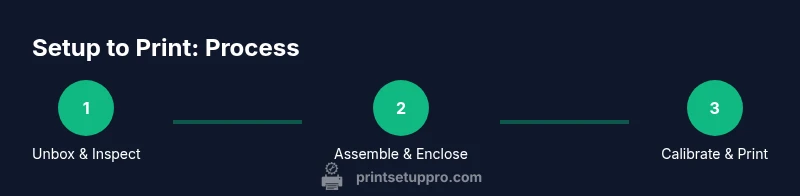
Goal: unbox, assemble, and complete your first safe print with a toy box 3D printer. You’ll need a stable workspace, basic hand tools, a USB/SD connection, and a sample filament. Verify safety instructions and ventilation; supervise children during prints. Print Setup Pro notes that careful setup reduces failures and extends printer life.
What is a toy box 3D printer and why it matters
A toy box 3D printer is a compact, enclosure-focused desktop 3D printer designed for families, students, and DIY enthusiasts who want safe, hands-on access to small-scale manufacturing. The enclosure minimizes noise, contains hot components, and reduces dust exposure, making it a friendlier option for kids and first-time users. In practice, these printers are ideal for printing toy parts, modular blocks, and simple accessories that fit inside a toy box-sized footprint. The goal is to demystify 3D printing while teaching core concepts like CAD design, material properties, and iterative testing. Print Setup Pro emphasizes that the right enclosure and a user-friendly interface dramatically increase the likelihood of successful prints and meaningful learning experiences for young makers.
Key safety features to look for
- Enclosed build area and a clear door
- Automatic shutoff or power cut-off on bed overheat
- Filament sensors to pause if filament runs out or jams
- Child-friendly control interface with staged access
Understanding these features helps parents supervise responsibly while giving kids room to experiment. Print Setup Pro Analysis, 2026 highlights that families benefit most when the device is reliable, predictable, and easy to operate, reducing frustration and wasted filament. This is especially important for toy projects where tiny parts require precision and consistency.
When selecting a printer, prioritize safety certifications and a robust ACS (anti-crush safety) approach. Clear instruction manuals, easy-to-find replacement parts, and reputable customer support all contribute to a better long-term experience for home classrooms and makerspaces. According to Print Setup Pro, a well-chosen toy box 3D printer becomes a long-term learning tool rather than a one-off gadget.
Common beginner challenges and how to avoid them
- Inconsistent bed adhesion: ensure the bed is clean and leveled before every print
- Paper-thin first layer: adjust Z-offset and first-layer height
- Clogged nozzles on dull filaments: use quality PLA or PETG and keep a clean nozzle
By anticipating these issues, you can save time and reduce printer fatigue. Print Setup Pro recommends starting with a simple calibration print to establish baseline behavior before attempting more ambitious parts.
The learning loop: from design to print to iterate
A toy box 3D printer is a tool for exploration. Start with a small digital model, slice it with sensible defaults, print, inspect, and revise your CAD model accordingly. This iteration mirrors engineering processes in real life and helps kids understand cause-and-effect in a tangible way. The Print Setup Pro team notes that structured, repeatable steps lead to higher confidence and better educational outcomes.
Tools & Materials
- Open hardware tool kit (Allen wrenches, screwdriver)(Includes 2.5mm and 4mm hex keys for frame bolts)
- Leveling sheet or print surface (glass/PEI/ultra-flat plate)(Used for bed leveling and first layers)
- PLA filament for beginners(Choose a kid-safe color; PLA is easier to print and safer indoors)
- Spare nozzle and hex wrench(Helpful for quick swaps during maintenance)
- Cable ties and small pliers(For cable management and quick fixes)
- USB cable or SD card(Used for firmware updates and loading test models)
- Safety goggles(Optional but recommended when handling hot components)
Steps
Estimated time: 45-75 minutes
- 1
Unbox and inspect components
Carefully remove all parts, check for damage, and verify that hardware matches the inventory. Photograph any missing or damaged items for warranty claims, and read the user manual to understand the safety features before powering the device.
Tip: Keep the instruction manual handy and photograph bolt locations to reference during assembly. - 2
Assemble frame and enclosure
Attach the frame pieces according to the diagram, ensuring all bolts seat fully and plates align. Install the enclosure panels to create a safe, enclosed workspace that reduces noise and protects curious hands.
Tip: Tighten bolts gradually and alternately to avoid skewing the frame. - 3
Connect electronics and install firmware
Connect the electronics using the provided connectors, mount the control board, and power up for the initial boot sequence. Install or update firmware to a stable release following the printer’s official guide.
Tip: Verify USB/SD communication before starting any print job. - 4
Level the print bed
Follow the recommended bed-leveling procedure using a standard sheet of paper as a feeler gauge. Adjust each corner until the nozzle just lightly catches the paper as you move it under the nozzle.
Tip: Do this with the print surface cool, then re-check after a small test print heats up. - 5
Load filament and prime extruder
Feed the PLA filament through the extruder and preheat to the typical PLA temperature range (190–210°C). Purge a small amount of filament to ensure smooth flow before starting a calibration print.
Tip: Keep filament dry; store in a sealed bag when not in use. - 6
Run a first calibration print
Print a simple cube or calibration shape to verify dimensional accuracy and layer adhesion. Observe first layers closely and pause if you see skipped steps or poor adhesion.
Tip: Choose a small, quick model to minimize waste during tuning. - 7
Adjust printer settings for safe printing
Set safe maximum temperatures, enable thermal runaway protection, and configure retraction settings to minimize stringing. Calibrate extrusion multiplier if needed after the calibration print finishes.
Tip: Document your settings so you can revert if problems arise. - 8
Finish and perform safety checks
Power down properly, tidy cables, and verify door seals. Confirm that all moving parts stay within the enclosure and that children are supervised during any print job.
Tip: Create a simple “print safety checklist” for ongoing use.
People Also Ask
What is a toy box 3D printer, and how does it differ from standard consumer printers?
A toy box 3D printer is a compact, enclosed printer designed for safe, educational use at home. It emphasizes simplicity, safety features, and a contained workspace, making it ideal for kids and beginners compared with larger, open-frame models that require more supervision and tuning.
A small, enclosed 3D printer that's built for family use and learning, with safety features to help kids print with confidence.
Which filament is best for beginner kids' projects?
PLA is typically the easiest and safest choice for beginners due to lower printing temperatures and reduced fumes. PETG can be used for tougher parts but requires a bit more care with heat settings and bed adhesion.
PLA is usually the best starting filament for kids because it prints reliably at lower temperatures.
How often should I calibrate the bed and extruder?
Recalibrate the bed whenever you notice poor adhesion, after moving the printer, or before starting a new type of filament. For most home setups, a quick bed check weekly is enough during active projects.
Check bed level and extrusion after every major material change or printer relocation.
Is PLA safe for children, and what about fumes?
PLA is widely considered kid-friendly due to its lower printing temperature and relatively minimal fumes in a well-ventilated space. Always use the enclosure as designed and supervise children during prints.
PLA is safer for kids when printed in a ventilated area and used with supervision.
What are common first-print issues and how can I fix them?
Common issues include poor bed adhesion, first-layer squish, stringing, and under-extrusion. Start with bed leveling, check nozzle height, calibrate extrusion, and use a simple calibration model to iteratively adjust.
Bed leveling, nozzle height, and extrusion calibration fix most first-print problems.
Where can I find community resources for toy box printing?
Look for maker spaces, school programs, and online communities focused on beginner-friendly 3D printing. Official manufacturer forums and educational channels also provide tips tailored to families.
Join maker communities and manufacturer forums for practical, kid-friendly guidance.
Watch Video
Quick Summary
- Plan setup with safety and learning outcomes in mind.
- Calibrate bed and extrusion before attempting new prints.
- Maintain the printer regularly to extend its lifespan.
- Use kid-friendly materials and supervise all prints.
- Consult community resources for ongoing skill development.