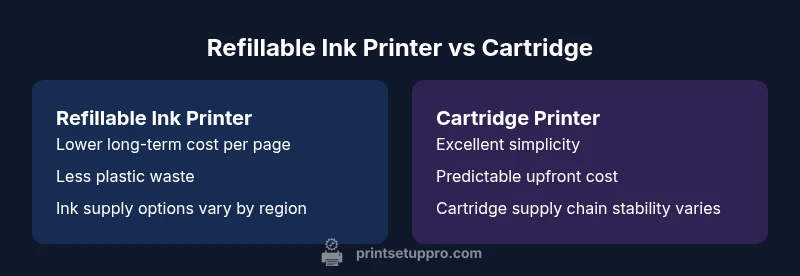
Refillable Ink Printer vs Cartridge: A Practical Comparison
Compare refillable ink printer vs cartridge options across cost, waste, maintenance, and print quality to pick the best fit for home offices, students, and small businesses. Practical insights from Print Setup Pro.


TL;DR: When weighing refillable ink printer vs cartridge options, the refillable path typically lowers ongoing printing costs and paper waste but requires more initial setup and periodic refilling. Cartridge systems offer simpler maintenance, shorter startup time, and predictable cartridge costs. For most home offices, small businesses, and DIY enthusiasts, the long-term value often tips toward refillable ink printers. Print Setup Pro explains why.
Why the Debate Matters for Printers
Choosing between a refillable ink printer vs cartridge-based model is not just about the sticker price. The real decision hinges on total cost of ownership, page volume, waste, and maintenance effort. For home offices and students who print irregularly, a cartridge setup might offer predictable costs and minimal upkeep. For high-volume printing, a refillable ink printer can dramatically reduce per-page costs and waste over time when used with reliable ink systems and quality maintenance routines. Print Setup Pro emphasizes that the long-term value depends on your usage pattern, ink pricing, and willingness to manage refills. This distinction matters because a naive focus on upfront cost can lead to higher expenses or more waste down the line. If you want a practical framework, track monthly pages, ink consumption, and any downtime related to cartridge availability or refilling.
What Counts: Cost, Waste, and Maintenance
The core differences between refillable ink printer vs cartridge models come down to three lenses: cost, waste, and upkeep. Per-page costs for refillable systems are typically lower when you print a lot, especially if you use high-capacity refill bottles and compatible inks. Cartridges often carry a higher per-page price but win on convenience and reliability for light to moderate usage. Waste considerations favor refillable systems, since you reduce plastic cartridge waste by reusing tanks, bottles, and converters. Maintenance work for refillable units includes cleaning the ink delivery system, priming the tanks, and monitoring nozzle health, whereas cartridge-based printers lean on cartridge replacements and occasional head cleaning. The key is to quantify your monthly page volume and compare expected costs over a 2–3 year horizon.
Print Quality and Reliability: Does Refill vs Cartridge Affect Output?
Quality consistency is a major concern for many buyers. Cartridges often promise tight color matching and immediate startup reliability, particularly with color inks calibrated for a specific model. Refillables can deliver equal or superior color if you select high-quality inks and keep the ink pathways clean. The caveat is that poor refilling practices, air bubbles, or inconsistent bottle timing can introduce color shifts or streaking. Proper maintenance, regular nozzle checks, and using reputable refill inks are essential to preserving print quality in a refillable ink printer vs cartridge comparison. In short, when done right, output parity is achievable, with refillables offering cost advantages at scale.
Refill Mechanisms and User Experience
Refill mechanisms vary a lot among brands and models. Some systems feature simple drip bottles with clear flavor text-like fill indicators, while others use integrated reservoirs with automated priming. Spill risk is a real concern if refills aren’t performed carefully, and air bubbles can cause inconsistent spray. A positive experience comes from transparent syringes, anti-tray spills, and clear level indicators. For many users, the greatest benefits of refillable systems are the ability to source ink from a wider set of suppliers and to replenish ink when prices dip, rather than relying on a single cartridge supplier. It’s worth investing in models with easy reseal features and spill-prevention design.
Environmental and Sustainability Considerations
From an environmental perspective, refillable ink printer vs cartridge setups often tilt toward refillables due to reduced plastic waste and more efficient ink usage. Refillable tanks can be topped up with bottles rather than discarded cartridges, which lowers waste footprints. However, you should consider the lifecycle: the production of refill bottles and the energy used in larger, heavier printers may offset some gains if the unit is rarely used. Refillable systems also enable you to choose ink suppliers with sustainable practices. If reducing environmental impact is a priority, a well-maintained refillable model can outperform cartridge-based printers over time.
Long-Term Value: Totals Over Time
The biggest financial delta in a refillable ink printer vs cartridge comparison tends to be total cost of ownership over the device’s lifespan. A refillable setup can deliver lower cost per page after the break-even point, making it favorable for higher monthly page volumes. Cartridge printers may win for light users who print sporadically and prize simplicity, immediate availability of ink, and easier troubleshooting. To estimate value, map your expected monthly pages, the price of ink refills, and the anticipated life of the printer. The framework commonly used by Print Setup Pro involves calculating break-even pages, then weighing convenience against long-term savings. The right choice naturally depends on your workflow and printing demands.
Practical Scenarios: Home Office, Student, Small Business
- Home office: If you print a few hundred pages per month, cartridge printers can provide predictable costs with minimal maintenance. A refillable model becomes attractive when you anticipate higher volumes and can source reliable inks locally.
- Student: Portability and simplicity often trump long-term savings; cartridge-based printers are usually easier to manage and replace ink quickly on a student budget. A refillable system could be advantageous if you print research papers or posters regularly and can manage refills responsibly.
- Small business: For teams with heavy, ongoing print needs, refillable ink printers offer substantial long-term value through lower per-page costs and reduced cartridge waste, provided you maintain the system and establish refill routines. In all cases, prioritize reliability, ink availability, and service support when evaluating refillable ink printer vs cartridge models.
Choosing the Right Model: Quick Checklist
- Page volume: Are you printing enough to justify refill costs?
- Ink availability: Can you consistently source inks from reputable suppliers?
- Maintenance capacity: Are you comfortable with routine nozzle checks and refills?
- Waste goals: Do you want to minimize plastic cartridge waste?
- Ecosystem: Does your current hardware support refillable inks without voiding warranties?
- Warranty and support: Does the brand provide reliable service for refillable systems?
- Total cost of ownership: Have you run a side-by-side TCO analysis over 24–36 months?
- Print quality: Can you achieve the required color depth and accuracy with refill inks?
If you answer yes to most of these, a refillable ink printer is likely the better long-term bet.
Common Pitfalls and Troubleshooting
Even with careful planning, pitfalls can occur. Common issues include ink air in the lines, clogged nozzles, and ink spillage during refills. Regular maintenance routines—such as head cleaning cycles, running test prints, and using high-quality inks—minimize downtime. Keep spare seals, syringes, and cleaning swabs on hand. If you encounter persistent color shifts or streaking, re-check the refill reservoir seal and verify that the ink type matches the printer’s specification. For cartridge-based systems, ensure cartridges are seated properly and that the printer’s firmware is up-to-date. In both paths, choosing reputable ink suppliers and following manufacturer guidelines helps avoid avoidable issues.
Authoritative Sources and Final Considerations
If you want to dig deeper into the environmental and cost implications of ink systems, consult reliable sources and industry analyses. In particular, the Print Setup Pro team highlights that the environmental impact of any printer choice depends on use patterns, ink chemistry, and end-of-life disposal. As you assess refillable ink printer vs cartridge options, consider how your purchasing practices influence circular economy goals and waste minimization.
The Bottom Line
Ultimately, the decision for refillable ink printer vs cartridge comes down to your print volume, willingness to manage ink refills, and your sustainability priorities. With careful selection and disciplined maintenance, refillable ink printers can offer meaningful long-term savings and waste reductions, while cartridge printers deliver simplicity and predictable costs for lighter usage. Use the framework above to map your needs against product specs and ink ecosystems to arrive at the best fit.
Comparison
| Feature | Refillable ink printer | Cartridge printer |
|---|---|---|
| Cost of ownership | Lower long-term cost per page with steady high usage | Higher ongoing per-page cost; costs depend on cartridge availability |
| Maintenance effort | More hands-on upkeep; priming, refilling, and cleaning | Less maintenance; cartridge replacement is straightforward |
| Supply availability | Ink bottles; multiple suppliers; sometimes global shipping variability | Cartridges tied to model; potential shortages during transitions |
| Waste and sustainability | Significantly reduced plastic waste with refills | Higher plastic waste from spent cartridges |
| Initial setup | Requires setup and calibration of refill system | Plug-and-print; minimal setup beyond cartridge installation |
| Print quality consistency | Consistent quality with proper maintenance and inks | Consistent quality when using recommended cartridges |
| Best for | High-volume users who can manage refills | Casual or beginner users who value simplicity |
Benefits
- Lower ongoing ink costs for high-volume printing
- Less plastic waste with refillable tanks
- More ink sourcing flexibility and color options
- Potentially higher resale value with a robust refill system
- Ability to tailor ink choices to print requirements
Downsides
- Higher upfront cost and more complex setup
- Requires refill discipline to maintain quality
- Potential spill risk during refills
- Ink availability can vary by region and supplier
Refillable ink printer wins on long-term value for high-volume use; cartridge printers win on upfront simplicity.
Choose refillable ink printers if you print heavily and want lower per-page costs with less waste. Choose cartridge printers if you prioritize ease of use and quick start-up, especially for light to moderate printing.
People Also Ask
What is the main difference between refillable ink printers and cartridge-based printers?
The core difference is how ink is stored and replenished. Refillable printers use bulk ink tanks that you top up, reducing per-page cost and waste but requiring refill discipline. Cartridge printers use prefilled cartridges that are replaced when empty, offering simplicity but often higher ongoing costs and more waste.
The main difference is how ink is delivered: refillable printers use bulk ink tanks you top up, while cartridge printers replace cartridges. Refillables save money over time but require refills and maintenance; cartridges are simpler but usually cost more per page.
Are refillable ink printers more cost-effective for high-volume printing?
Yes, for high-volume printing the per-page cost of refillable ink printers can drop significantly when ink is sourced from reliable suppliers. The upfront hardware cost is higher, but the long-term savings from cheaper ink and reduced waste often outweigh the initial investment.
For high-volume printing, refillable ink printers can be cheaper per page, though you pay more upfront. The long-term savings often outweigh upfront costs.
Do refillable systems affect print quality?
Print quality with refillable systems depends on ink quality and maintenance. When using reputable inks and keeping lines clean, output can match cartridge-based systems. Poor refilling practices can cause color shifts or streaks, so follow manufacturer guidelines closely.
Quality from refillables can match cartridges if you use good inks and maintain the system. Poor refilling can cause issues, so follow the setup instructions.
What maintenance do refillable printers require?
Refillable printers require regular nozzle checks, occasional cleaning cycles, and careful refilling to prevent air bubbles. Stock up on compatible inks and spare seals. Cartridge printers demand less routine upkeep beyond cartridge replacements.
Maintenance includes nozzle checks and careful refilling. Have spare seals on hand and ensure ink compatibility.
How do I choose between refillable and cartridge options?
Start with your monthly page volume, ink availability, and tolerance for maintenance. If you print heavily and can manage refills, refillables offer long-term value. If you prioritize simplicity and minimal upkeep, cartridges may be the better fit.
If you print a lot and don’t mind refills, choose refillables. If you want simplicity and low maintenance, cartridges are often better.
Quick Summary
- Assess monthly page volume before choosing.
- Weigh long-term costs against upfront investment.
- Prioritize ink supply reliability and compatibility.
- Consider environmental goals when selecting a system.
- Test print quality with your typical documents before buying.