How to Deal with Resin Printer Fumes: Safe Setup and Mitigation
A step-by-step guide to safely manage fumes from resin 3D printing with ventilation, PPE, and workflow practices. Designed for home offices and small workshops by Print Setup Pro.


This guide helps you safely deal with resin printer fumes by improving ventilation, choosing the right PPE, and creating a dedicated workspace. You’ll learn a quick-start checklist, what gear to buy, and how to verify your setup for ongoing safety. Follow these steps to minimize exposure and protect your indoor air quality.
Why resin fumes matter
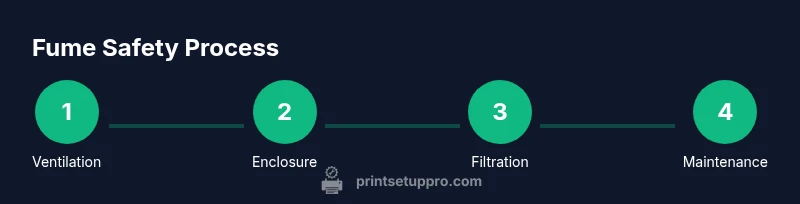
Resin printer fumes contain volatile organic compounds that can irritate the eyes, nose, throat, and lungs. Prolonged exposure may worsen symptoms for sensitive individuals, and poor airflow can quickly amplify odors in small spaces. This is why a deliberate safety approach is essential. According to Print Setup Pro, safe resin printing starts with proper ventilation and a well-planned workspace. In this article we explore practical, proven steps to reduce exposure and keep indoor air quality high. We will cover ventilation, PPE, enclosure options, filtration, resin handling, and routine maintenance. The goal is to build a safe, repeatable workflow that fits typical home offices and hobby spaces while staying within common budgets.
Quick baseline: what counts as fumes
Fumes are not only strong odors; they are invisible airborne compounds that can irritate mucous membranes and lungs. Do not rely solely on smell to judge safety. Volume and duration matter: longer sessions in small rooms will raise exposure levels. In many resin formulations, fumes change as resin cures, so ventilation should be consistent from start to finish. Print Setup Pro's guidance emphasizes regular checks of airflow, minimizing recirculation, and keeping your work area separate from living spaces to reduce the risk of sustained exposure.
Ventilation strategies for small spaces
A good ventilation strategy combines fresh air intake with exhaust. If your space has cross-ventilation, position the printer so air moves away from your breathing zone. A dedicated exhaust fan that routes outdoors is highly effective; avoid exhausting into walls, attics, or crawl spaces where fumes can linger. If outdoor venting is not available, use a high-quality air purifier with a carbon filter and keep the room door closed during printing. Regularly inspect ducts for leaks and keep the area around the printer free of clutter that could trap fumes.
PPE and protective practices
Always wear PPE that matches the risk level of your setup. A respirator approved for organic vapors or a PAPR provides better protection than a disposable mask. Safety goggles or a face shield protect eyes from splashes and vents, while nitrile gloves guard your skin during resin handling and cleanup. Keep spare cartridges and PPE within reach but away from the resin storage to prevent accidental contamination. Train household members on proper PPE use to ensure consistent protection.
Enclosures, airflow, and placement
An enclosure significantly reduces exposure by containing fumes and directing airflow. If you can, place the printer inside a dedicated cabinet or enclosure with gasketed doors. Seal seams with weatherstripping to minimize leaks, and ensure the exhaust is vented directly outdoors. Keep intake vents clear of dust and obstructions, and position the setup away from doors or windows that cycle air in and out of the room. An enclosure also helps contain spills and reduces the risk of accidental contact with uncured resin.
Filtration and air-cleaning options
Filtration choices depend on space and budget. A combination of a high-quality HEPA filter and an activated carbon or molecular-sieve filter can significantly reduce circulating fumes. If a dedicated filtration unit isn’t feasible, pair an enclosure with outdoor exhaust and an air purifier that includes a carbon filter. Regularly check purifier performance, replace carbon filters as recommended by the manufacturer, and avoid units that recirculate air without removing VOCs.
Resin handling, storage, and cleanup
Always cap resin bottles promptly, store resin away from heat or flames, and label waste containers clearly. When cleaning, use dedicated rags or papers and dispose of them according to local hazardous waste guidelines. Never pour liquid resin down the drain or onto soil. Keep work surfaces clean and dry, and wipe down the enclosure interior after each printing session to prevent buildup. Proper storage reduces outgassing and keeps your workspace safer over time.
Maintenance, monitoring, and when to upgrade
Schedule monthly checks of seals, gaskets, and duct connections to catch wear early. If you notice persistent odors or new symptoms, reassess airflow, enclosure integrity, and filter status. Consider upgrading to a higher-efficiency filtration system or adding an outdoor vent if your current setup underperforms. Routine monitoring—whether via a basic VOC meter or regular odor checks—helps you maintain a safe environment as resins and room conditions change.
Quick-start safety checklist
- Ventilate the space before printing and keep it running during the session.
- Wear a respirator for organic vapors, plus eye protection and gloves.
- Enclose the printer and seal the enclosure; route exhaust outdoors.
- Use a carbon/HEPA filtration strategy if possible.
- Store resin and cleaning solvents in sealed, labeled containers.
- Do not pour resin waste down the drain; follow local disposal rules.
- Regularly inspect ducting and enclosure for leaks or cracks.
- Keep a dedicated area for printing away from living spaces and food prep areas.
- Test airflow with simple indicators (a ribbon or tissue) to verify direction.
- Maintain a log of filter changes, maintenance tasks, and any odor observations.
Tools & Materials
- P100 respirator or elastomeric respirator with organic vapor cartridges(Replace cartridges per manufacturer guidance.)
- Safety goggles with side protection(Choose anti-fog lenses.)
- Nitrile gloves(5-8 mil thickness recommended.)
- Printer enclosure or cabinet(Seal gaps; ensure access to controls.)
- Inline duct fan or dedicated exhaust(6-8 inch ducting to outdoors, minimal bends.)
- Ducting and fittings(Avoid sharp bends; secure joints.)
- Activated carbon filter or air purifier with carbon filter(Helpful for recirculating air when outdoors venting isn’t possible.)
- VOC air quality monitor (optional)(Tracks changes in air quality during setup.)
Steps
Estimated time: Estimated total time: 45-60 minutes for initial setup; ongoing daily checks ~5-10 minutes.
- 1
Assess your space
Survey the room for airflow patterns, nearby living spaces, and potential exterior vent routes. Identify where fumes will accumulate and whether an outdoor exhaust is feasible. Document window or door positions to plan cross-ventilation.
Tip: Use a lightweight ribbon to visualize current air movement and draft direction. - 2
Set up ventilation
Install a dedicated exhaust path that leads outdoors, avoiding recirculation. If possible, position intake from a cleaner outdoor source and route the air away from doors and windows to prevent backflow.
Tip: Keep ducts short and straight; reduce bends to maximize airflow. - 3
Create an enclosure
Place the printer inside a sealed enclosure or cabinet with gasketed doors. Ensure access to controls and a clear space for resin handling, while preventing air leaks around the seams.
Tip: Test the seal by using a tissue near joints—no strong air drafts should bypass the enclosure. - 4
Add filtration
Install a filtration strategy that matches your space: HEPA plus carbon, or a high-efficiency purifier with a carbon filter. If you must rely on recirculation, ensure the unit is sized for the room and has carbon filtration.
Tip: Inspect filters monthly and replace when you notice odors or decreased airflow. - 5
Test and monitor
Run a small print to test the setup and observe odor levels and air movement. If odors persist, adjust exhaust placement or filtration and re-test.
Tip: Consider a temporary VOC monitor for the initial trial to quantify changes. - 6
Clean up and maintain
Cap resin containers tightly, wipe surfaces after prints, and store resin away from heat sources. Dispose of waste according to local hazardous waste guidelines and keep the enclosure free of spills.
Tip: Never pour resin or solvents down the drain and label all waste containers clearly.
People Also Ask
What are resin fumes composed of?
Resin fumes contain volatile organic compounds that can irritate the eyes, skin, and lungs. The exact mix depends on resin chemistry and curing state. Safe handling relies on ventilation, PPE, and proper storage.
Resin fumes include volatile organic compounds that can irritate your airways. Ensure good ventilation and PPE when printing.
Is ventilation alone enough to protect me, or is PPE still required?
Ventilation is essential, but PPE remains important. Use respirators, eye protection, and gloves in addition to a well-ventilated space.
Good ventilation helps, but do not skip PPE; wear a respirator and eye protection.
Do I need a full enclosure?
An enclosure significantly reduces exposure by containing fumes and directing airflow. If you cannot enclose the printer, create a dedicated box with seals and a dedicated exhaust.
An enclosure helps a lot; consider one if you print often.
What PPE is essential for resin printing fumes?
A respirator suitable for organic vapors, splash goggles, and nitrile gloves are the core PPE. Add a face shield if your setup creates splashes or spills.
Wear a respirator, goggles, and gloves to protect your eyes, lungs, and skin.
How should resin waste be disposed of?
Store waste resin and curing agents in sealed containers and follow local hazardous waste guidelines. Never pour liquid resin down the drain.
Dispose resin waste according to local rules; never pour it into the sink.
How often should I replace carbon filters?
Filter replacement depends on usage and manufacturer guidelines. Check for odors and reduced airflow as signs to replace.
Replace filters as recommended by the manufacturer or when you notice reduced performance.
Watch Video
Quick Summary
- Ventilate effectively before printing
- Wear proper PPE during resin work
- Monitor air quality and adjust setup
- Maintain enclosure integrity and clean regularly