What to Do with 3D Printer Waste: Clean, Reuse, and Recycle Safely
Learn practical steps to manage 3D printer waste responsibly—sorting scraps by filament type, safe disposal, and creative reuse for PLA, ABS, PETG, and more. A Print Setup Pro guide for home offices and small shops.


Goal: learn how to handle what to do with 3d printer poop waste responsibly. You’ll identify waste types (scraps, failed prints, supports), sort by material (PLA, ABS, PETG), and choose safe disposal or reuse options. This quick guide previews practical steps to reduce filament waste, protect indoor air, and keep your workspace neat and compliant with local rules.
Introduction: Understanding 3d printer poop and why proper management matters
Dealing with 3d printer waste is part of responsible maker practice. If you’ve ever wondered what to do with 3d printer poop, you’re not alone. Wasted prints, failed parts, and leftover supports accumulate quickly and can create clutter, odor, or dust if handled poorly. Print Setup Pro emphasizes that a simple plan—sorting by material, safe containment, and compliant disposal—reduces environmental impact and keeps your workspace healthier. This section lays the groundwork for a repeatable, safe routine you can apply at home or in a small shop. Throughout, you’ll see practical steps you can implement this week, alongside clarifications on what counts as “poop” in 3D printing.
Key idea: treat waste as material that can be redirected, reused, or disposed of responsibly rather than tossed haphazardly.
Sorting by material: PLA, ABS, PETG and specialty filaments
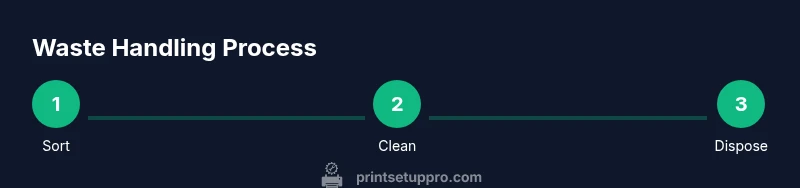
Different filaments behave differently when wasted or shredded. PLA is plant-based and compostable in some industrial facilities, but home composting is typically unsuitable and curbside programs rarely accept PLA as-is. ABS and PETG have different melting points and fumes, so sorting by material helps you choose safer disposal paths and minimizes cross-contamination. Specialty filaments (carbon fiber, nylon, or flexible materials) often require stricter handling due to additives or fiber content. Begin by creating labeled bins or bags for each material and commit to sorting every scrap, failed print, support, and purge material immediately after each session. This step dramatically improves downstream options, from recycling to reuse.
Tip: label bins clearly with the filament type and date, and keep separate tools for each material to avoid cross-contamination.
Cleaning and containment: prepping scraps for disposal
Waste should be contained before transport to disposal points. Scrape off excess plastic, remove supports, and wipe down pieces to remove dust. For powders or fine dust from sanding, use a damp cloth or a dedicated vacuum with a HEPA filter to limit airborne particles. Ventilation matters: a small, dedicated area with a vent or an open window helps keep fumes under control, especially when sanding or heat-treating waste. Clean paper towels, wipes, and used rags should be disposed of in sealed bags to reduce odors and prevent leakage. When possible, avoid burning plastics at home; the fumes can be toxic and irritating to the lungs.
Pro-tip: use a silicone mat or a washable tray to collect debris so you can easily transfer it into the correct bin.
Disposal options: recycle, reuse, landfill, and programs
Disposal choices depend on your local facilities. Many curbside programs do not accept raw filament waste, and some plastics require specialized processing. Check with your city or county about acceptable plastics and whether they accept shredded or pelletized waste. Recycling programs may take PLA or PETG scraps if they’re clean and properly sorted, but ABS is less commonly accepted. For non-recyclable waste, consider safe landfill disposal as a last resort and follow local guidance. If you belong to a makerspace or a community workshop, there may be shared disposal or recycling programs you can join. For some filaments, creating new items from scrap (like test prints or supports) can reduce waste dramatically while teaching practical skills.
Important: never mix waste streams; segmentation increases the chance of successful recycling or reuse.
Reuse ideas: turning scraps into new prints or other projects
Scraps and failed prints can inspire new projects. Smaller pieces can become testing surfaces, calibration aids, or art/creative builds that don’t require functional strength. Shred and blend certain plastics to use as filler for epoxy or resin projects, or use scraps as molds or placeholders for soft demonstrates in education settings. For PLA, small pellets can sometimes be repurposed into DIY filament recycling demonstrations if you have access to equipment; however, most home users will benefit more from using scraps to prototype shapes or pockets for cable management. When in doubt, repurpose the waste for non-structural tasks before discarding.
Note: reuse opportunities depend on material type, scrap size, and access to tools or community programs.
Creating a waste-management routine: a practical weekly plan
Establish a simple, repeatable routine to prevent backlog. At the end of every print session, empty and label waste bins, wipe down the workspace, and record the material and disposal method in a small log. Schedule a weekly review to move sorted waste to the proper bins or programs, and set reminders to check community recycling opportunities for the current month’s plastics. Building a routine reduces chaos and ensures every piece of waste has a clear path forward. Include a quick audit of filters, ventilation, and PPE to maintain a safe environment.
If your setup grows, consider a dedicated waste station with a divider, a small shredder for compatible filaments, and a larger collection bin for long-term storage.
Safety and environmental considerations: breathing room for your printer space
Safety overlaps with the environment: ensure adequate ventilation, avoid overheating plastics, and never burn waste indoors. Keep work areas clean to prevent dust inhalation, especially when sanding or cutting. Choose PPE appropriate for the task—gloves for handling, safety glasses during cutting, and a mask when sanding powder is present. Carbon fiber or fiberglass filaments require extra care due to inhalation risks; follow the manufacturer’s guidelines and use a dedicated, well-ventilated space when handling these materials. By designing your workflow around safety, you protect both your health and the local ecosystem. You’ll minimize hazards while maintaining a tidy workspace.
Tip: store any waste in sealed containers and keep them away from heat sources and open flames.
Common mistakes to avoid: learn from real-life waste pitfalls
Don’t mix filaments in the same bin; cross-contamination makes recycling harder or impossible. Don’t burn waste to reduce volume—fumes are hazardous and potentially illegal in many neighborhoods. Don’t ignore local disposal rules; they can change with new programs or facilities. Don’t neglect documentation; without a simple log, you may miss opportunities for recycling or safe disposal. Finally, don’t ignore odors or signs of moisture in waste containers; damp plastic can be a breeding ground for mold and unpleasant smells. Implement these safeguards and your waste strategy will remain efficient and compliant.
Tools & Materials
- Disposable nitrile gloves(Protect hands when handling hot or sharp parts)
- Safety glasses(Eye protection during trimming or cutting)
- Nitrile scraper or palette knife(For removing supports and scraping waste)
- Sealant bags or labeled waste bins(Sort by filament type (PLA, ABS, PETG))
- Dust mask or respirator(Optional for sanding dust; use when needed)
- Ventilation or portable fan(Maintain airflow in the workstation)
- Permanent marker and labels(Label bins clearly with material and date)
- Notebook or app for waste logging(Track disposal methods and dates)
Steps
Estimated time: 2-4 hours
- 1
Identify and sort waste by material
Inspect used prints, failed parts, and supports. Create separate bins or bags for PLA, ABS, PETG, and specialty filaments. Label each container clearly to avoid cross-contamination and to simplify recycling options.
Tip: Use color-coded labeling and keep a quick-reference guide near the waste station. - 2
Clean and prepare waste for disposal
Remove any residue from parts and wipe surfaces. Avoid grinding or shredding without appropriate equipment. For fine dust, use a damp cloth or vacuum with a HEPA filter to minimize airborne particles.
Tip: Always wear PPE and work in a ventilated area when cleaning. - 3
Package waste for transport to disposal
Seal waste in labeled bags and ensure they’re closed securely. Use rigid bins for heavier items and keep liquids away from packaging. Store in a dry place away from heat until you can drop off at the correct facility.
Tip: Double-bag especially damp or dusty waste to prevent leaks. - 4
Check local disposal and recycling options
Reach out to your municipal program or a local maker space to confirm accepted plastics and any required preparation. Some facilities accept shredded PLA or PETG, while ABS may be limited. If programs aren’t available, consider safe landfill disposal per regulations.
Tip: Document program rules to avoid missteps during pickup or drop-off. - 5
Explore reuse possibilities
Look for non-structural uses of scraps such as calibration prints, cable organizers, or teaching aids. For small pieces, consider experiments or art projects. Reuse reduces waste volume and can be fun learning experiences.
Tip: Coordinate with local schools or maker spaces for donation ideas. - 6
Establish a weekly waste routine
Set a recurring schedule to sort, label, and transfer waste into the correct container. Review your logs monthly to identify which materials were recycled and which went to disposal, adjusting your process as needed.
Tip: Set reminders and keep a simple checklist at the workstation.
People Also Ask
Is PLA recyclable through curbside programs?
PLA recyclability varies by program. Many curbside facilities do not accept it, or require it to be a specific form. Always check with your local provider for accepted plastics and preparation requirements.
PLA recycling depends on local programs; check with your curbside service to know if they accept PLA and how to prepare it.
Can I burn 3D printer waste to dispose of it?
Burning plastics releases toxic fumes and is often illegal in many areas. Avoid burning; use approved disposal or recycling options instead.
No—burning is dangerous and often illegal. Use approved disposal methods instead.
What about ABS waste disposal?
ABS is harder to recycle locally. If your facility accepts ABS, ensure it’s clean and sorted. Otherwise, dispose of it per local guidelines or through a makerspace program.
ABS disposal depends on local facilities; sort and check with nearby programs.
Are there programs to recycle 3D printer waste?
Some maker spaces and specialized facilities offer filament recycling or plastic recycling programs. Contact local educational institutions or community workshops to learn what’s available near you.
Look for maker spaces or local recycling pilots that handle 3D printer waste.
How can I safely reuse scraps?
Use scraps for non-structural test prints, cable management, prototypes, or educational demos. Reuse reduces waste and can be a valuable learning exercise.
Reuse scraps for testing and non-structural projects to cut waste.
Should I grind rejected parts at home?
Grinding requires specialized equipment and dust control. For home setups, limit grinding and use manual trimming or professional shredders if needed.
Home grinding is risky; use simpler trimming or seek professional shredding if necessary.
Watch Video
Quick Summary
- Sort waste by material before disposal.
- Never burn plastics; use approved disposal methods.
- Explore recycling and reuse options to reduce landfill waste.
- Document waste management to improve over time.