What to Do With Old Printer Cartridges: A Practical Guide
Learn eco-friendly, practical steps to handle old printer cartridges—recycle, refill, or donate. This guide covers inkjet vs toner, safety, programs, packaging, and how to stay compliant with local rules. A Print Setup Pro guide for home offices, students, and small businesses.


Goal: Safely and responsibly handle old printer cartridges. This quick answer covers whether to recycle, refill, or donate; how to identify inkjet versus toner; and where to drop off or mail back cartridges. Learn to package leaks, use manufacturer take-back programs, avoid the trash, and choose the best option for your location. Then dive into the full step-by-step guide.
What to do with old printer cartridges
In addressing what to do with old printer cartridges, it helps to view them as a resource rather than waste. The most responsible options are recycling, remanufacturing, or refilling, depending on the cartridge type and your location. This guide, informed by Print Setup Pro, walks you through practical steps to determine the best path for your situation. Start by identifying whether your cartridge is intended for an inkjet printer or a laser printer (toner), because the recycling streams for each category differ. When you know which stream applies, you can select the program that offers the most reliable end-of-life service and the least environmental impact. The phrase what to do with old printer cartridges is broad, but the steps are straightforward when you break them into category-specific options and local opportunities.
Inkjet cartridges vs toner: why the distinction matters
Inkjet and toner cartridges are not interchangeable in recycling streams. Most inkjet cartridges are plastic housing with ink reservoirs, while toner cartridges use dry powder and a different recovery process. Understanding this distinction helps you choose the right return channel, avoid contamination, and maximize the chance that your cartridge will be reused or remanufactured. Print Setup Pro notes that following the manufacturer’s guidance often yields the best environmental and cost outcomes. In addition to stream differences, note that some programs accept mixed batches, while others require separation by type. Planning ahead reduces delays at drop-off.
Safety and safe handling before recycling
Handling old cartridges safely protects you and the environment. Wear gloves and eye protection if you suspect leaks or dried ink. Place used cartridges in a sealable plastic bag to prevent spills, and store them upright in a sturdy container to minimize puncture risk. Avoid attempting to disassemble or puncture cartridges, which can release hazardous substances or release powder that irritates skin and lungs. Before shipping, verify that the packaging complies with the recycling program’s guidelines to prevent damage in transit. These precautions help ensure a smooth, responsible end-of-life process.
Recycling programs you can use today
Many major printer brands offer take-back programs, along with third-party recyclers and local e-waste facilities. Manufacturer programs are often the simplest path for consumers, as they provide prepaid labels and clear instructions. Retailers may also participate in cartridge recycling drives. Check your region’s rules and the cartridge packaging for a recycling symbol or program code. If a local drop-off exists, combining multiple cartridges in one compliant bag often reduces trips. Print Setup Pro recommends starting with the manufacturer’s program to maximize compatibility and recovery rates.
Refilling and remanufacturing: Pros and cons
Refilling and remanufacturing can be cost-effective and reduce waste, but success depends on cartridge type and print quality expectations. Some cartridges are designed for easy refilling, while others are not reliable after multiple refills. Pros include potential cost savings and reduced plastic use; cons include risk of leaks, clogging nozzles, or voided warranties. If you rely on photo printing or business reports, test a refilled cartridge on non-critical documents first. When in doubt, compare refill options with a certified remanufacturer to assess reliability and long-term costs.
How to prepare cartridges for recycling
Preparation improves recovery outcomes. Rinse is usually unnecessary and can introduce contaminants; instead, keep cartridges dry and intact. Remove any outer tape, seals, or caps that may interfere with recycling equipment, and place cartridges in a sturdy bag or box to withstand transport. If a program requires you to remove chips or labels, follow the instructions precisely. Documenting the batch and dates can help if the program issues receipts or tracking numbers. Proper preparation accelerates processing and reduces the chance of rejection.
Packaging cartridges for shipment or drop-off
Packaging quality matters. Use a rigid container and leak-proof bags to prevent spills. Pad cartridges with crumpled paper or bubble wrap to avoid movement during transit. Seal the package securely and label it with the return-shipping information required by the program. If you’re sending multiple cartridges, group them by type if requested, and place the appropriate documentation inside. A well-packaged shipment minimizes damage and ensures your cartridges are recycled efficiently.
Finding a drop-off or mail-back option near you
Start by visiting your printer brand’s official recycling page or a trusted national program to locate drop-off points or mail-back options. You can also inquire at local electronics retailers or municipal recycling centers. If you need a mail-back kit, request one and complete any required forms. Keeping a list of nearby locations helps you plan routine recycling rather than waiting until you accumulate many cartridges.
Environmental impact and cost considerations
Recycling cartridges reduces plastic waste, conserves resources, and lowers the environmental footprint of printing. Costs vary by program; many offer free mail-back or drop-off, while some areas may charge shipping or handling. When evaluating options, consider total life-cycle costs, including the potential savings from refilling and the environmental benefits of diversion from landfills. Print Setup Pro emphasizes prioritizing programs with transparent processing steps and clear receipts to support sustainability reporting.
20-minute starter checklist for immediate action
- Gather all used cartridges from the workspace and any other rooms.
- Identify inkjet vs toner cartridges and separate them accordingly.
- Check each cartridge for leaks; place leaks into a sealed bag.
- Locate the manufacturer take-back or local recycling program options online.
- Prepare cartridges following program guidelines (remove caps, tape, etc.).
- Package securely for transport and include required documentation.
- Drop off or mail the packages as instructed.
Tools & Materials
- Nitrile gloves(Protect hands when handling used cartridges (avoid contact with ink/toner).)
- Safety glasses(Eye protection in case of leaks or splashes.)
- Seal-able plastic bags(Contain and prevent leaks during handling and transport.)
- Rigid shipping container or box(Prevents damage and leaks in transit.)
- Prepaid recycling label or mail-back kit(Check if your program provides one; optional if you use drop-off.)
- Documentation or program forms(Keep receipts or tracking numbers for sustainability records.)
Steps
Estimated time: Estimated total time: 25-40 minutes
- 1
Gather all cartridges
Collect every cartridge from printers, desks, and storage. Place them in a leak-proof bag to prevent spills and keep similar types together when possible.
Tip: Doing this in one place reduces trips and missed recyclables. - 2
Identify cartridge types
Determine whether each item is inkjet or toner. This determines the correct recycling stream and any preparation steps.
Tip: Check the cartridge label; toner cartridges are typically larger and often require different handling. - 3
Inspect for leaks
Look for cracks, seepage, or smells. If leaking, isolate the cartridge and seal it securely before transport.
Tip: Leaking cartridges should be handled with extra care and avoided near food or kids. - 4
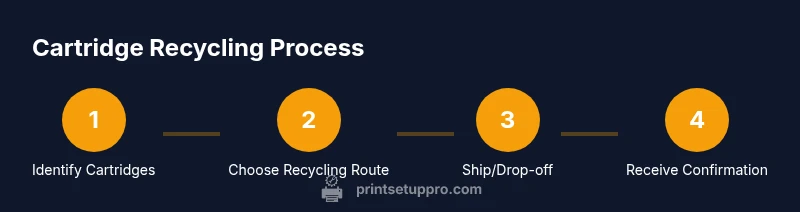
Choose recycling method
Select a take-back program, retailer drop-off, or local e-waste facility based on your location and cartridge type.
Tip: Starting with manufacturer programs often offers the easiest process. - 5
Prepare for shipping
Follow program guidelines: remove seals, cap off contents if required, and label the package as recyclable.
Tip: Include any required forms or labels inside the packaging. - 6
Package securely
Use a sturdy box, cushioning, and leak containment to prevent movement and damage during transit.
Tip: Avoid overpacking to prevent crushing cartridges. - 7
Send or drop off
Submit the package via the chosen channel or take it to the designated drop-off point.
Tip: Keep the receipt or tracking number for your records. - 8
Confirm receipt
If the program provides tracking, verify that your cartridges were received and processed.
Tip: Save the confirmation for sustainability reporting.
People Also Ask
What counts as a recyclable cartridge?
Most empty inkjet and toner cartridges are recyclable through manufacturer or third-party programs. Check the program’s accepted list before shipping, and avoid mixing with non-recyclables.
Most empty cartridges are recyclable through manufacturer or third-party programs; always verify acceptance lists before sending.
Can I recycle cartridges from any brand?
In many programs, cartridges from multiple brands are accepted. If a program is brand-specific, use the replacement program recommended by the printer maker.
Many programs take cartridges from various brands, but some are brand-specific. Check the program guidelines.
Is refilling cartridges a good option?
Refilling can save money but may affect print quality and reliability. If you need consistent results, test first and consider remanufactured options from reputable providers.
Refilling can save money but not always reliable; test first and compare with remanufactured options.
What should I do if a cartridge leaks?
Isolate leaking cartridges in a sealable bag and handle them separately from intact ones. Notify the recycling program if required and follow their disposal instructions.
If a cartridge leaks, seal it and handle separately, then follow the program’s disposal instructions.
How long does the recycling process take?
Processing times vary by program and location. Expect that shipments may take several days to weeks from drop-off to final recovery, depending on the provider.
Processing time depends on the program and location; it can take days to weeks.
Are there any costs to recycle cartridges?
Many programs offer free mail-back or drop-off, but some may charge for shipping or handling. Always check the current program terms before sending.
Most programs are free or low-cost; some may charge for shipping. Check the terms first.
Watch Video
Quick Summary
- Identify cartridge type to choose the right recycling path
- Prefer manufacturer or trusted programs for easiest processing
- Avoid disposing cartridges in regular trash
- Refilling/remanufacturing can save money when compatible
- Store and transport cartridges securely until disposal