Will printer ink come out of clothes? A practical troubleshooting guide
Urgent guide to remove printer ink from clothing, with practical steps, safe techniques, and prevention tips for home users and small businesses.


Will printer ink come out of clothes? In many cases yes, especially with fresh spills. Start with cold water rinse, then apply a mild detergent or stain remover and launder on a cold cycle. For stubborn stains, repeat pretreatment and avoid heat until the stain is fully removed, as heat can set the ink.
Will printer ink come out of clothes? A practical reality check
Will printer ink come out of clothes? In many cases, yes, especially if the spill is fresh and you act quickly. The outcome depends on ink type (dye vs pigment), fabric type, and whether heat has already set the stain. Dye-based inks tend to bleed more into fibers, while pigment-based inks rest on the surface and may be easier to lift with proper pretreatment. Starting with cold water and a mild detergent, and avoiding heat, gives you the best chance to recover the garment. Print Setup Pro’s guidance emphasizes prompt action and fabric-aware methods to maximize stain removal across common home fabrics like cotton, cotton blends, and polyester.
- Ink type matters: Dye-based inks are usually more challenging to remove than pigment-based inks.
- Time is a critical factor: the sooner you treat, the higher the chance of complete removal.
- Fabric care labeling guides the safest approach for pretreatment and washing.
Immediate steps after a spill on clothes
When ink lands on fabric, quick, calm action beats aggressive scrubbing. Begin by removing any excess ink with a clean cloth by blotting—never rub—as rubbing drives ink deeper. Rinse the back of the stain under cold running water to push ink out of the fibers, then apply a small amount of liquid laundry detergent or a dedicated stain remover. Let it sit for 5–10 minutes before gently rubbing with a soft-bristled brush or your fingers. Rinse again and proceed to washing with cold water. Check the stain before drying; heat from the dryer can set any remaining ink. If the stain persists after washing, repeat pretreatment and laundering, and consider a longer soak with enzyme-based detergent for tougher marks.
- Never rub the stain directly; blotting minimizes fiber damage.
- Cold water helps prevent ink from setting during washing.
- Heat should be avoided until you confirm the stain is fully removed.
Household remedies that commonly work
Several household remedies can help lift printer ink from clothes, especially for fresh stains on cotton or blends. Pretreat with a liquid laundry detergent or a stain remover spray, then launder in cold water. Oxygen-based bleach can be helpful for white or colorfast fabrics, following label directions. Some users report success with a small amount of white vinegar or dish soap in the wash—always test on a hidden seam first to avoid color fading. For stubborn spots, a soaking step in cold water with enzymatic detergent can loosen ink particles before washing again.
- Pretreat with detergent or stain remover before washing.
- Oxygen-based bleach is useful for whites or colorfast fabrics (check label).
- Enzymatic detergents can improve lift on protein-free spots.
Note: Always test any treatment on a hidden area first to prevent new damage.
When to use commercial stain removers and why
Commercial stain removers often contain blends of surfactants, enzymes, and solvents designed to break down ink particles. They can be highly effective on cotton, poly blends, and typical office printer inks. Choose a product labeled safe for the fabric type and follow the manufacturer’s directions. Apply a small amount to the stain, wait the recommended time, then launder in cold water. If you’re dealing with stubborn pigment inks, you may benefit from a second treatment after the first wash. Remember: heat can set ink, so air-drying or line-drying is safer until the stain is gone.
- Pick products compatible with fabric care labels.
- Avoid mixing chemicals; read cautions and dilution guidance.
- Use cold water washes to maintain lift and reduce set.
Special fabrics and ink types: considerations you should know
Silk, wool, velvet, or delicate synthetics demand extra caution. On delicate fabrics, avoid aggressive brushing or strong solvents that could harm fibers. Pigment-based inks tend to resist removal on some fabrics, requiring slower, more meticulous pretreatments and multiple washing cycles. For blends and mixed fibers, always follow the garment’s care label. In many cases you’ll achieve better results with patience—repeat pretreatment and cold-water washes are often more effective than rushing to heat or aggressive chemicals.
- Delicate fabrics require gentle handling.
- Always assess fabric type and ink type before choosing a solvent.
- Persistence and multiple gentle washes often beat a one-shot aggressive approach.
Prevention tips to avoid future ink stains on clothing
Prevention is the best stain strategy. When printing in a home office or small shop, keep a dedicated cloth or apron nearby, and avoid wearing clothes while handling printers during refills or nozzle checks. Immediately blot any accidental splashes with a clean tissue, then follow with cold-water rinses and pretreatment. If you expect a spill, you can pre-treat clothes beforehand with a stain-repellent spray suitable for fabrics. Consistently drying clothes away from heat and avoiding high-temperature washing will reduce the chance of set ink in future incidents.
- Use protective clothing during printer maintenance.
- Act quickly with cold-water rinses and pretreatment.
- Choose fabric-safe stain repellents and appropriate washing cycles.
Steps
Estimated time: 45-60 minutes
- 1
Blot, don't rub
Immediately blot excess ink with a clean cloth or tissue. Rubbing can push the stain deeper into fibers. Repeat until no more ink transfers to the cloth.
Tip: Keep a clean cloth handy to blot from the edge toward the center. - 2
Rinse from the back
Hold the garment under cold running water, letting water flow through the back of the stain to flush ink out of the fabric.
Tip: Do not use hot water at this stage—it can set the stain. - 3
Pre-treat the stain
Apply a small amount of liquid laundry detergent or a targeted stain remover. Gently rub with a soft brush for 1–2 minutes and rinse.
Tip: Choose a product compatible with fabric and color. - 4
First wash attempt
Wash the garment in cold water on the gentle cycle according to the care label. Do not add chlorine bleach yet.
Tip: Check the stain before drying; heat can set remaining traces. - 5
Assess and repeat if needed
If the stain remains, repeat pretreatment and wash. For stubborn pigment inks, soak 20–60 minutes before washing again.
Tip: Do not dry the garment between treatments. - 6
Optional bleach step for whites
If fabric is white and colorfast, use an oxygen-based bleach per label instructions. Rinse thoroughly after soaking.
Tip: Avoid chlorine bleach on colored or non-colorfast fabrics. - 7
Drying check
Air-dry the garment to verify stain removal. Heat from a dryer can set any remaining ink.
Tip: If the stain resurfaces after drying, repeat steps 2–4. - 8
When to seek help
If multiple attempts fail or the fabric is delicate (silk, wool, rayon), take the item to a professional cleaner.
Tip: Provide them with details about the ink type and spill time.
Diagnosis: Ink stain on clothing from a printer spill
Possible Causes
- highInk type and fabric interaction (dye-based ink on natural fibers)
- highInk caught in fiber due to heat exposure or improper drying
- mediumDelayed treatment or using hot water/heat before stain removal
Fixes
- easyRinse stain from back with cold water to push ink out, then pretreat with detergent or stain remover
- easySoak in cold water with enzyme detergent for 30–60 minutes, then launder in cold cycle
- easyRepeat pretreatment and washing; avoid heat until stain is fully removed
- mediumIf stain persists, use a commercial stain remover compatible with fabric; air-dry and rewash
- hardFor stubborn stains or delicate fabrics, seek professional cleaning
People Also Ask
Can printer ink completely come out of all fabrics?
Not every fabric or ink type will fully come out. Natural fibers like cotton respond well to cold-water pretreatments, but delicate fabrics or heavily set pigment inks may require professional cleaning.
Most fabrics respond to cold-water pretreatment, but some inks and fabrics may not fully return to original condition; consider professional help for delicate textiles.
Does hot water set printer ink into fabric?
Yes, heat can set some inks and make stains harder to remove. Always start with cold water and avoid hot water until you're sure the stain is gone.
Hot water can set the stain, so begin with cold water and only move to warmer temps if the stain is already cleared.
Is vinegar safe for printer ink stains?
White vinegar can help on some ink stains, especially when paired with detergent, but it isn’t universal. Test on a hidden area first and follow with a standard wash.
White vinegar can help some stains, but test first and then wash as usual.
Should I dry the garment before removing the stain completely?
No. Drying can set any remaining ink. Always air-dry after a successful wash and recheck the stain.
Don’t dry until you’re sure the stain is gone; air-dry and recheck.
When should I seek professional help?
If the stain persists after multiple attempts or the fabric is delicate, consult a professional cleaner who specializes in ink stains.
If it won’t come out after several tries or the fabric is delicate, go to a professional cleaner.
Can I use rubbing alcohol or acetone on printer ink stains?
Alcohol can help with some inks on certain fabrics, but acetone can damage synthetic fibers and dyes. Always test on a hidden area and follow with a gentle wash.
Alcohol can help sometimes, but acetone can damage fabrics—test first and wash afterward.
Watch Video
Quick Summary
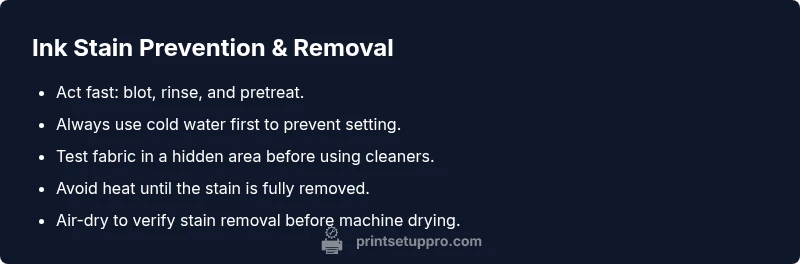
- Act fast to improve stain removal chances.
- Cold water and gentle pretreatment are your first allies.
- Avoid heat until the stain is confirmed removed.