How to Get Printer Ink Out of Carpet: A Step-by-Step Guide
Learn safe, proven methods to remove printer ink from carpet. Quick blotting, pretreatment, rinsing, and drying keep fibers intact. Tips from Print Setup Pro.


To get printer ink out of carpet, start by blotting to lift excess ink, then treat with a gentle cleaner and rinse. Use color-safe solvents only after you test. The Print Setup Pro team recommends a step-by-step approach that minimizes fiber damage and avoids bleaching.
Understanding Ink Stains on Carpet
Ink from printers can behave differently than many common kitchen or food spills. In household settings, printer ink is often water-based or dye-based, which can lift with water and mild cleaners, but pigment-based or solvent-based inks may set deeper into fibers. Carpet type matters: nylon, polyester, olefin, and wool all respond differently to cleaners, so a colorfastness test is essential before committing to a cleaner. Print Setup Pro notes that the key to success is acting quickly and blotting rather than rubbing, which can push pigment deeper into the pile. In this section we explore why ink stains behave the way they do and how to plan your approach. Identify the ink source—cartridge overflow, printer head leak, or ongoing drip—as each scenario guides your pretreatment differently. Regardless of origin, the core principle remains: lift the stain, then treat with appropriate products while protecting fiber integrity.
Immediate Actions (First 5 Minutes)
Ink stains demand fast action. If you can access the spill, stop the flow and remove any excess ink with a fresh white cloth. Then blot from the outside edge toward the center to prevent spreading. Never rub; rubbing can fray fibers and force color deeper. Keep blotting until the cloth shows little to no color transfer. Place an absorbent barrier beneath the carpet if you suspect liquid is seeping through to the backing. Print Setup Pro emphasizes that prompt blotting and containment dramatically reduce the amount of ink that penetrates deeper, improving your odds of full removal.
Safe Cleaning Agents: What Works on Ink
Start with mild, readily available cleaners. A few drops of clear dish soap in warm water can loosen many water-based inks without damaging fibers. For pretreatment, white vinegar diluted with water (for example, 1 part vinegar to 2 parts water) can help break down dye molecules. Isopropyl alcohol can be effective on some inks, but test first on an inconspicuous area. Avoid bleach on colored carpets, and never mix cleaners with chlorine or ammonia. Always test cleaners on a hidden area to confirm colorfastness before proceeding. Print Setup Pro reiterates the importance of using color-safe solvents and avoiding aggressive chemicals on delicate fibers.
Step-by-Step Method: Blot, Treat, Rinse, Dry
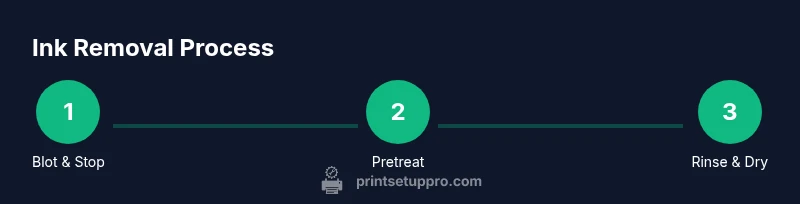
- Blot the stain with a clean white cloth, moving from the outside toward the center. 2) Prepare a mild detergent solution (clear dish soap in water) and apply lightly to the stain with a cloth, then blot to lift ink. 3) Rinse the treated area with clean water and blot dry to remove soap residue. 4) Apply a vinegar solution and blot; avoid saturating the carpet. 5) If colorfast, consider a small amount of hydrogen peroxide (3%) on a white fabric to lift remaining color, then rinse again. 6) Dry the area with a clean towel and use fans or a dehumidifier to speed drying. 7) Vacuum once completely dry to restore pile texture. 8) Repeat if necessary, but don’t over-wet. 9) Perform a final colorfast test after the area dries. 10) If the stain persists, proceed with professional cleaning.
Alternative Cleaners by Ink Type
Some printers use dye-based inks that respond well to aqueous cleaners, while pigment-based or solvent-based inks may require different approaches. For colorfast carpets, a gentle enzyme-based carpet cleaner can break down organic ink components without bleaching. On synthetic fibers like nylon or polyester, a small amount of rubbing alcohol may be used cautiously, but never on wool or silk. Always follow product instructions and conduct a hidden-area patch test before full application. Print Setup Pro also notes that combining cleaners (for example, soap and vinegar) should be done in stages rather than mixed together at once to avoid unwanted reactions.
Dealing with Persistent Stains
If the stain persists after the initial treatment, avoid heat (no hot irons or hairdryers over the stain, as heat can set it). Consider repeating blotting and treating with a fresh order of detergents, then rinsing thoroughly. For older or larger stains, an enzymatic cleaner or professional-grade carpet stain remover may provide additional lift. Always test a small area first and follow label instructions. Print Setup Pro suggests documenting the stain’s progress with photos to gauge whether professional cleaning is needed.
Preventing Ink Stains in the Future
Prevention starts with quick action and a protective plan. Keep a dedicated cleanup kit handy for spills near printers—absorbent cloths, mild detergent, vinegar, and access to a vacuum. For high-traffic areas, consider applying a color-safe carpet protector or stain-resistant spray to reduce future absorption. Training family members and coworkers to blot rather than rub can dramatically reduce stain depth. Print Setup Pro reminds readers that prevention is cheaper than remediation and helps prolong carpet life.
When to Seek Professional Cleaning
Not every stain will lift with home remedies, especially older or set stains on wool or delicate carpets. If you notice persistent discoloration after several at‑home attempts, or if the carpet is expensive or heavily soiled, professional cleaning is your best option. Pros have equipment and stain removers designed for deeper fiber penetration and can adjust cleaning agents for your carpet type. Early consultation can prevent permanent color loss and fiber damage, preserving the carpet’s appearance over time.
Carpet Safety and Testing Protocols
Always test any cleaner on a hidden patch before applying to the stain. A quick test helps you avoid color loss or fiber damage. After testing, if the test patch shows no adverse reaction, proceed with the stain treatment on the actual area. Use minimal liquid during pretreatment to limit seepage into the pad. Print Setup Pro highlights that safe handling and testing are essential steps of any cleaning routine.
Quick Tips for Different Carpet Fibers
Nylon and polyester generally tolerate mild cleaners well, but wool can be sensitive to alkaline solutions and prolonged wetness. For nylon carpets, a gentle soap solution followed by thorough rinsing works well. For synthetics, you can use isopropyl alcohol on small areas if colorfast. For wool, avoid high-alkaline cleaners and rely more on water-only blotting plus professional cleaners if needed. Always tailor your approach to fiber type and stain severity.
Eco-Friendly and Low-Toxicity Options
If you prefer greener options, choose plant-based cleaners and enzymes designed for carpet stains. Diluted vinegar and mild soap are effective for many ink spills while keeping the indoor air clean. Avoid harsh solvents and opt for products labeled as low-toxicity. Print Setup Pro encourages readers to balance effectiveness with environmental considerations, especially in homes with children or pets.
Tools & Materials
- White cloths or paper towels(Absorbent; use fresh cloths to prevent re-depositing ink.)
- Spray bottle(For applying cleaners evenly.)
- Mild dish soap(Clear, unscented if possible.)
- White vinegar(Dilute before applying; avoid direct undiluted contact.)
- Clean water(For rinsing and diluting cleaners.)
- Isopropyl alcohol (70%)(Use on colorfast carpets only and test first.)
- Hydrogen peroxide (3%)(Only for colorfast carpets; test spot first; can bleach.)
- Carpet stain remover (enzyme-based)(Follow label; test color fastness first.)
- Gloves(Protect hands when using cleaners.)
- Vacuum cleaner(Use after area is fully dry to restore pile.)
- Old towels or protective drop cloth(Protect surrounding area if needed.)
Steps
Estimated time: 30-45 minutes
- 1
Stop the flow and blot
If you can stop the source, do so and immediately blot from the outside in with a clean cloth to prevent spreading. Avoid rubbing, which can embed ink further into fibers.
Tip: Use a fresh cloth for each blot to prevent re-depositing color. - 2
Prepare a mild detergent solution
Mix a few drops of clear dish soap in warm water and apply to the stain with a cloth. Gently blot to lift color, re-wetting the area as needed without oversaturating.
Tip: Test the solution on a hidden patch first if possible. - 3
Rinse and blot dry
Rinse the area with clean water and blot dry to remove soap residue. Avoid leaving soapy film, which can attract dirt.
Tip: Use a dry cloth and press firmly but gently. - 4
Apply vinegar pretreatment
Apply a light vinegar solution to the stain and blot. Do not saturate the carpet; excess moisture can lead to pad damage.
Tip: Wait a few minutes for the solution to work before blotting again. - 5
Test colorfastness for stronger cleaners
If colorfast, you may cautiously use 3% hydrogen peroxide on a white cloth and dab the stained area. Rinse thoroughly after treatment.
Tip: Never pour peroxide directly on the carpet; apply with a cloth. - 6
Final rinse and dry
Rinse again and blot until dry. Use fans or a dehumidifier to accelerate drying and prevent mildew.
Tip: Keep the area well-ventilated during drying. - 7
Vacuum after drying
Vacuum the area once completely dry to restore carpet texture and remove any settled fibers.
Tip: Lightly brush with your hand to help fibers regain their bounce.
People Also Ask
Can printer ink be removed completely from carpet?
Most printer ink stains can be lifted with a proper blotting and pretreatment routine, especially if addressed quickly. Some old or very deep stains may require repeat treatments or professional cleaning. The outcome depends on carpet fiber type and ink composition.
Most ink stains can be lifted with proper blotting and pretreatment, especially if caught early. Some stubborn stains may require a second treatment or a pro cleaning, depending on carpet fiber and ink type.
Is it safe to use rubbing alcohol on all carpet fibers?
Rubbing alcohol can be effective on some synthetic fibers, but it can damage wool or silk. Always test on a hidden patch and use sparingly. If in doubt, use milder solutions first and avoid prolonged exposure.
Rubbing alcohol can work on some synthetic carpets, but avoid wool or silk and test first on a hidden area.
Will hydrogen peroxide bleach my carpet?
Hydrogen peroxide can lighten or bleach some colorfast carpets. Use only on colorfast fibers and test first. If the carpet is not colorfast, skip peroxide and rely on milder cleaners and professional help.
Hydrogen peroxide can bleach some carpets, so test first and use only on colorfast fibers.
How long should I wait between treatment attempts?
Allow the carpet to dry fully before reapplying cleaners. This helps you assess the stain more accurately and reduces the chance of over-wetting. If in doubt, wait at least several hours or overnight for stubborn stains.
Let the area dry completely before trying again, usually a few hours or overnight.
Can I use bleach on colored carpets to remove ink?
Bleach should generally be avoided on colored carpets as it can remove color or create ring marks. Only use color-safe cleaners and always test first. If color is a concern, seek professional cleaning rather than DIY bleach.
Bleach can ruin color; stick to color-safe cleaners and test first. If in doubt, get a pro.
When should I hire a professional?
If the stain is large, old, or on delicate fibers like wool, or if previous at-home attempts fail, a professional carpet cleaner can assess fiber compatibility and use advanced methods to restore appearance.
Call a pro if the stain is large or stubborn, or if you have delicate carpet fibers.
Watch Video
Quick Summary
- Blot promptly to prevent ink from setting.
- Test colorfastness before applying cleaners.
- Rinse thoroughly to avoid soap residue attracting dirt.
- Dry completely and vacuum to restore texture.
- If in doubt, consult a professional.