How to Get Rid of Printer Ink: A Practical Guide
Learn safe, effective methods to get rid of printer ink on clothing, skin, and surfaces. Step-by-step guidance, tested solvents, and tips for fabrics, furniture, and electronics.


Learn how to get rid of printer ink across fabrics, skin, and hard surfaces with fast, safe steps. Gather mild soap, isopropyl alcohol, clean cloths, and a spray bottle, then blot—never rub—until the stain lifts. Work from the outside in to prevent spreading, and always test solvents on a hidden area first. According to Print Setup Pro, quick, methodical action yields the best results.
Why quick action matters when getting rid of printer ink
Printer ink stains can be stubborn and set quickly if you wait too long. If you’re wondering how to get rid of printer ink, start with the simplest, gentlest approach and escalate only as needed. Acting promptly limits the ink’s ability to bond with fibers or porous surfaces. According to Print Setup Pro, the most reliable removal starts with blotting to remove fresh ink, followed by a mild solvent and cold-water rinses. For skin and clothing in particular, the sequence matters: blot, test, treat, rinse, and launder. For hard surfaces, use a mild solvent on a microfiber cloth, then wipe away residue. With consistent steps and patience, most common printer inks can be reduced to near-invisibility. This guide walks you through practical, safe techniques for four main areas: fabric, skin, hard surfaces, and soft plush like carpets or upholstery. The goal is to give you a reliable, repeatable method you can adapt to different inks and materials.
Understanding ink varieties and how they affect removal
Printer ink isn’t a single thing; there are dye-based inks and pigment-based inks. Dye-based inks tend to dissolve and lift more easily with water and mild cleaners, while pigment-based inks can sit deeper in some materials and may require stronger or specialized stain removers. Regardless of the ink type, always begin with blotting to remove fresh ink and avoid scrubbing, which can grind pigment deeper into the material. Testing a small hidden area first helps prevent damage, color bleeding, or surface dulling. In many homes you’ll encounter a mix of inks from inkjet printers, laser printers, and fax or copier devices, so a flexible approach works best.
Fabric stains: clothing, napkins, and upholstery
Clothing and textiles show ink quickly, especially on cotton and blends. Start by blotting, then apply a small amount of isopropyl alcohol (70%) to a clean cloth and dab the stain from the outside toward the center. If alcohol isn’t suitable for the fabric, use a pH-balanced stain remover or a liquid detergent directly on the spot. Gently rub with a soft brush or cloth, rinse with cold water, and launder as usual. Air-dry and inspect; repeat if needed. For delicate fabrics like silk or wool, skip alcohol and use a carpet-safe enzyme cleaner or consult care labels. This is a guide on how to get rid of printer ink that prioritizes fabric safety and results.
Skin and hair stains: safe removal steps
Printer ink on skin usually washes off with soap and warm water, but fresh stains can be stubborn. Wash the area gently with soap, then apply a small amount of isopropyl alcohol or hand sanitizer on a cotton pad, blot—don’t rub—until the stain fades. Rinse with water and soap again. If irritation occurs or the ink is on sensitive skin, stop and seek medical advice. Hair may require shampooing and repeated rinses; avoid harsh scrubbing, which can irritate skin. If residue persists after washing, repeat the process or try a mild cleanser designed for skin, then rinse thoroughly. This approach aligns with how to get rid of printer ink across surfaces while keeping skin safety in focus.
Cleaning hard surfaces: plastics, wood, metal, and glass
For hard, nonporous surfaces like plastic, glass, and sealed wood, start by blotting to remove excess ink, then apply a small amount of isopropyl alcohol on a microfiber cloth and wipe in gentle, circular motions. Rinse with a damp cloth and dry. For porous surfaces (unsealed wood, fabric-covered tables), use a gentle detergent or stain remover, then wipe and blot again. Do not use acetone on heat-sensitive plastics; test on an inconspicuous area first. This section reflects practical steps for getting rid of printer ink on everyday surfaces without damage.
Carpet and rug stains: delicate handling
Carpets absorb ink quickly. Blot up as much as possible with a clean cloth, then treat with a carpet-safe stain remover or isopropyl alcohol applied with a cloth. Work from the outside toward the center, dab rather than scrub, and avoid soaking the carpet. After treatment, rinse with a small amount of water and blot dry. If the stain persists, repeat the process or consider professional cleaning for stubborn marks. Always air-dry completely before using the area. This is an essential part of any guide on how to get rid of printer ink in household textiles.
Spot testing and choosing cleaners safely
Before tackling any stain, perform a spot test in an inconspicuous area. This reduces the risk of color loss or surface damage. Print Setup Pro analysis shows that combining blotting with a carefully chosen solvent—preferably one that is compatible with the material—produces the best results. Always follow the product’s instructions and wear gloves if needed. If you’re unsure, err on the side of gentler cleaners and more testing; patience pays off with ink stains. This section also anchors our safety-first approach to solving how to get rid of printer ink.
Drying, laundering, and preventing set-in stains
After treatment, air-dry the item away from direct heat. For fabrics, launder as recommended on the care label using cold or warm water and a gentle detergent. Check the stain before placing the item in the dryer; heat can set anything that remains. For upholstery or carpets, blot dry and allow to air out. Repeat treatment if any trace remains, and consider professional cleaning for delicate materials or stubborn stains. Keeping spill rates low and performing regular maintenance reduces future incidents and makes learning how to get rid of printer ink easier over time.
Tools & Materials
- Isopropyl alcohol (70-90%)(Test on fabric first; ensure good ventilation.)
- Mild dish soap(Dilute in warm water for spot cleaning.)
- White vinegar(Optional pretreatment for some fabrics.)
- Baking soda(Gentle scrub if needed for stubborn residue.)
- Hydrogen peroxide (3%)(Use on white or color-safe fabrics only.)
- Stain remover pen or liquid(Enzyme-based cleaners can help with organic inks.)
- Microfiber cloths(Lint-free and non-abrasive.)
- Old towels or rags(Place under stain to absorb moisture.)
- Spray bottle(For applying solvents evenly.)
- Soft brush(Use on fabric only if safe for the material.)
- Gloves(Protect skin from solvents.)
Steps
Estimated time: 45-90 minutes, plus drying and laundering times
- 1
Identify ink type and test a hidden area
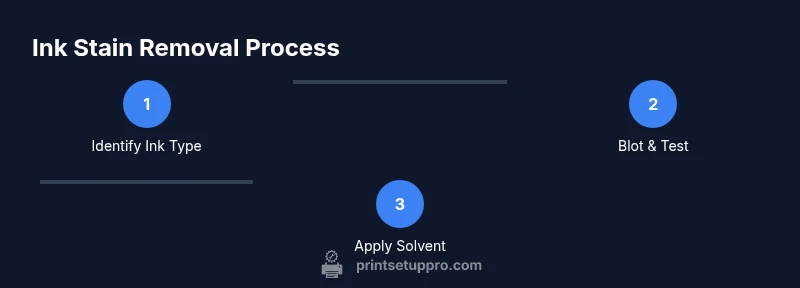
Check whether the ink is dye-based or pigment-based by performing a small test in a hidden seam. Apply a drop of isopropyl alcohol on a white cloth and gently blot from the outside toward the center; observe color transfer and fabric response. If color bleeds or the fabric shows color change, switch to a milder approach and avoid aggressive solvents.
Tip: Always document the test result and stop if you notice any color loss. - 2
Blot up excess ink quickly
Use a clean white cloth or paper towel to blot the stain, starting from the outside edge and moving inward. Do not rub, which can push ink deeper into fibers. This reduces the amount of ink that needs removing and lowers the risk of spreading.
Tip: If the cloth starts to pick up color, switch to a fresh area of fabric and continue blotting. - 3
Apply solvent to the stain (fabric)
Dampen a cotton swab or corner of a microfiber cloth with isopropyl alcohol and gently dab the stain from the outside in. For fabrics that resist alcohol, try a mild detergent spot treatment or an enzyme-based stain remover. Do not saturate delicate fabrics.
Tip: Work in small circles outward to avoid embedding the stain further. - 4
Rinse and launder fabric
Rinse the treated area with cold water to remove solvent residue. Launder according to the garment’s care label using an appropriate detergent. Avoid heat until you confirm the stain is gone, as heat can set remaining ink.
Tip: Inspect after washing and before drying; repeat treatment if any trace remains. - 5
Clean hard surfaces (plastic, glass, metal)
Wipe the stained area with a microfiber cloth dampened with isopropyl alcohol. Rinse with a damp cloth to remove any residue and dry with a clean towel. For stubborn marks, repeat once or switch to a mild detergent.
Tip: Avoid acetone on soft plastics; test on an inconspicuous spot first. - 6
Treat carpets and upholstery (case-by-case)
Blot the stain, then apply a carpet-safe stain remover or isopropyl alcohol on a cloth. Work from outside to center and avoid saturating the pile. Rinse with a small amount of water and blot dry. If persistent, consider a professional cleaner for delicate fibers.
Tip: Never rub aggressively; excessive moisture can worsen the stain and backing materials.
People Also Ask
How do I remove printer ink from clothing?
Blot the stain, apply isopropyl alcohol to the area with a clean cloth, then rinse with cold water and launder as usual. If the stain persists, repeat with a stain remover before drying.
Blot, apply alcohol, rinse, and launder. Repeat with a stain remover if needed before drying.
Can I use bleach on printer ink stains?
Bleach can damage fabrics and colors. For most fabrics, avoid chlorine bleach on ink stains. Use oxygen-based or enzyme cleaners and always test first.
Bleach can damage fabrics; try gentler cleaners and test first.
Is printer ink dangerous to skin?
Printer ink is not typically dangerous on skin, but avoid prolonged contact. Wash with soap and water; if irritation occurs, seek medical advice.
Avoid prolonged contact; wash with soap and water, seek help if irritation appears.
Will heat set printer ink stains?
Yes, heat can set remaining stains deeper. Do not apply heat until you are sure the stain is removed.
Heat can set stains; avoid it until you know the stain is gone.
What if ink is on carpet or upholstery?
Treat with blotting, then a carpet-safe stain remover or isopropyl alcohol. Test first on a hidden spot and avoid saturating the fibers.
Blot, test first, and use a carpet-safe cleaner for best results.
Can printer ink stains be removed completely?
Many stains can be reduced significantly, but complete removal depends on fabric type and ink formulation. Persistence and proper technique improve outcomes.
Most stains lift with the right method, though some fabrics may retain traces.
Watch Video
Quick Summary
- Act quickly to minimize set-in stains.
- Test cleaners on inconspicuous areas first.
- Blot, then treat with a suitable solvent for the material.
- Check the stain before drying or applying heat.
- Patience and repeats often improve results.