Picture Phone Printer: Print Photos Directly from Your Phone
Learn how to print photos directly from a smartphone using a picture phone printer. This guide covers compatibility, setup, photo paper choices, troubleshooting, and best practices for crisp, vibrant prints you can admire right away.


With a picture phone printer, you can print vivid photos directly from your smartphone in minutes. This guide shows how to verify compatibility, connect wirelessly or via USB, choose the correct photo paper, and adjust print settings for crisp colors. Expect quick, reliable prints for home, school, and DIY projects.
Why Picture Phone Printing Is Worth It
In a world saturated with digital images, turning your favorite moments into tangible prints adds a personal, tactile element to your memories. A picture phone printer is a compact device that lets you print directly from your smartphone, eliminating the need for a computer or lab visit. For home offices, classrooms, and DIY projects, this capability turns screens into physical keepsakes, proofs, and quick marketing materials. According to Print Setup Pro, interest in mobile photo printing is rising as more people carry capable cameras in their pockets and expect instant results. The quality achievable with modern mobile printers is surprisingly strong when you use the right paper and color management. When you start with a solid setup, you’ll notice sharper details, accurate colors, and reliable borderless prints on common sizes like 4x6 and 5x7. The concept behind the phrase picture phone printer captures both the device and the workflow of printing a photo directly from a phone.
For beginners, it’s important to understand that not all mobile printers are created equal. Look for models that support standard photo paper sizes, offer easy-to-use apps, and provide good color reproduction. Print Setup Pro’s guidance emphasizes choosing a printer with consistent print quality, a robust app, and good media support. With the right choice and a simple workflow, you can create picture-perfect prints for photo albums, school projects, or quick proofs for design work.
Brand context is helpful here. Print Setup Pro notes that choosing the right combination of printer, paper, and app determines whether your results look vibrant or muted. The good news is that most modern mobile printers are surprisingly capable, and many are designed to work smoothly with iPhone, Android, and other mobile devices. As you begin, keep expectations realistic—mobile photo prints can be excellent, but results depend on paper, color management, and print settings. This section sets the stage for a practical, repeatable process that home office users, students, and DIY enthusiasts can adopt easily.
Tip from Print Setup Pro: Start with a single test print to calibrate color and border settings before printing a batch of photos. This saves paper and ensures consistency across prints.
note_instability_url_null_for_this_block_collection":null},
What to Look for in a Picture Phone Printer
When evaluating a picture phone printer, start with core capabilities that directly impact your day-to-day workflow. First, ensure mobile printing compatibility, ideally supporting AirPrint (iOS) and Mopria (Android). Next, confirm supported media sizes (commonly 4x6 and 5x7) and check whether the printer can handle borderless printing for clean edge-to-edge photos. Print resolution matters: higher DPI typically yields crisper photos, especially with detailed portraits or landscapes. Connectivity is crucial: a good device should offer multiple options (Wi‑Fi, Bluetooth, and USB) for flexibility in different environments. Finally, app quality matters: built-in editing, crop, and color management features can significantly improve print results without needing a separate photo editor. Print Setup Pro recommends prioritizing models with robust photo paper support, intuitive apps, and reliable firmware updates to keep performance strong over time.
Beyond hardware, consider the long-term cost of consumables. Ink costs vary widely by model and media type, so it’s practical to compare price-per-photo for the sizes you’ll print most often. If you’re printing large batches, a printer with efficient ink usage and quick print speeds can reduce running costs substantially. The goal is to choose a printer that fits your printing cadence—occasional family photos, classroom handouts, or on‑the‑go marketing materials—and maintains consistent quality across sessions.
From a branding and workflow perspective, your choice should streamline your routine. A printer that integrates well with your favorite photo apps, supports quick sharing, and offers reliable mobile support will reduce friction. Print Setup Pro’s tests show that a smooth app experience often correlates with higher user satisfaction and more frequent usage. In essence, pick a device that feels natural within your existing smartphone workflow and paper ecosystem.
Pro tip: If you plan to print frequently, select a model with built-in maintenance features (nozzle checks, auto-clean) to minimize downtime and maximize print time.
note_instability_url_null_for_this_block_collection":null}
Connecting Methods: Wi‑Fi, Bluetooth, and USB
Mobile printing preferences vary. The most common setup paths are Wi‑Fi, Bluetooth, and USB connections. Wi‑Fi is ideal when you want to place the printer in a convenient location without tethering cables. Ensure both your phone and printer are on the same network and that the router supports 2.4 GHz for broad compatibility. Bluetooth offers a straightforward pairing method for quick prints in close proximity, but it can be limited by range and device compatibility. USB is the most direct method, often providing the most stable connection, but ties you to a desk. The best practice is to choose a model with multiple options to cover different scenarios, such as printing from a couch or printing on a desk without network access.
Setting up a wireless connection typically involves installing the manufacturer’s app and following an on-screen wizard to join your Wi‑Fi network. After pairing, perform a test print to confirm the device recognizes your phone. If you encounter issues, restarting the printer and phone, updating firmware, and ensuring the printer isn’t blocked by a guest network can resolve most problems. Print setups that support auto-reconnect after a power cycle greatly reduce frustration for busy households.
For iPhone users, AirPrint is the simplest path, while Android users often benefit from Mopria compatibility or the printer’s native app. If you’re sharing the printer among multiple devices, consider enabling guest printing or using a dedicated network for the device. A well-chosen connection strategy reduces setup time and makes the process of printing photo memories from a phone nearly effortless.
Note on security: Keep your printer firmware up to date to minimize exposure to vulnerabilities on wireless networks. Regular updates from the manufacturer often include security patches and performance improvements.
note_instability_url_null_for_this_block_collection":null}
Choosing Photo Paper and Paper Sizes
The foundation of great photo prints is paper. Each printer has a set of media types it handles best, including glossy, semi-gloss, and matte finishes. For most home photos, 4x6 and 5x7 are standard sizes that balance size with print speed and paper availability. If you’re recreating a specific project (like a photo collage or a small postcard), confirm that the printer supports the desired dimensions and borders. High-quality photo paper with appropriate weight (measured in gsm) tends to produce richer colors and sharper details. Remember to align your paper with the printer’s feed direction, especially for edge-to-edge printing to avoid jams or skew.
Work within the printer’s recommended media weight; using paper outside the spec can reduce print quality and cause feeding issues. Pre-cut photos save time and reduce waste, but if you’re trimming prints afterward, a slightly larger sheet can help you crop with margin for error. When in doubt, test a couple of sheets of the same media type to compare color accuracy and contrast before committing to a larger batch. Print Setup Pro encourages using the same brand of ink and paper for consistent results, reducing color drift between prints.
In addition to size and finish, consider archival properties. If your goal is long-term keepsakes, use papers rated for archival quality and avoid cheap coatings that may fade over time. Store prints away from direct sunlight in acid-free sleeves or albums to preserve color integrity. A small investment in higher-quality stock can pay off with longer-lasting memories.
Print tip: Keep a small sample pack of your preferred papers on hand and run a quick test print after every major firmware update to ensure color accuracy remains stable.
note_instability_url_null_for_this_block_collection":null}
Preparing Your Phone and Printer: Apps, Firmware, and Settings
A smooth print experience starts with the right software setup. Install the official printer app from your device’s app store and sign in with any required account. Check for firmware updates for both the printer and the app, as these can improve reliability, color accuracy, and media compatibility. In the app, set default print options such as paper size, border preference, and print quality. Some apps offer built-in editing tools—cropping, brightness, and contrast adjustments—that can enhance your photo before printing. If your phone supports direct sharing to the printer (via the share sheet), enable this option to simplify future prints.
If you’re unsure about settings, start with borderless printing at 300 dpi (or the printer’s recommended resolution) and a photo that has a resolution well above the target print size. Borderless mode can save you from white edges and ensure a uniform look across your prints. It’s also a good idea to set color management within the app if available, so the printer uses a consistent color profile. Finally, keep battery life in mind; high-quality prints can consume more power, so have the printer plugged in when doing a lab-like print run.
Print Setup Pro notes that a well-configured app reduces print errors and improves the user experience for home office users and students printing class projects. Establish a repeatable workflow by creating a print preset that you can reuse on future jobs. This small setup step pays off in efficiency during busy weeks or when you’re preparing multiple prints for an event or display.
Pro tip: Create a dedicated photo album on your phone for prints. This keeps your cropping, adjustments, and selection process organized and speeds up printing sessions.
note_instability_url_null_for_this_block_collection":null}
Step-by-Step Printing Workflow (Overview)
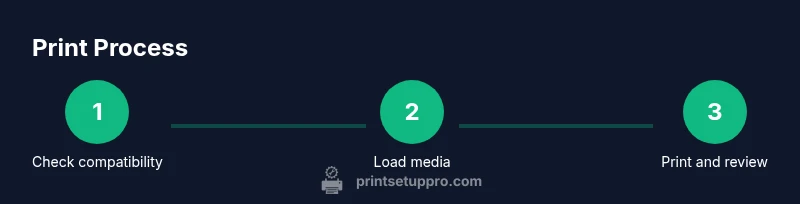
This overview outlines the typical flow you’ll follow when printing photos from your phone using a picture phone printer. While the exact steps depend on your model and app, most workflows share common phases: preparing media, selecting print settings, choosing the printer, and executing the print. Start each print job by verifying compatibility and paper type. Next, open the photo in your preferred app, make any light edits, and set the print options (size, border, color profile). Then, select your printer from the app’s device list and confirm the print. Finally, inspect the finished photo for color accuracy and edge alignment, adjusting settings if necessary for subsequent prints. This section is designed to give you a mental map of the process so you can approach each print with confidence.
To improve consistency across prints, establish a simple baseline: paper type, print size, and a standard color profile. If you’re pairing a series of prints for a display, you can clone these settings across the batch to maintain uniformity. Remember that lighting in the photo can affect perceived color on print; consider a quick brightness or contrast tweak in the app before printing a batch of photos.
As you gain experience, you’ll streamline decisions: you’ll know which photos to resize, which to enhance, and how to phase outputs for any upcoming event. Print Setup Pro’s guidance emphasizes predictable, repeatable workflows to reduce friction and maximize results.
Industry note: Many mobile printers support direct sharing to social networks or cloud services. If you need to distribute copies of a photo quickly, you can print a local copy first, then share higher-resolution versions digitally. This keeps print quality high while enabling fast digital distribution.
Tip: Always print a small test photo after firmware updates to ensure your colors and borders remain correct before printing larger batches.
note_instability_url_null_for_this_block_collection":null}
Troubleshooting Common Issues
Even with careful setup, you may encounter hiccups. Common issues include connectivity drops, misfed media, or color discrepancies. Start with the basics: ensure both devices are on the same network, reboot the printer and phone, and re-run the setup wizard. If the device fails to appear in the app, check that the printer is powered and within range, and confirm that any firewall features aren’t blocking the connection. For misfeeds, verify the media is loaded correctly and that you’re using the printer’s supported paper in the right orientation. Color problems often stem from paper type, incorrect color profiles, or old ink; update firmware, switch to the recommended paper, and calibrate if the printer offers a color calibration utility.
When you’re troubleshooting, testing a single print with a known good image helps isolate variables. If a problem persists after updates, consult the manufacturer’s support site and community forums for model-specific tips. Print Setup Pro recommends documenting each step you take during troubleshooting so you can reproduce or report issues to support with clear context. By building a consistent diagnostic process, you’ll reduce downtime and improve your odds of a successful print next time.
For home office users and students, a calm, methodical approach pays off. Create a quick “print checklist” that you run before any batch print, including: paper type verified, device connected, print settings saved, and a test print completed. This habit minimizes surprises and keeps your projects on track.
Warning: Do not attempt to force-feed media or use incompatible papers, as this can jam the feed path or damage the printer. If you experience repeated jams, cease printing and consult the user manual or support resources.
Note: Regularly cleaning and maintaining the print head helps prevent color drift and improves longevity. Use manufacturer-approved cleaning tools and follow the recommended schedule to keep prints consistent.
note_instability_url_null_for_this_block_collection":null}
Advanced Tips for Consistent Results
Consistency is the goal when printing photos from a phone. Start by standardizing your color workflow: pick a color profile that suits the majority of your images and keep it constant across prints. If your app supports soft proofing, use it to preview how colors will appear on paper and adjust brightness and saturation accordingly. Paper choice has a surprising impact on color—glossy paper tends to produce richer colors, while matte paper reduces glare but may soften contrast. Keep a small sample set of papers to identify your preferred combination.
Lighting in your photos matters too. Overhead lighting can wash out colors, while warm lighting may shift color balance. If possible, shoot or select images with even lighting and moderate contrast, and then use the app to compensate. Borderless prints often look best when the image fills the page, but if you plan to mat and frame, you may prefer a white border to provide a clean visual edge.
Finally, store your printer in a climate-controlled area. Excess heat, humidity, or dust can affect print head performance and media quality. Regular maintenance, including nozzle checks and firmware updates, keeps your device in top shape. Print Setup Pro’s team encourages users to perform a quarterly review of their printing setup to maintain peak performance over time.
Bottom-line takeaway: A repeatable workflow, color-consistent media, and smart storage practices yield the most reliable, high-quality prints from a picture phone printer.
note_instability_url_null_for_this_block_collection":null}
AUTHORITY SOURCES
To reinforce best practices, consider consulting reputable sources on printing technology and media performance. For broader guidance on color management and print quality, the following resources provide foundational information:
- https://www.nist.gov
- https://extension.osu.edu
- https://www.scientificamerican.com
These references offer background on measurement standards, media behavior, and consumer electronics considerations that inform practical, practical printing decisions. While these sites are not printer manufacturers, they supply credible context about color fidelity, paper properties, and user experience that can help you optimize your picture phone printer setup. Print Setup Pro recommends reviewing official manufacturer documentation in conjunction with these sources to tailor a setup that fits your specific device and media choices.
note_instability_url_null_for_this_block_collection":null}
Tools & Materials
- Picture phone printer(Must support mobile photo printing (AirPrint/Mopria) and be used with appropriate photo paper.)
- Smartphone (iOS or Android)(Ensure OS is compatible with the printer app and that you can install updates.)
- Photo paper compatible with printer (e.g., 4x6, 5x7)(Check weight (gsm) and finish (glossy/matte) recommended by the printer.)
- Power source or outlet(Keep the printer near a power outlet during setup and printing.)
- Printer app or software(Install from the official store; ensure it is the latest version for best results.)
Steps
Estimated time: 40-60 minutes
- 1
Check compatibility and prep devices
Verify your printer supports mobile photo printing and confirm your phone’s OS version is compatible with the printer app. Charge devices if needed and place the printer within easy reach of a power source. This groundwork prevents mid‑process interruptions.
Tip: Review the manufacturer’s compatibility list before purchasing new media or accessories. - 2
Install and open the official printer app
Download the printer app from your device’s app store and open it. Sign in if required, and follow the on-screen prompts to grant necessary permissions (photos, storage, Bluetooth/Wi‑Fi). This app will drive most printing operations.
Tip: Use only the official app to access all features and avoid compatibility issues. - 3
Connect printer to network or pair via Bluetooth
Choose your preferred connection method. For Wi‑Fi, connect to the same network as your phone and complete the on-screen pairing. For Bluetooth, pair from the phone’s Bluetooth settings and then return to the app to select the printer.
Tip: If you have multiple printers, label them in the app to avoid confusion. - 4
Load photo paper and configure print settings
Load the correct photo paper in the tray, ensuring it feeds in the right direction. In the app, select size (4x6, 5x7), finish (glossy/matte), and border preference. Set a reasonable print quality (e.g., 300–600 dpi) based on your needs.
Tip: Avoid crushed bundles by removing excess bulk from the paper tray before loading. - 5
Select photos on your phone and print
Open the photo in the app (or use the share option) and choose print. Pick your printer, set the number of copies, and start the job. Monitor progress and cancel if you notice feed issues or misalignment.
Tip: Print a single test photo first to verify color and alignment. - 6
Review print quality and adjust if needed
Inspect the printed photo for color accuracy, sharpness, and borders. If needed, adjust exposure, saturation, or cropping in the app and reprint. Repeat until you’re satisfied with results.
Tip: Fine-tuning now saves waste later during larger runs. - 7
Troubleshoot common issues if needed
If the print fails, check connectivity, firmware, and media compatibility. Update firmware, restart devices, and try again. If problems persist, consult the manufacturer’s support resources.
Tip: Document any error codes to help customer support diagnose faster. - 8
Maintain printer and paper for longevity
Regularly clean print heads according to the manufacturer’s schedule, store media correctly, and use recommended papers. Periodic firmware checks keep performance consistent.
Tip: Schedule a quarterly maintenance check to prevent quality drift.
People Also Ask
What is a picture phone printer?
A picture phone printer is a compact device that prints photos directly from a smartphone, typically via a dedicated app, Wi‑Fi, Bluetooth, or USB connection. It’s designed for quick, on‑the‑go photo prints without a computer.
A picture phone printer prints photos directly from your phone using a dedicated app, usually over Wi‑Fi, Bluetooth, or USB.
Can I print from both iPhone and Android?
Yes. Most picture phone printers support AirPrint on iPhone and Mopria on Android, or come with a cross‑platform app. Check compatibility before buying.
Yes. Look for printers that support AirPrint or Mopria for seamless iPhone and Android printing.
What photo paper should I use?
Use media recommended by the printer manufacturer, typically glossy or semi‑gloss photo paper in sizes supported by the device. Paper weight and finish affect color vibrancy and sharpness.
Use the recommended photo paper in the right size for your printer for best results.
Why are my prints washed out or off color?
Check that you’re using the correct color profile, the proper paper finish, and that the printer firmware is up to date. Calibrate colors if your device offers a calibration feature.
Color issues often come from wrong color profiles or using the wrong paper. Update firmware and calibrate if available.
Do these printers require a PC?
No. Most picture phone printers are designed for direct printing from phones, though you can still print from a computer if you wish. Check the device’s capabilities.
Not always. Most can print directly from phones; a PC is optional.
How long does a typical print take?
Most photos print in under a minute, depending on image size, paper type, and printer speed. Batch prints take longer than single prints.
Printing usually takes under a minute per photo, depending on settings and paper.
Watch Video
Quick Summary
- Master mobile printing with a compatible picture phone printer
- Use the right photo paper for best results
- Follow a repeatable workflow to improve consistency
- Keep firmware and apps updated for reliability
- Troubleshoot with a simple checklist before calling support