Printer and Cricut Stand: A Thorough Comparison for Your Craft Desk
A data-driven comparison of combo printer and cricut stands versus dedicated stands, with setup tips, ergonomics, and buying guidance for home offices and craft spaces.


For most craft setups, a combo printer and cricut stand works best when space is tight and both devices share a workflow. If you value dedicated storage or future-proofing, separate stands offer more flexibility. Price and build quality vary, so pick a model that fits your machines, workspace, and budget.
Why a printer and cricut stand matters for a craft-focused workspace
According to Print Setup Pro, a well-designed printer and cricut stand can transform a cluttered desk into a streamlined, efficient workspace. When you juggle a printer and a Cricut cutting machine, a single stand can centralize feeds, reduce material misalignment, and simplify cable routing. In compact rooms or shared spaces, a dual-use stand minimizes footprint while keeping both devices within easy reach. The goal is to align height, distance, and access so you can switch between print and cut without shuffling tools. A thoughtfully chosen stand lowers cognitive load, improves material flow, and reduces the risk of accidental jams or spills that interrupt a project. For home offices, makerspaces, and classrooms, the right stand becomes a quiet but meaningful upgrade. Print Setup Pro emphasizes that the best choice balances space savings with ergonomic access, ensuring both devices are easy to use during long sessions.
What to look for: core specifications for dual-use stands
When evaluating a printer and cricut stand, focus on surface area, weight distribution, and adjustability. A robust unit should provide a stable top large enough to accommodate typical printer footprints and the Cricut’s cutting bed without crowding. Look for steel or reinforced wood construction for durability and consider anti-slip feet to prevent creeping during operation. Cable management features—such as channels, grommets, or clips—help keep cords organized and out of the way. Storage options like shelves or hooks can reduce desk clutter by holding blades, mats, power adapters, and rolls of vinyl. Finally, check assembly requirements and warranty coverage. A well-built stand should offer clear instructions, standardized hardware, and predictable support for routine maintenance.
Compatibility and fit: printers and Cricut models
Compatibility is the linchpin of a successful setup. A printer and cricut stand should accommodate a range of printer footprints and Cricut models, from compact desktop printers to mid-size craft cutters. Always measure your devices and compare to the stand’s stated dimensions, including depth, width, and height clearance for operation. If you use a hot-melt adhesive applicator or a blade holder, ensure there is enough space for safe tool clearance. Consider stand options that offer adjustable height or tilt to accommodate different user heights and workflows. Where possible, choose stands with modular accessories or optional add-ons so you can tailor the unit to your specific printers and Cricuts over time.
Design and materials: wood, steel, composites
Material choice influences durability, weight, and aesthetics. Steel stands typically offer higher load-bearing capacity and modern looks, with powder-coated finishes that resist wear. Wooden stands—often from birch, maple, or bamboo—provide warmth and easier customization but may require more maintenance to prevent surface dents. Composite materials can strike a balance between price and strength, offering lighter weight with decent rigidity. Surface finishes matter: a non-slip top, chamfered edges, and smooth paint or veneer help minimize scuffs on devices and materials. If you anticipate frequent reconfiguration, modular or stackable designs can make reassembly effortless. Regardless of material, verify that the finish is resistant to dust, vinyl residue, and occasional solvent exposure from project materials.
Ergonomics and workflow: height, reach, and accessibility
Ergonomics play a pivotal role in choosing a printer and cricut stand. Aim for a working height that keeps your forearms roughly parallel to the desk when typing or cutting. The stand should place the printer’s output tray and the Cricut’s cutting area within easy reach to minimize bending or overextension. A lower or protruding top can create awkward angles for loading paper or vinyl. If you frequently swap between printing and cutting modes, a stand with adjustable height or a tilting surface can reduce neck and shoulder strain. Cable routing should prevent cords from snagging tools, mats, or hands, which also helps prevent accidental pulls that could topple devices. A well-balanced design reduces fatigue and supports longer, more accurate sessions.
Storage and organization: shelves, bins, and cable management
A printer and cricut stand should help you keep tools organized. Integrated shelves or bins for mats, blades, vinyl rolls, and spare ink can greatly reduce desk clutter. Consider external storage options such as add-on hooks for cords and power adapters. Effective cable management—through channels, clips, or grommets—minimizes tangles and improves airflow around devices. If you use heat or adhesive materials, ensure the stand’s surfaces are resistant to stains and easy to wipe down. For safety, select stands with anti-tip features or broad, low profiles to prevent accidental tipping, especially in busy craft rooms or classrooms.
Setup, assembly, and maintenance tips
Most printer and cricut stands come with straightforward hardware and step-by-step instructions. Before starting, clear the workspace, verify all components, and read the warranty terms. Assemble on a soft surface to avoid scratches, and tighten fasteners in a crisscross pattern to distribute weight evenly. Periodically inspect joints, feet, and fasteners for looseness or corrosion, and clean surfaces with a damp cloth. If your stand includes adjustable feet, level the unit on uneven floors to maintain stability. Routine maintenance includes dusting, checking cable lengths, and confirming mats and stands remain aligned. A well-maintained stand preserves performance and extends its lifespan across years of crafting projects.
Real-world use cases: home office, makerspace, classroom
In a compact home office, a combo stand can consolidate equipment and leave a single workspace clear for editing photos, printing labels, or designing vinyl decals. In a makerspace, where multiple users share devices, a modular or dual-stand setup can be rearranged to fit new projects quickly. For classrooms or instructors, a durable unit that resists heavy use and can be wiped clean between sessions is valuable. In all scenarios, prioritize stands that minimize movement while maximizing access to both devices, so students or colleagues can switch between tasks with minimal disruption.
Price range and value: when to invest in a combo vs separate stands
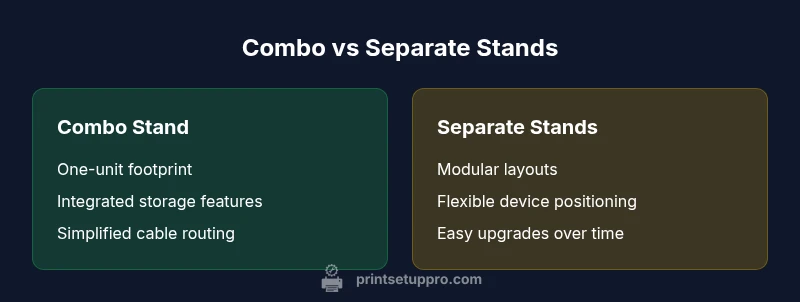
Price often reflects build quality, material, and features, though exact figures vary by retailer and model. Combo stands tend to offer space-saving advantages and simpler cable routing at a single price point, while separate stands can be cheaper per unit and more flexible for future changes. If your workspace is tight or you regularly switch between printing and cutting, a combo stand may deliver greater overall value. If you expect to upgrade or replace one device independently, separate stands could offer better long-term adaptability. Consider your budget against your space constraints and desired workflow efficiency to determine the best fit.
common pitfalls and how to avoid them
Common missteps include choosing a stand that is too small for your devices, failing to account for mat storage and vinyl rolls, and overlooking cable management needs. Avoid stands with insufficient weight capacity, as vibration from printers can transfer to the Cricut and cause misfeeds. Do not ignore ventilation and heat generation; ensure there is clearance for airflow. Finally, skip glossy finishes that show fingerprints on a busy desk. Always measure accurately, compare models side-by-side, and read user reviews for real-world insights on stability and longevity.
Getting the right balance: final decision factors
The right printer and cricut stand depends on space, device dimensions, and your preferred workflow. If space is at a premium and you want a clean, unified look, a combo stand with integrated storage is appealing. If you prize modularity and future flexibility, separate stands may be the better route. In all cases, verify weight capacity, surface area, and ergonomic height. Take time to consider how you’ll move between tasks, how cables will route, and how easy it is to reach mats, blades, and ink. A careful assessment now reduces rework later and supports a smoother, more efficient crafting routine.
Comparison
| Feature | Combo printer and Cricut stand | Dedicated printer stand + dedicated Cricut stand |
|---|---|---|
| Surface dimensions (approx.) | Varies by model; typically larger footprint for combo | Customizable per stand; often tighter footprints for individual units |
| Weight capacity | Moderate to high; balanced load across both devices | Variable; depends on each stand; can be optimized for separate devices |
| Storage options | Integrated shelves or hooks on the combo model | Separate shelves for each device; more modular storage |
| Adjustability | Usually one-height or limited adjustability | Often higher adjustability; some offer height and tilt adjustments |
| Cable management | Often integrated cable routing | Separate routing per device; more modular cable management |
| Assembly effort | Often simpler with one unit | Typically more complex due to two units and alignment |
| Best for | Small spaces, simplified workflow | Larger spaces, flexible layouts, future expansion |
| Price range | Moderate; typically higher upfront | Lower per-unit cost, but total can add up |
Benefits
- Saves space by combining devices into a single unit
- Simplifies cable management and routing
- Easier to move and reposition as a single unit
- Often lowers desk clutter and keeps essential tools within reach
- Consistent height and layout support a smoother workflow
Downsides
- Less flexibility to upgrade one device without changing the other
- Potentially heavier and bulkier to move
- Slightly fewer modular accessories than two separate stands
- One faulty unit can affect both devices' alignment and usage
Combo stands are recommended for small spaces and streamlined workflows; dedicated stands excel in flexibility and future expansion
If your craft space is compact and you want a tidy, all-in-one solution, choose a combo printer and cricut stand. For maximum adaptability and easier upgrades over time, opt for separate stands for each device. In both cases, ensure proper dimensions, weight capacity, and ergonomic height to maximize efficiency.
People Also Ask
What exactly is a printer and cricut stand?
A printer and cricut stand is a workstation accessory designed to support a printer and a Cricut cutting machine, either as a single combined unit or as two separate stands. It aims to consolidate space, improve accessibility, and organize supplies for print-and-cut workflows.
It’s a stand that holds both your printer and Cricut in one organized setup.
Combo vs separate stands: which should I choose when space is tight?
In small spaces, a combo stand can maximize footprint efficiency and simplify cable routing. If you value modularity or anticipate future upgrades, separate stands offer more flexibility. Consider your workflow, room layout, and whether you need to reposition devices often.
In tight spaces, go combo for simplicity; choose separate stands if you want flexibility.
Can I mount other devices or accessories on these stands?
Some stands support accessory hooks or add-ons like mats, cutters blades, or small storage bins. Always check the manufacturer’s accessory options and weight limits to avoid overload or instability.
Some stands offer add-ons; verify weight limits and compatibility.
What should I measure before buying a stand?
Measure the footprint of your printer and Cricut, including width, depth, and height you need for operation. Also measure desk depth and clearance under shelves to ensure the stand fits without crowding and allows easy reach.
Measure device footprints and the space around them for comfort.
Is assembly difficult for most models?
Most stands come with basic hardware and clear instructions. A simple, well-lit work area, basic tools, and following the crisscross tightening pattern will help ensure a stable setup and prevent wobbles.
Most stands are straightforward to assemble with basic tools.
How should I position the stand for ergonomic use?
Place the stand so the top surface is at elbow height when seated, with your forearms parallel to the desk. Ensure the Cricut’s cutting area and printer output are within comfortable reach to minimize twisting or bending.
Aim for elbow-height setup with easy reach to both devices.
Quick Summary
- Prioritize space savings for compact rooms
- Check device footprints and clearance before buying
- Prefer adjustable stands for ergonomic comfort
- Balance cost with long-term flexibility
- Plan for organized cable management